Norfolk
Minnows Manor at Mannington Hall


The hall and its history
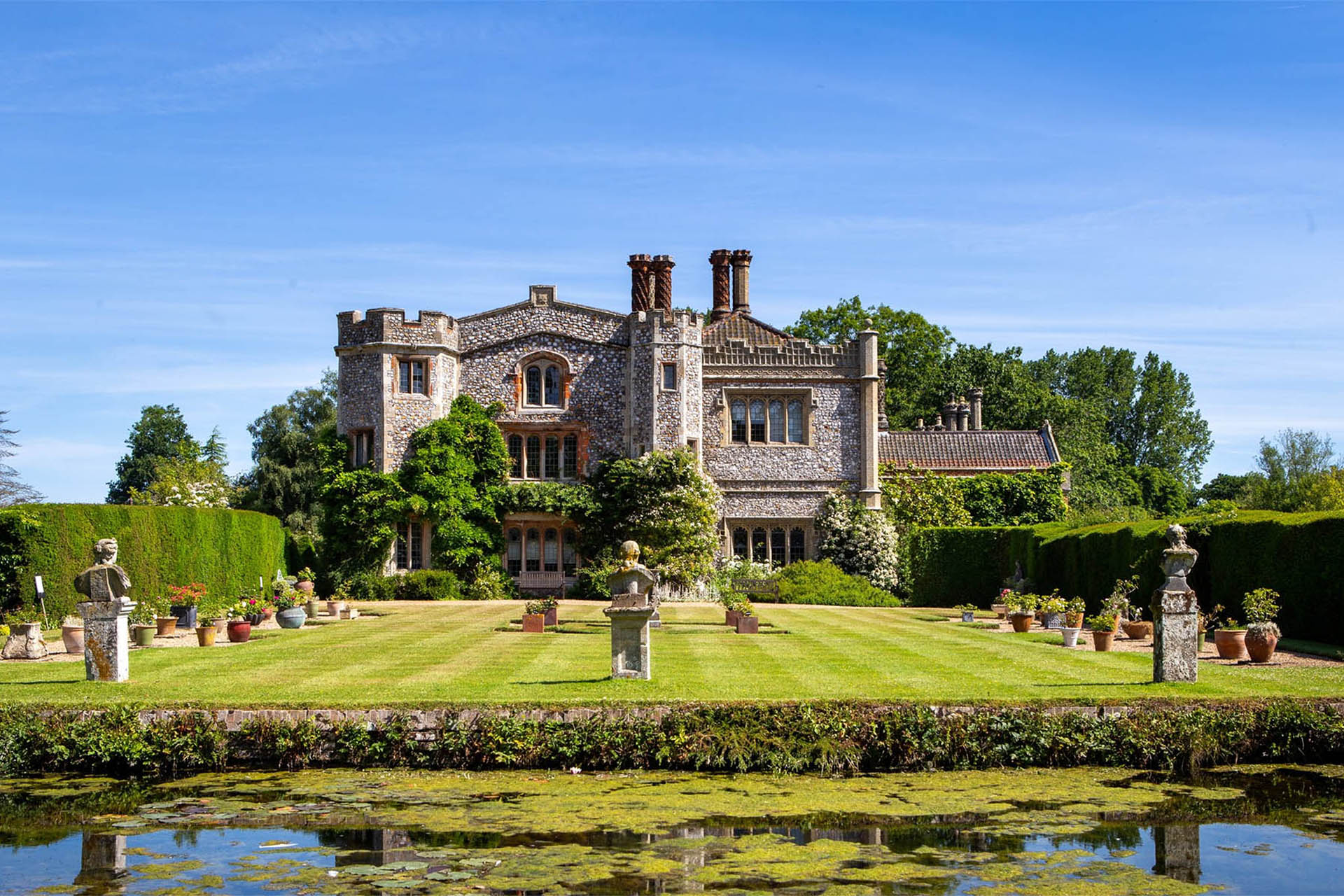
Mannington Hall is nestled in the heart of North Norfolk, boasting an illustrative history of owners since the site was recorded in the Doomsday Book of 1086. The hall itself was built around 1460 for William Lumnor, a friend of the Paston Family and is regarded as one of the oldest estates in Norfolk. Since the 18th century The Walpole Family were in ownership of the hall, alongside the neighbouring Wolterton Hall. Now Grade I listed, it's built of knapped flint, with Gothic windows, decorative chimneys and two turrets on its south side.
The Walpole family stayed for almost 300 years. In the 1980s the late Lord Walpole introduced a countryside management scheme with public access and interpretation, long before that became commonplace, and the estate has been opening its gardens, lakes, meadows and walks to visitors ever since.
A new chapter
In 2025 the Ellis family, who had also acquired the neighbouring Wolterton Estate, became the new owners, bringing the two historic Walpole properties back under one stewardship. The family planned to rejuvenate the site and continue the work begun by Lord and Lady Walpole.
Early work has covered a refurbished café, renovation of the holiday cottages, maintenance to the lake and moat sluices, and repairs to the hall's external fabric, alongside a long-term programme to refresh the gardens and parkland. In March 2026, planning permission was granted for a new visitor centre on the site of the former one, with a relocated gift shop and information point.

A playful Mannington
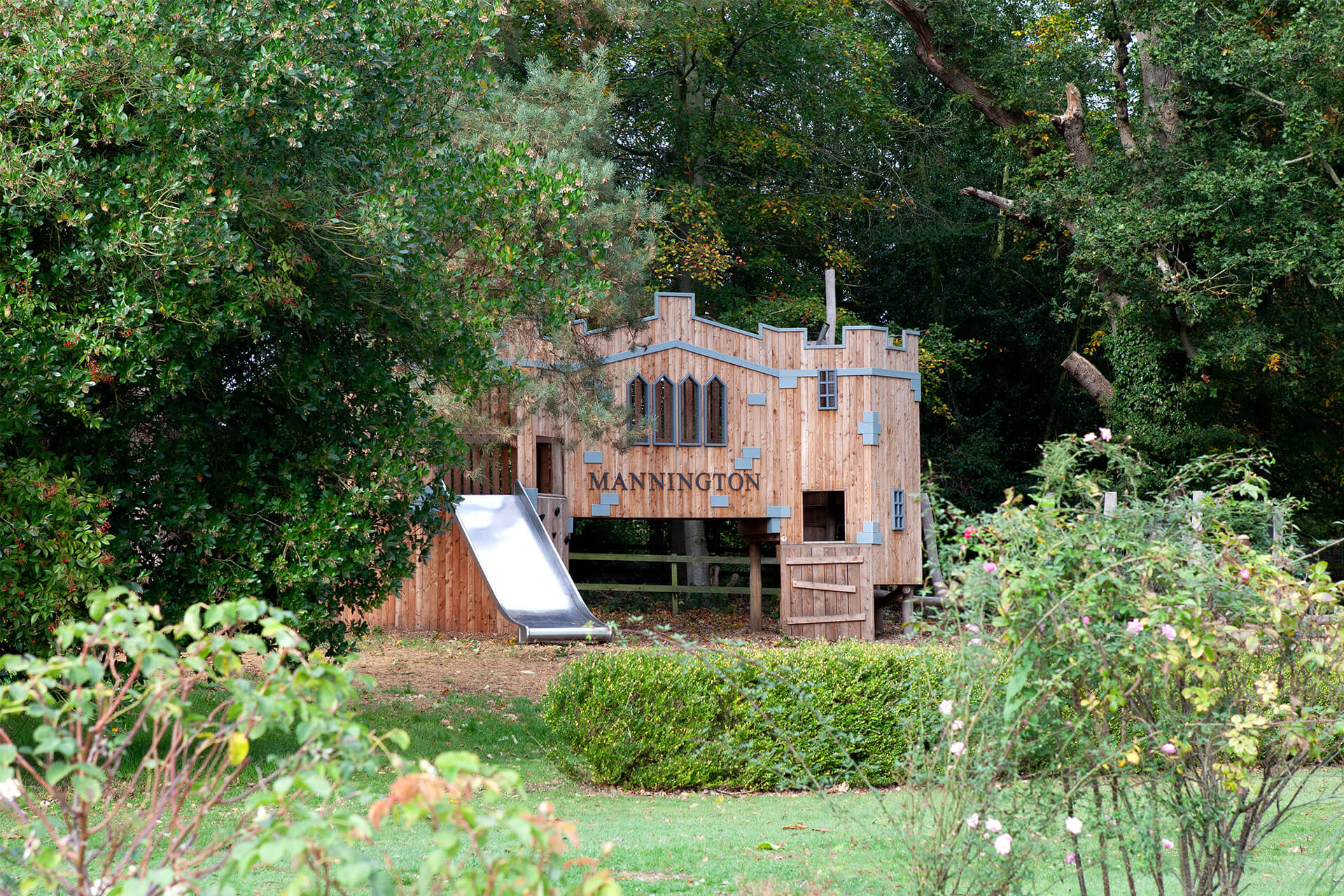
Play forms part of that wider plan, giving the estate a new way of welcoming families and introducing younger visitors to its history. Mannington Estate is a place of flint walls, garden rooms, moats and bridges, with the remains of a Saxon church tucked into the woodland. The brief was to bring play into that setting without overshadowing it, so the design starts with the estate itself.
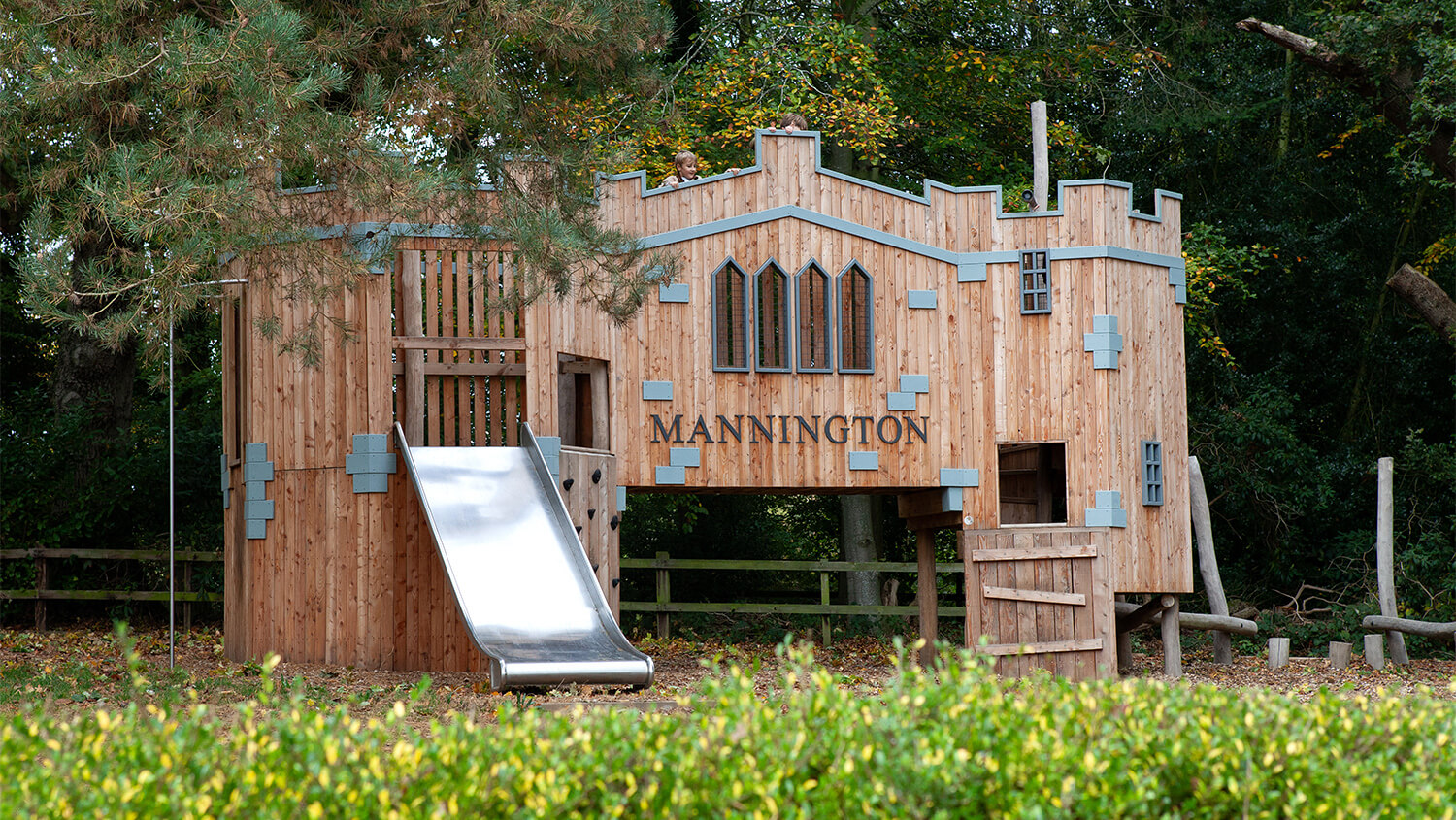
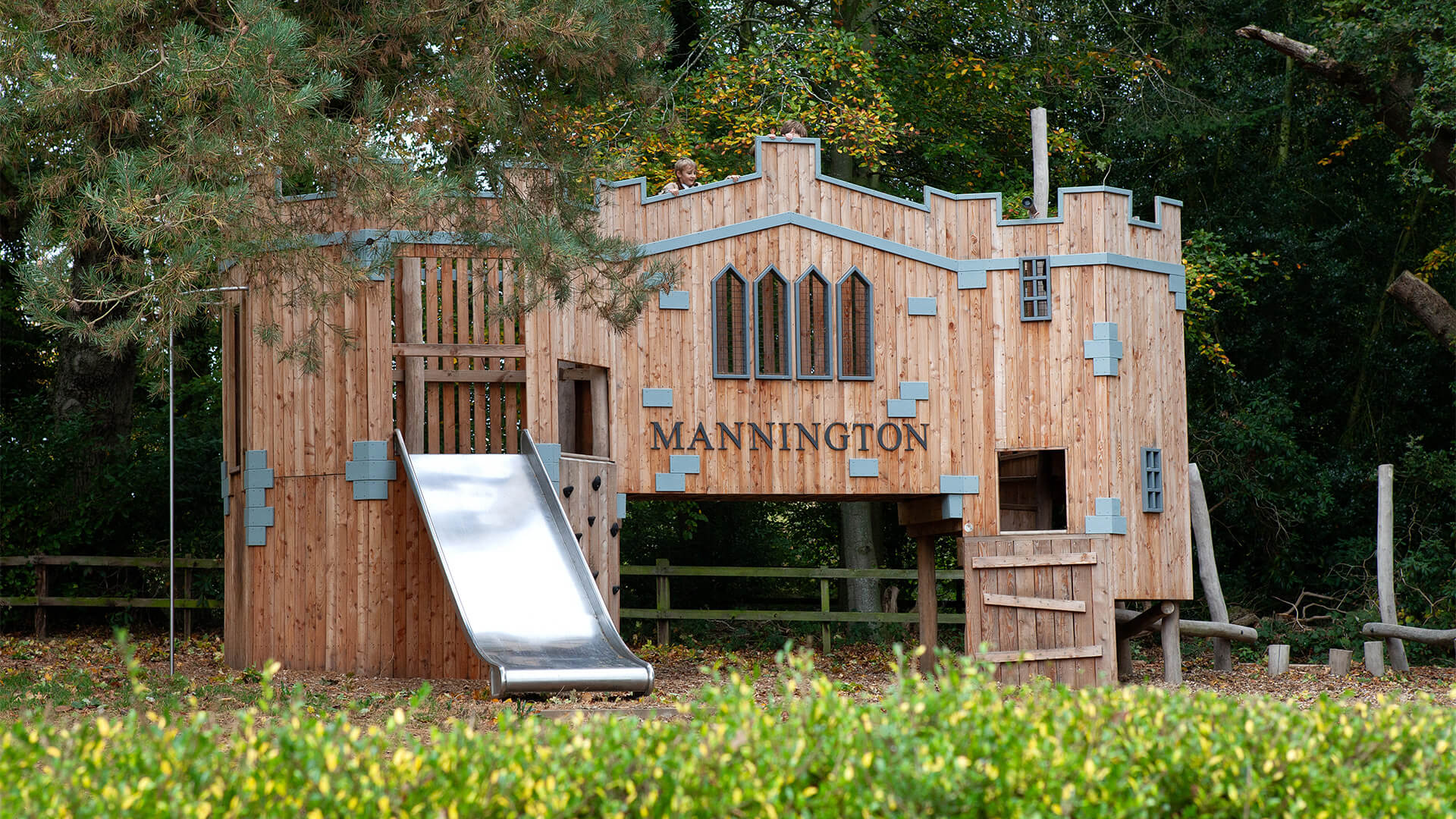
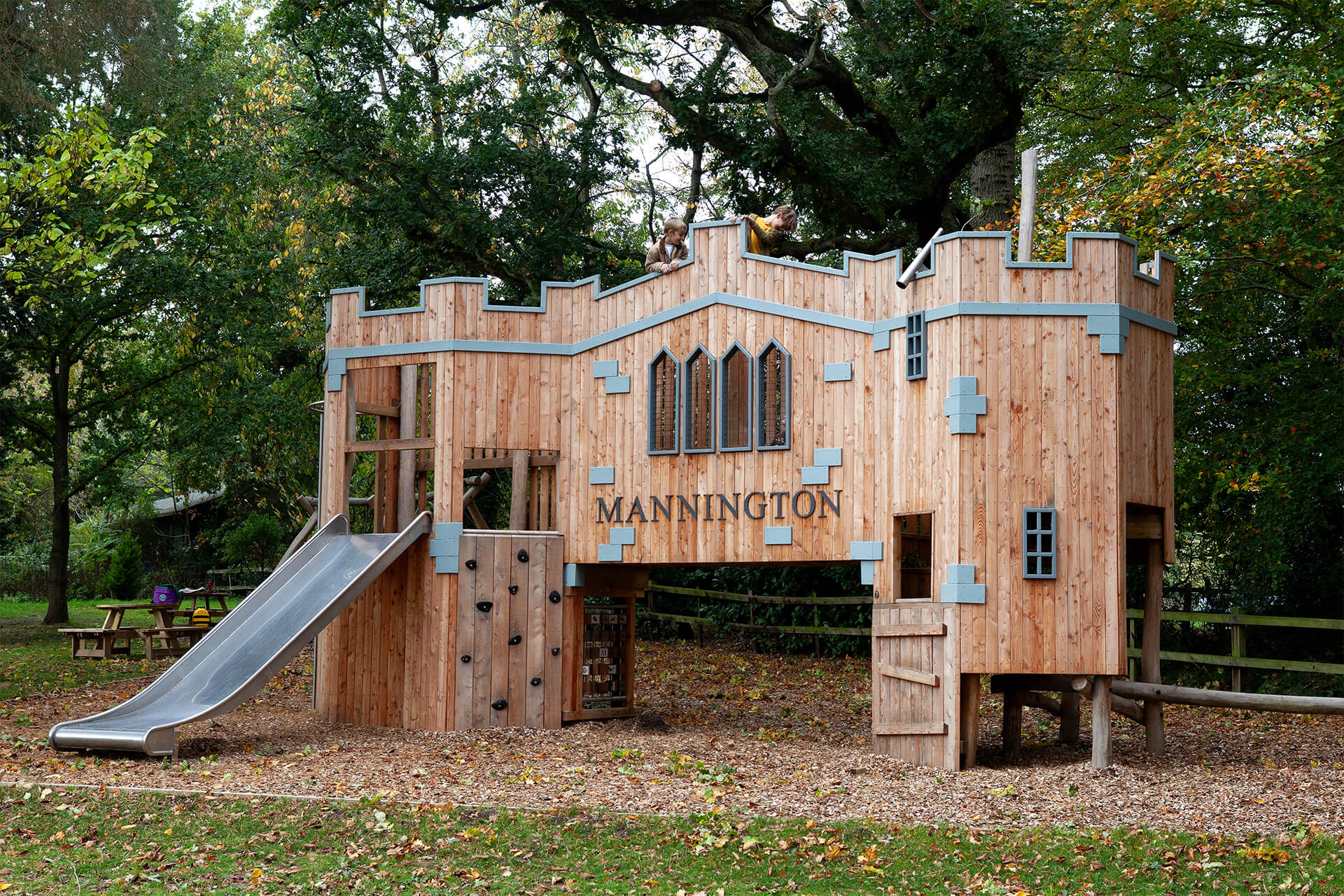
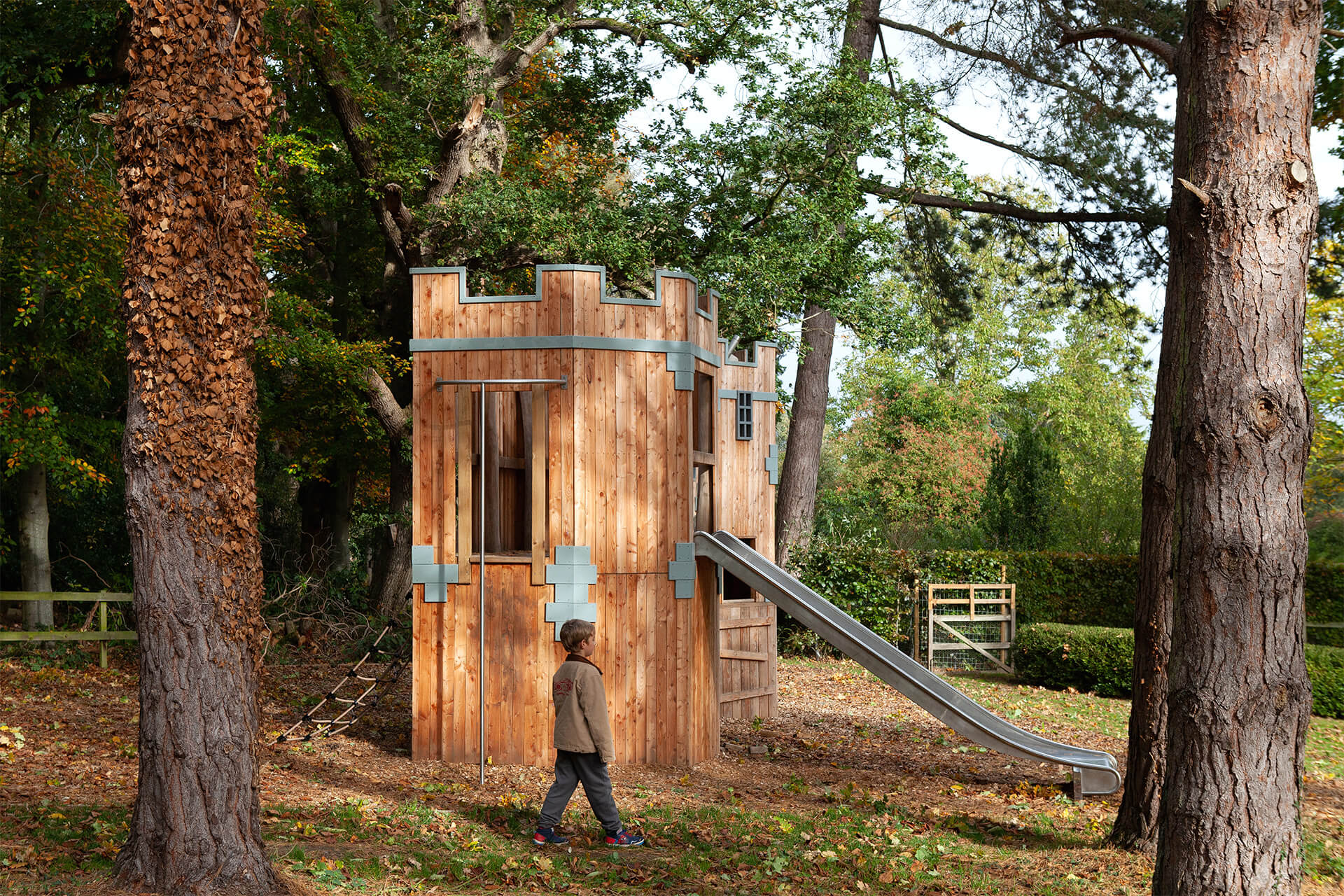
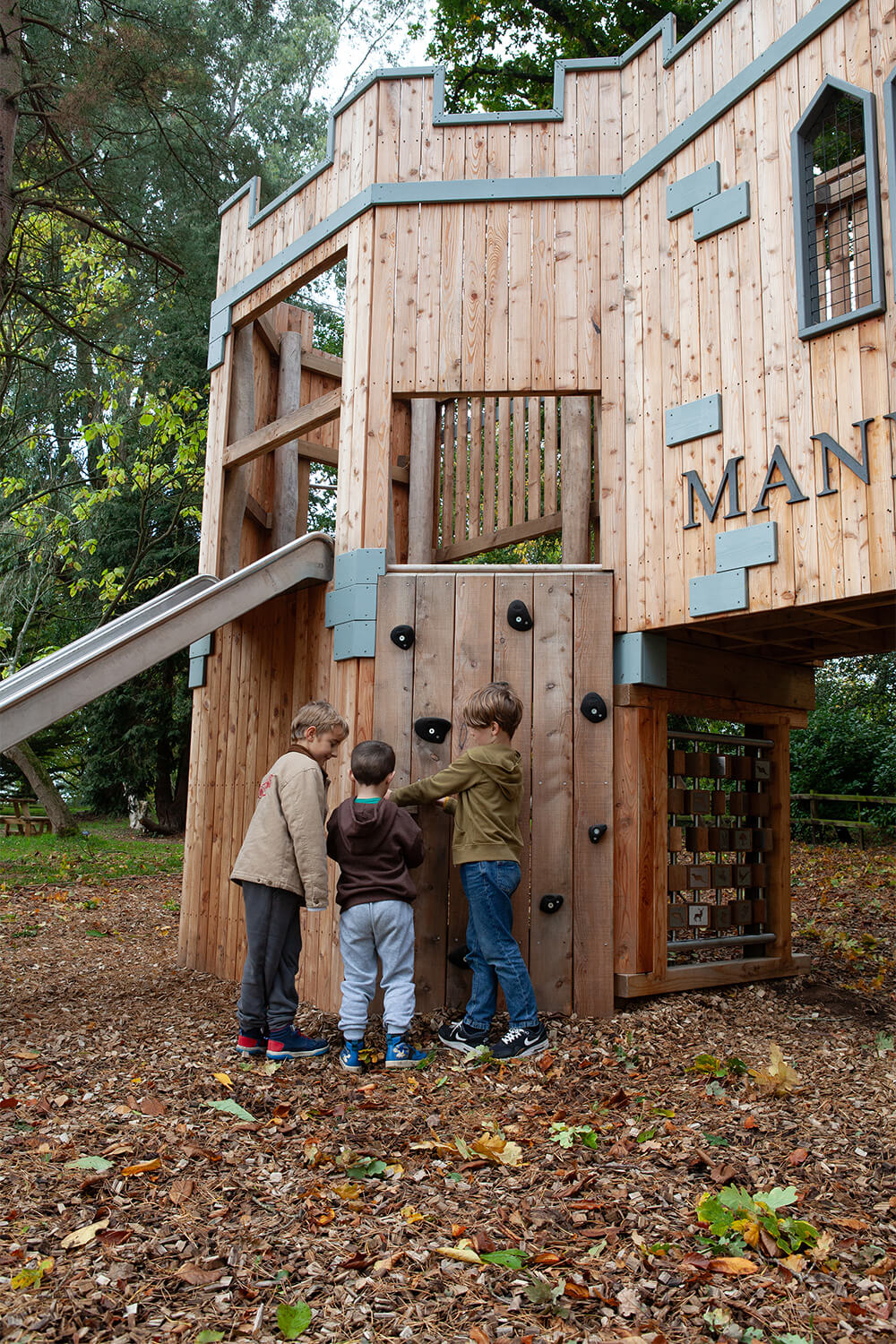
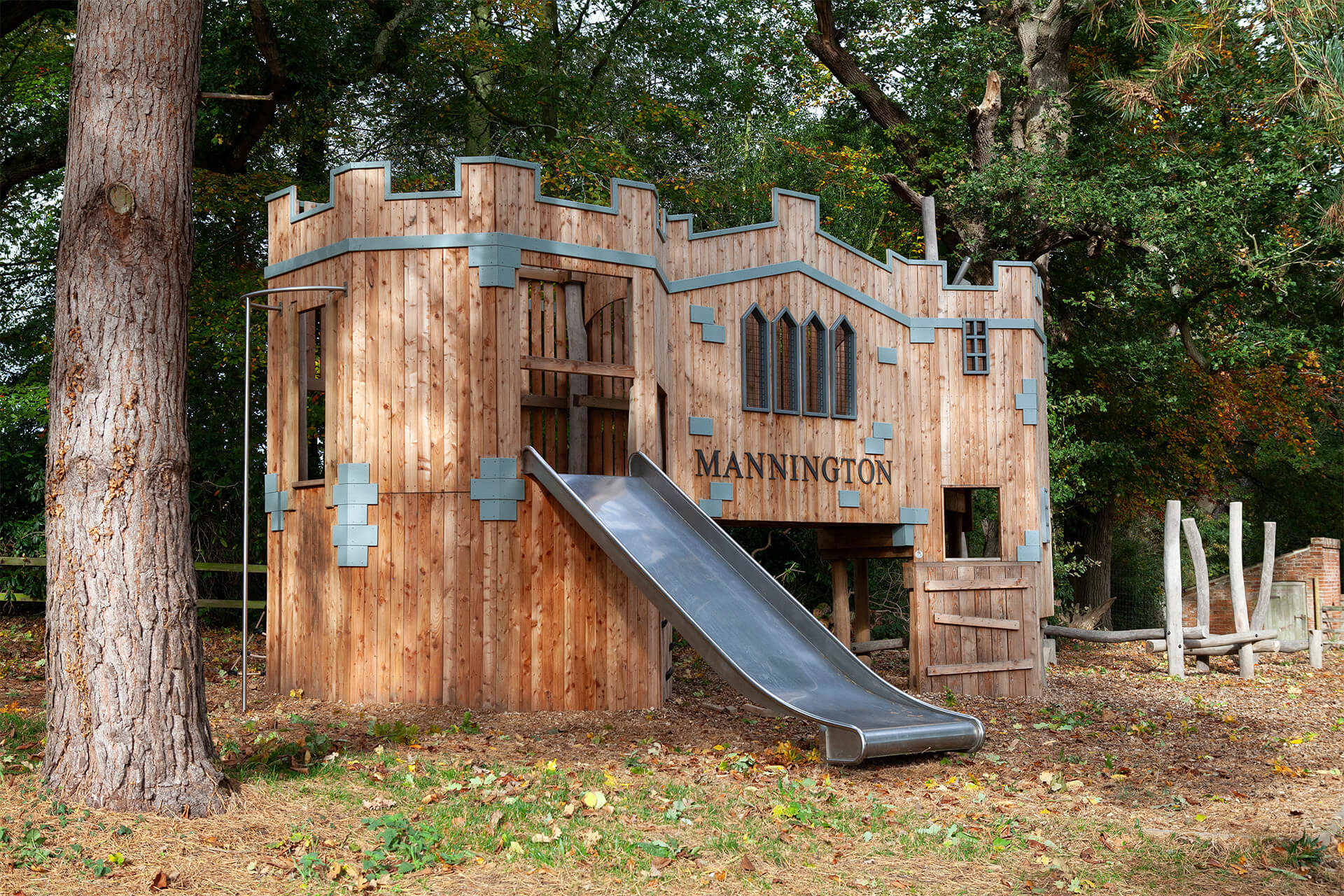
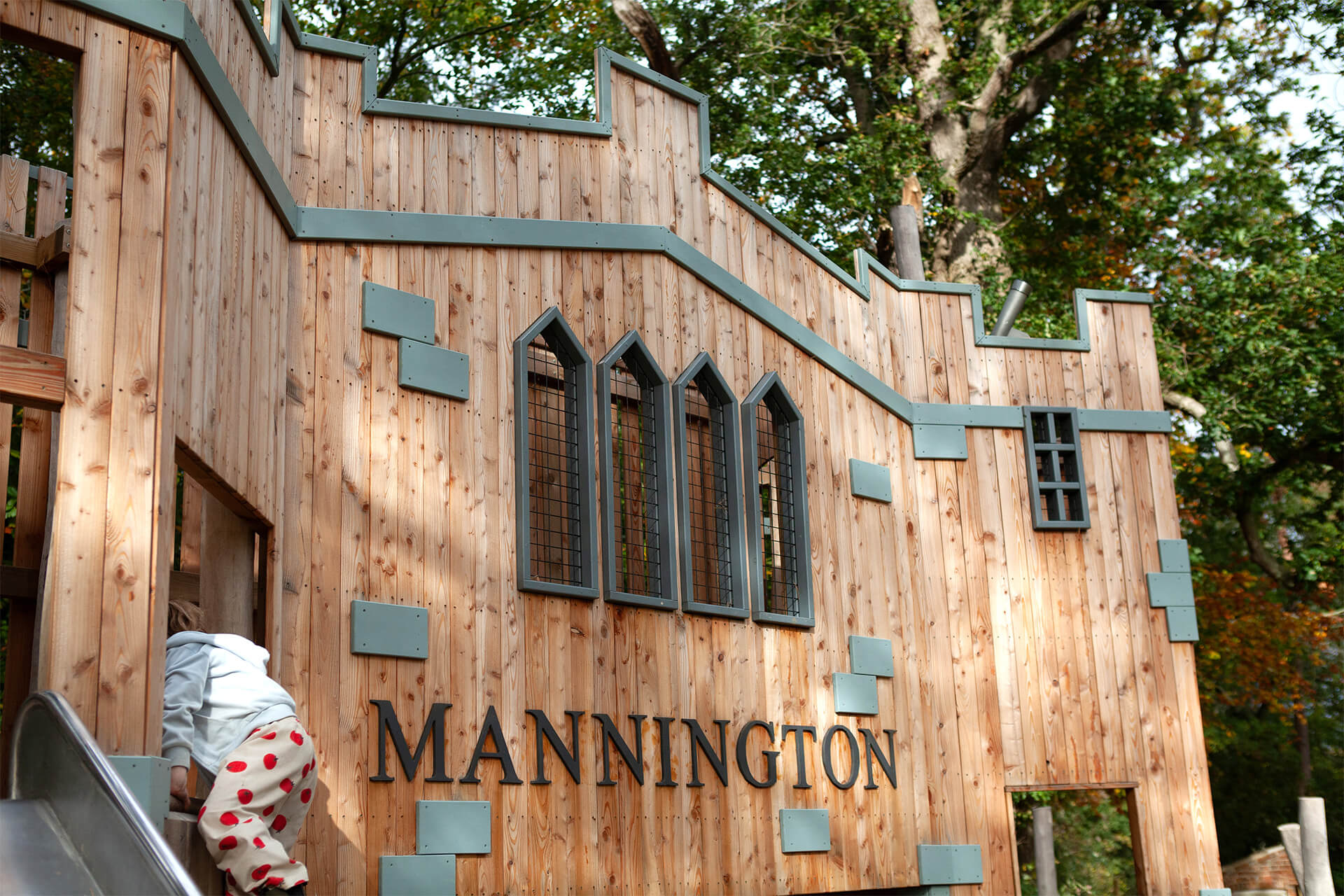
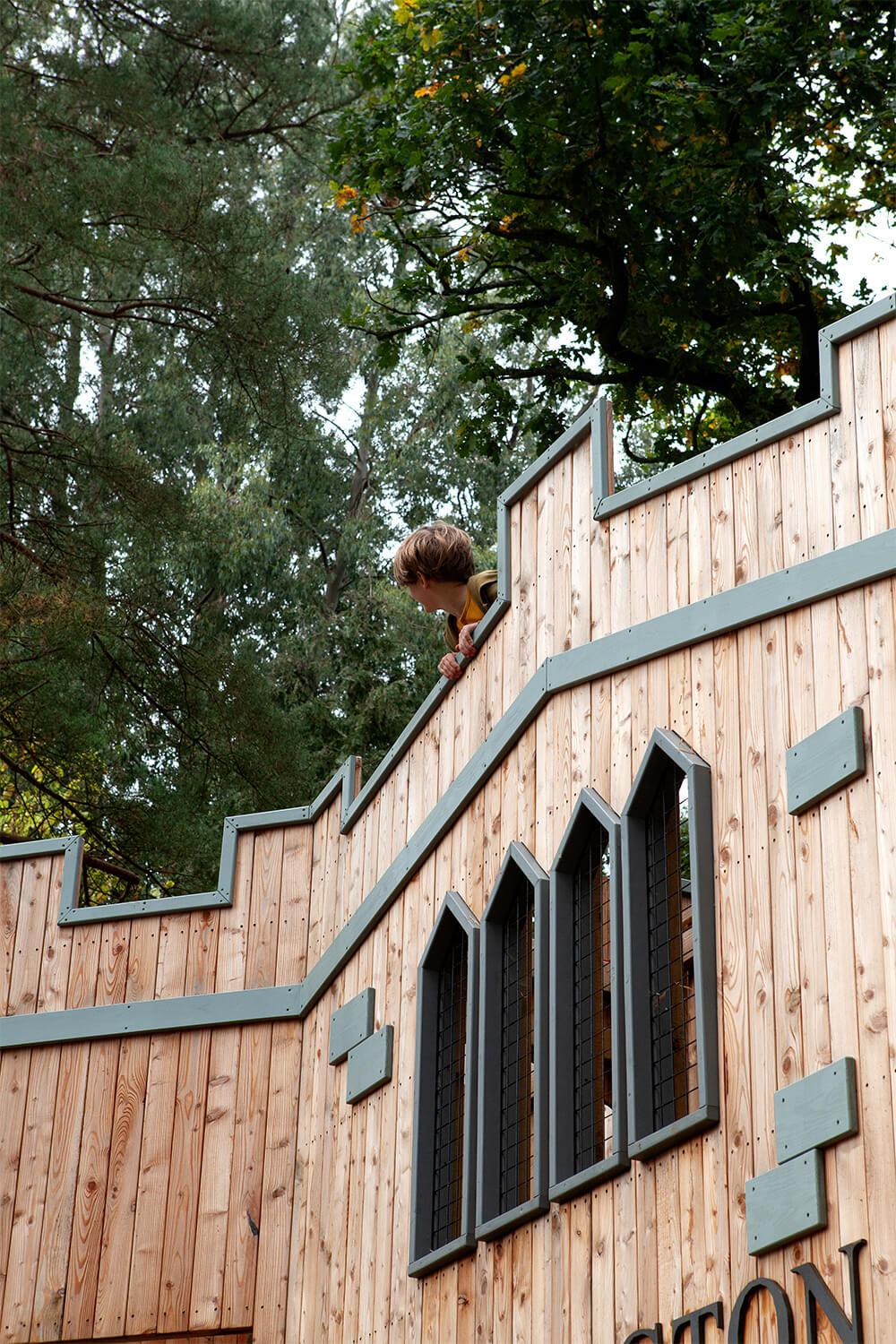
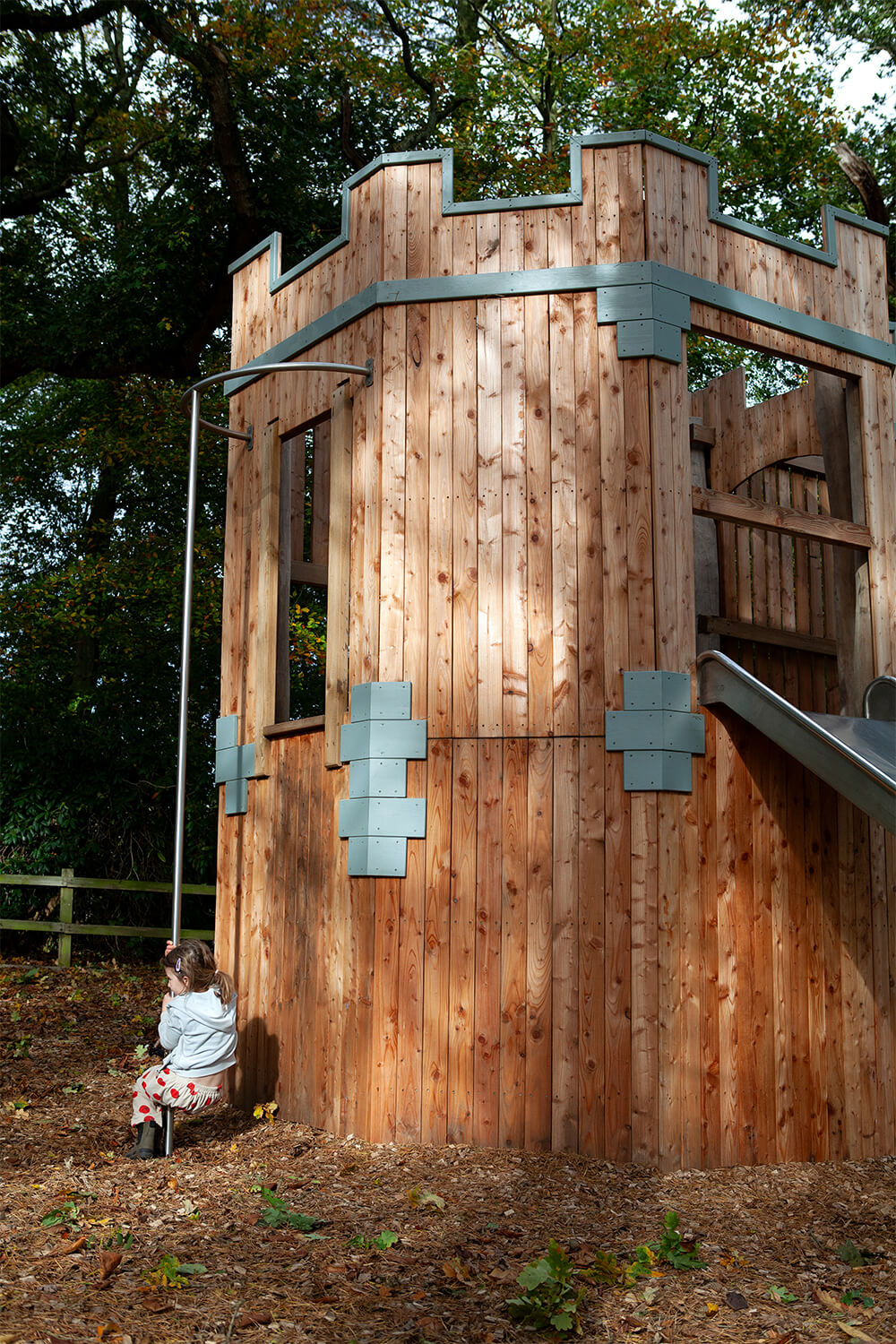
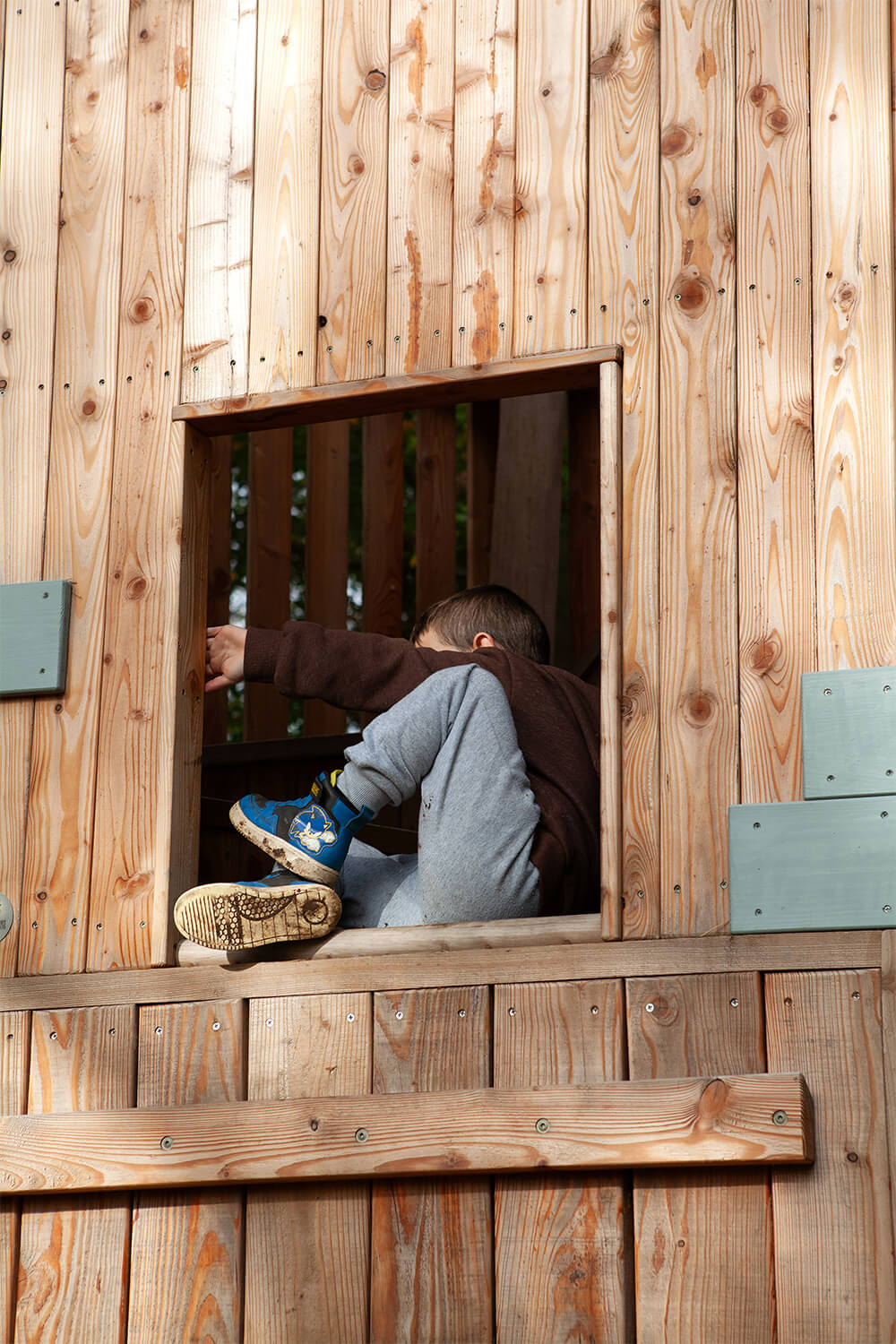
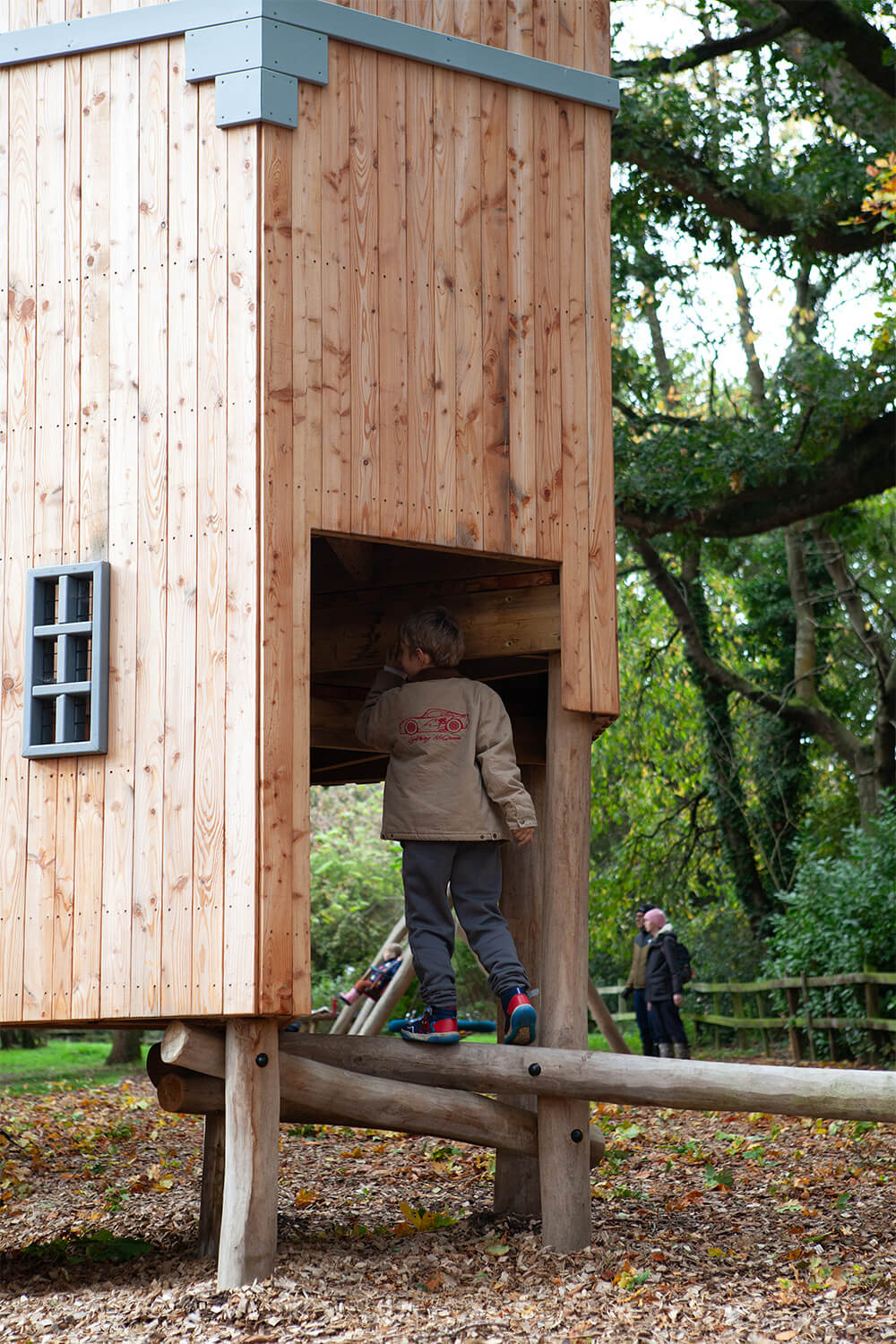
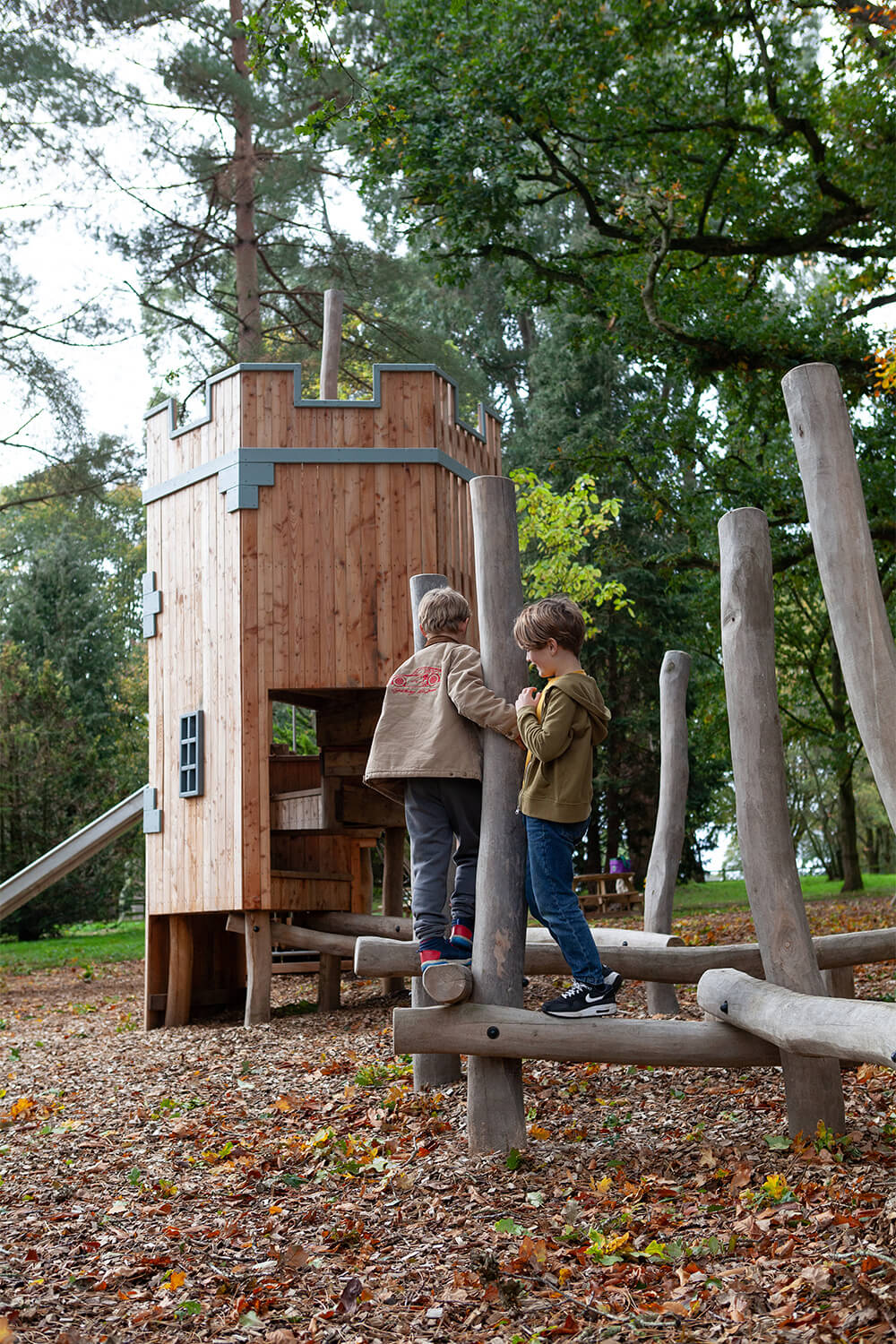
The structure was inspired by the distinct architecture of the house. Crenellated towers, pointed lookout windows and painted timber block work echo the stone and flint of the hall, while the Mannington name stretches across the header between the two towers. The structure is also the introduction to the wider trail, and the place where families arrive and decide which way to wander next.
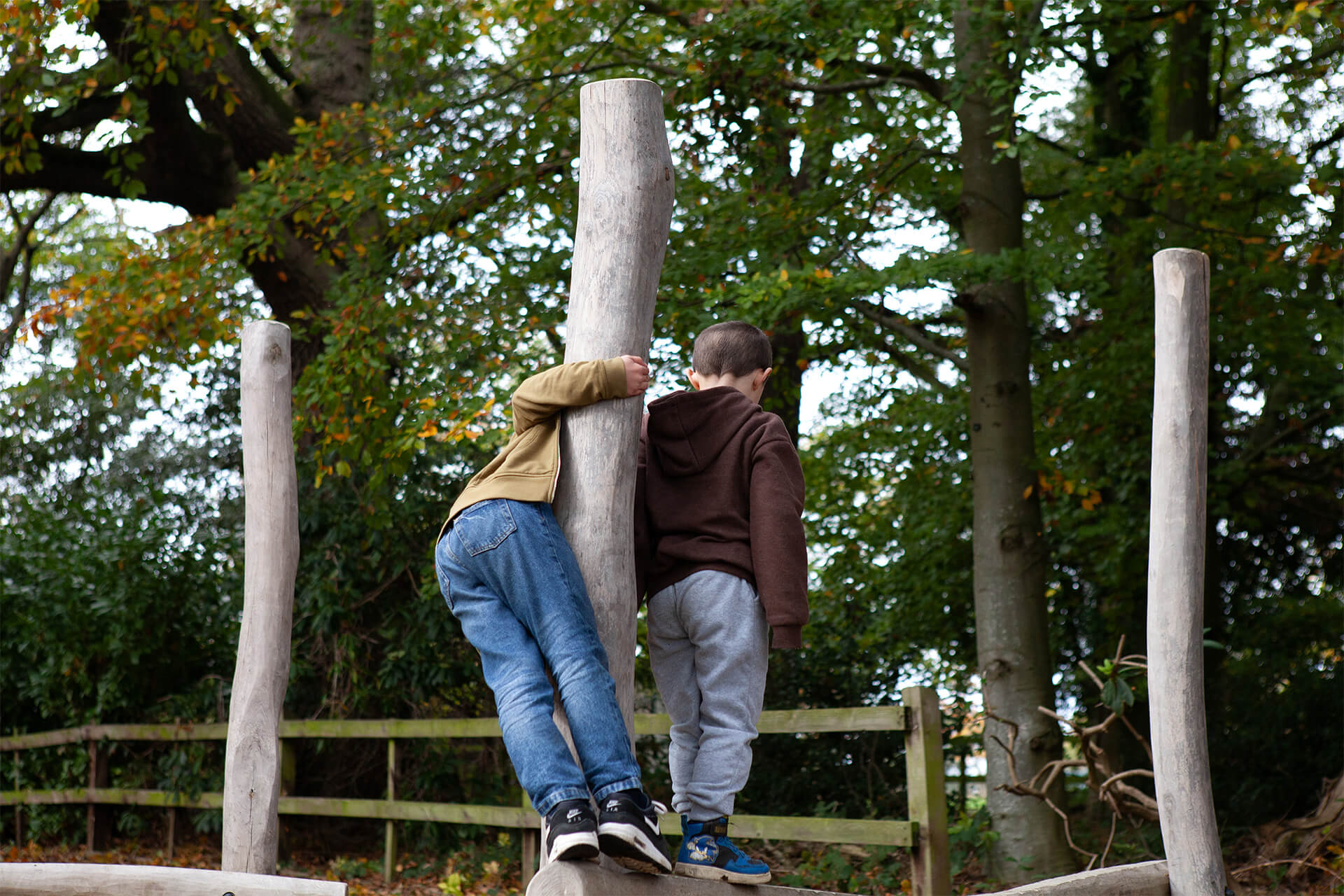
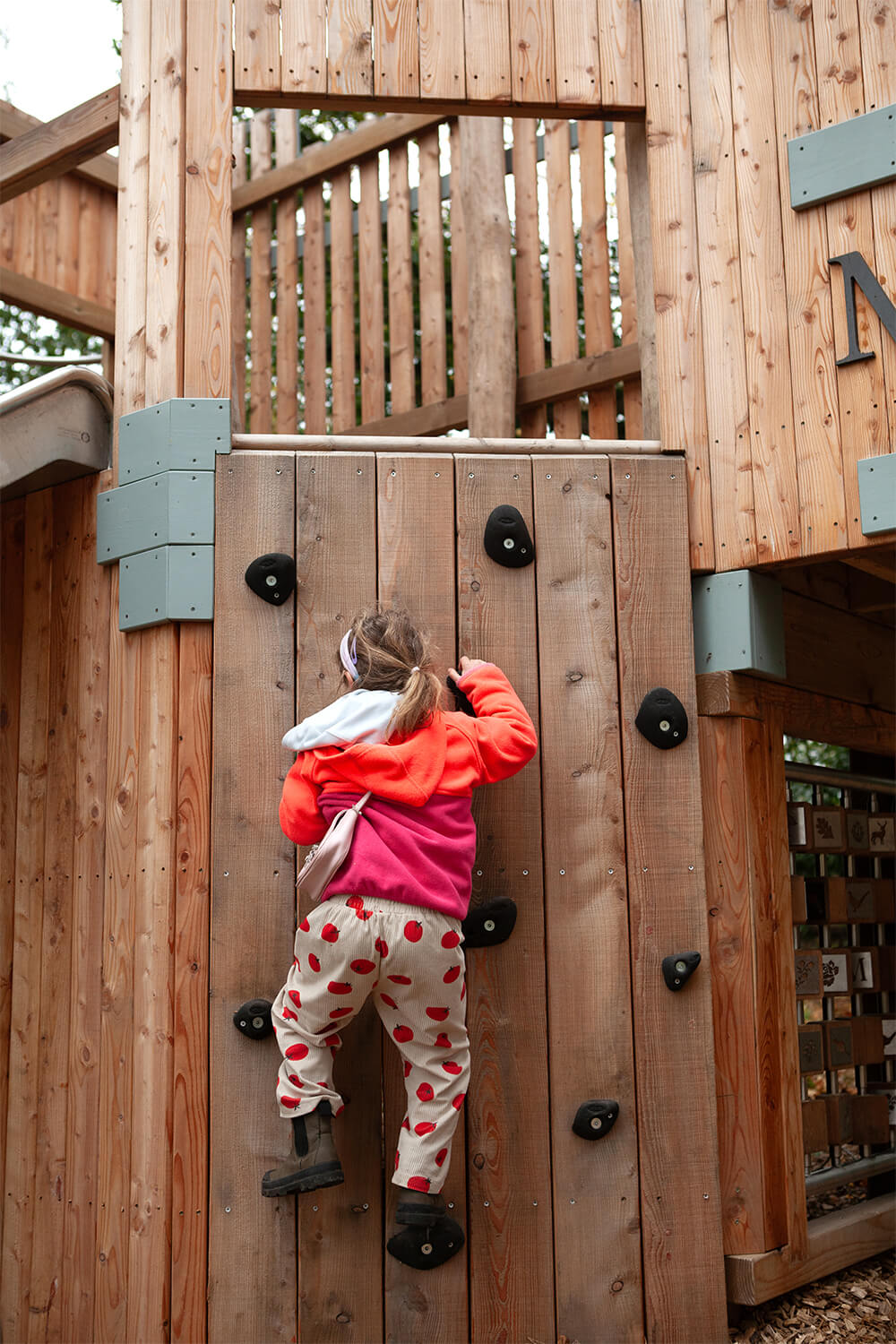
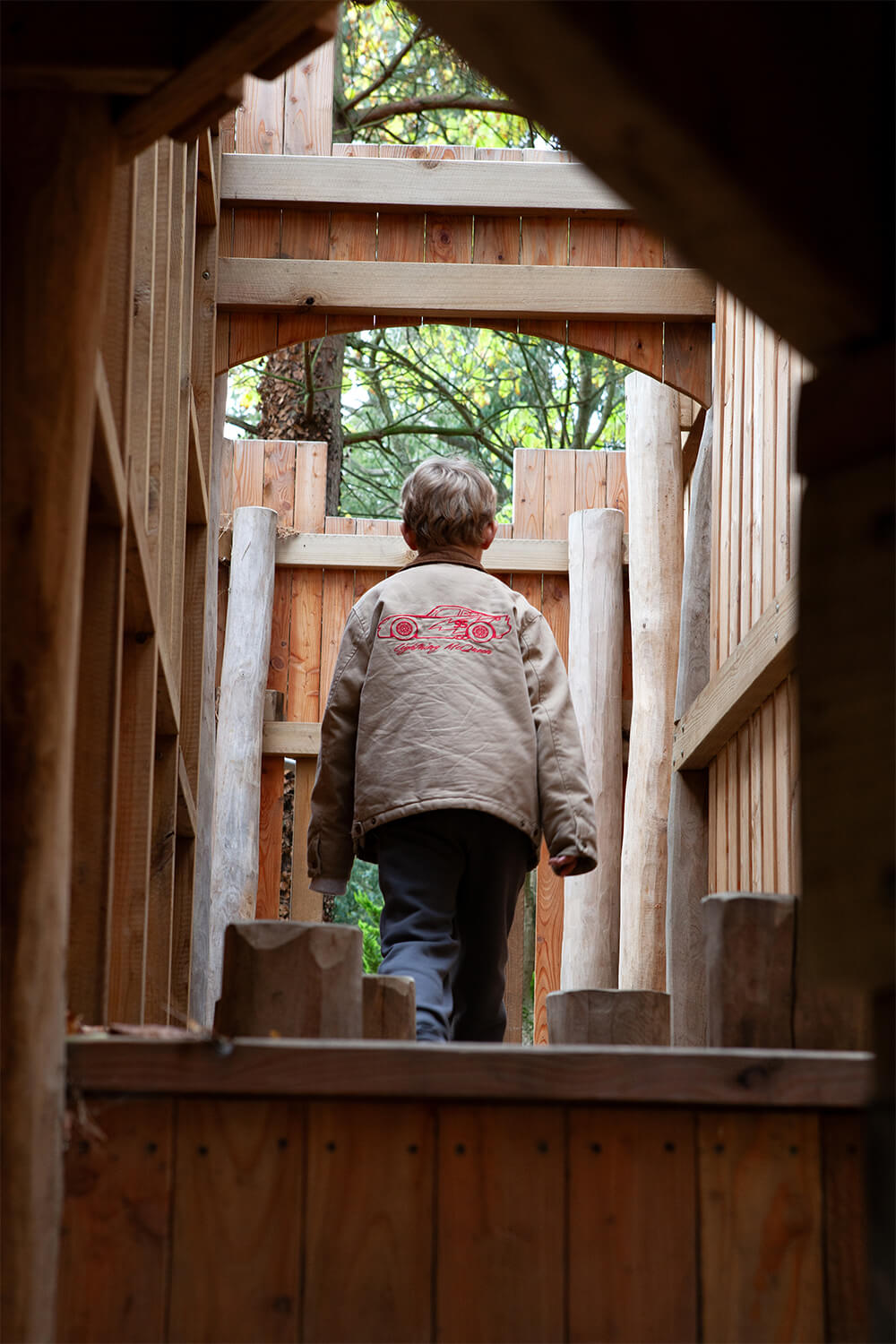
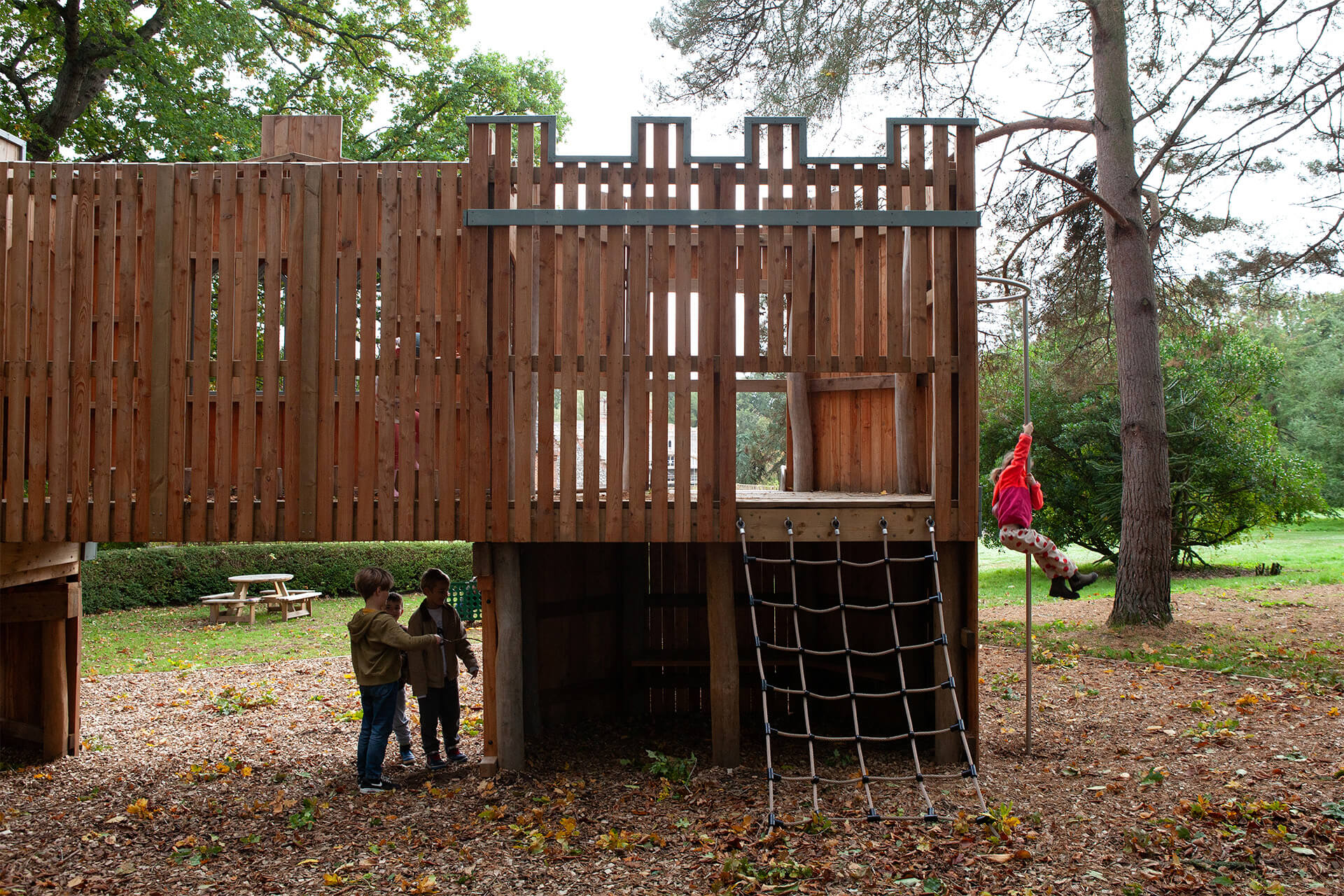
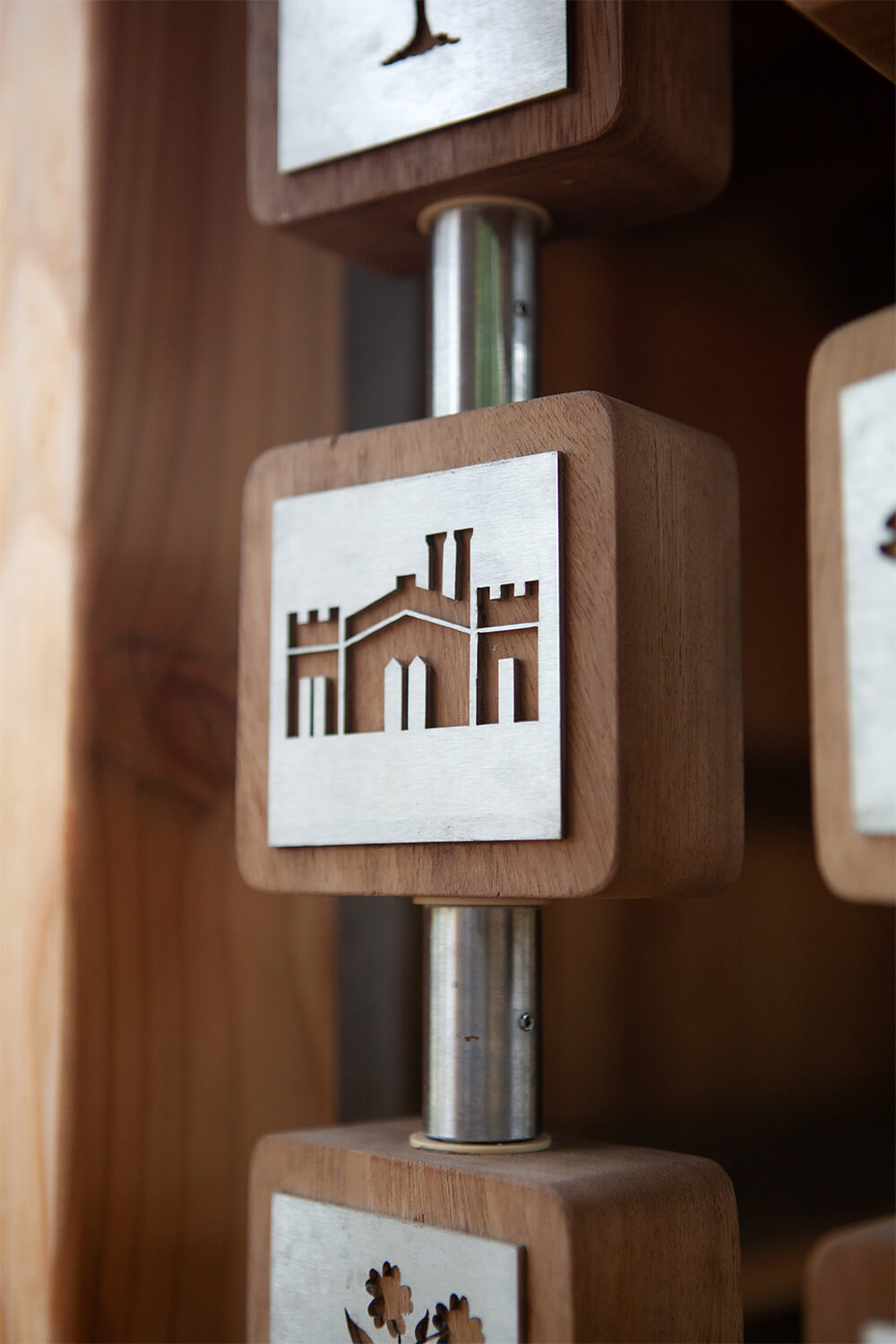
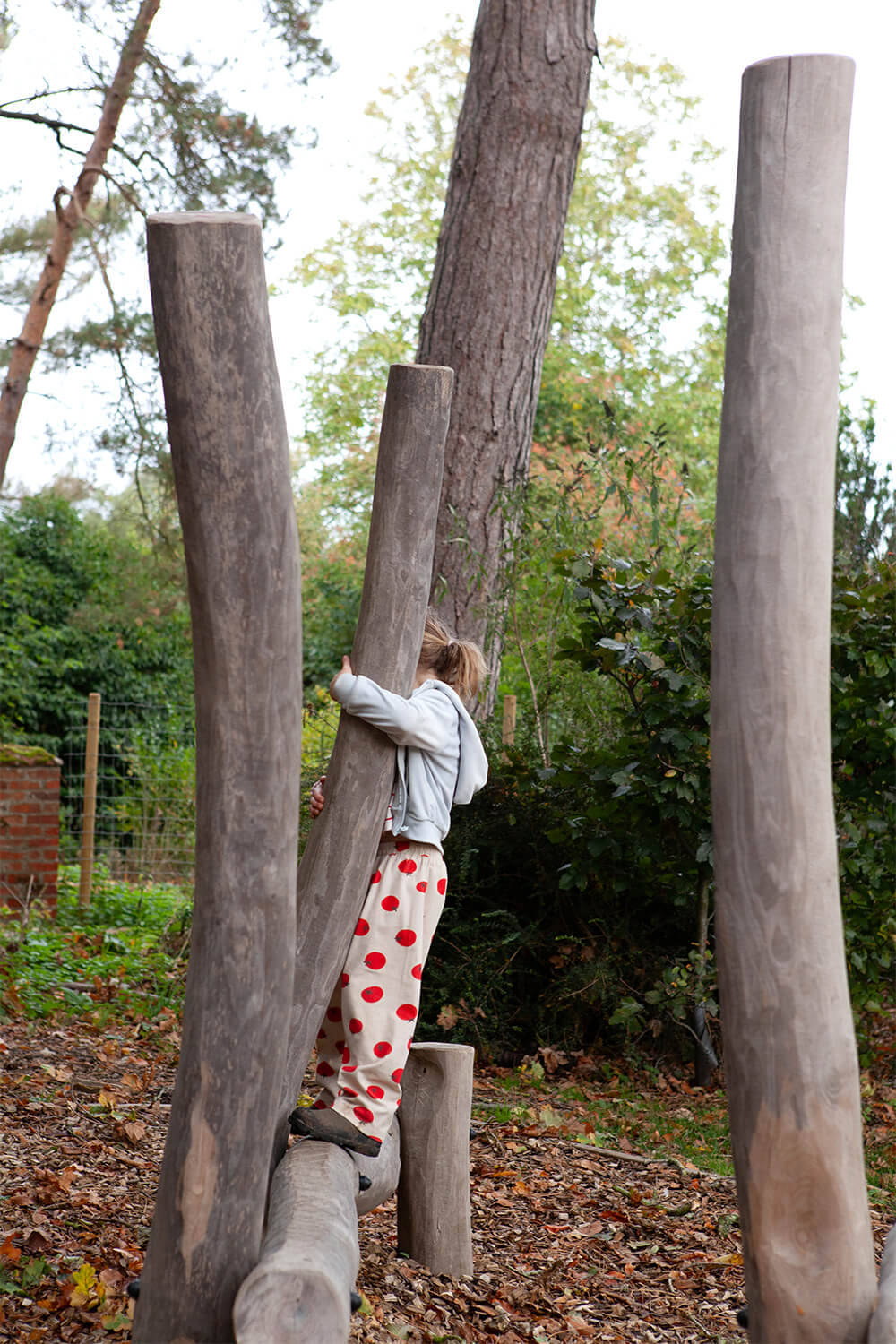
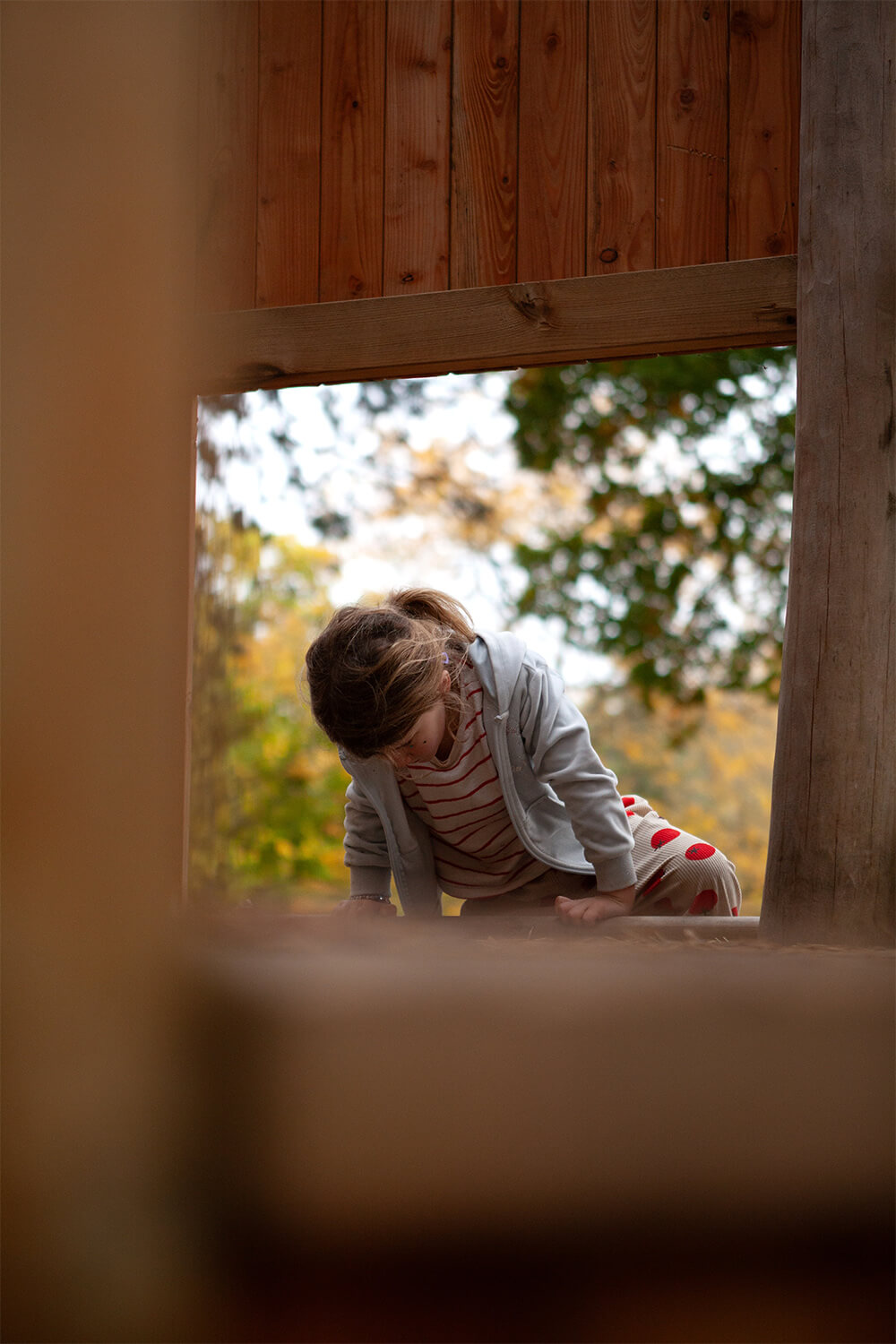
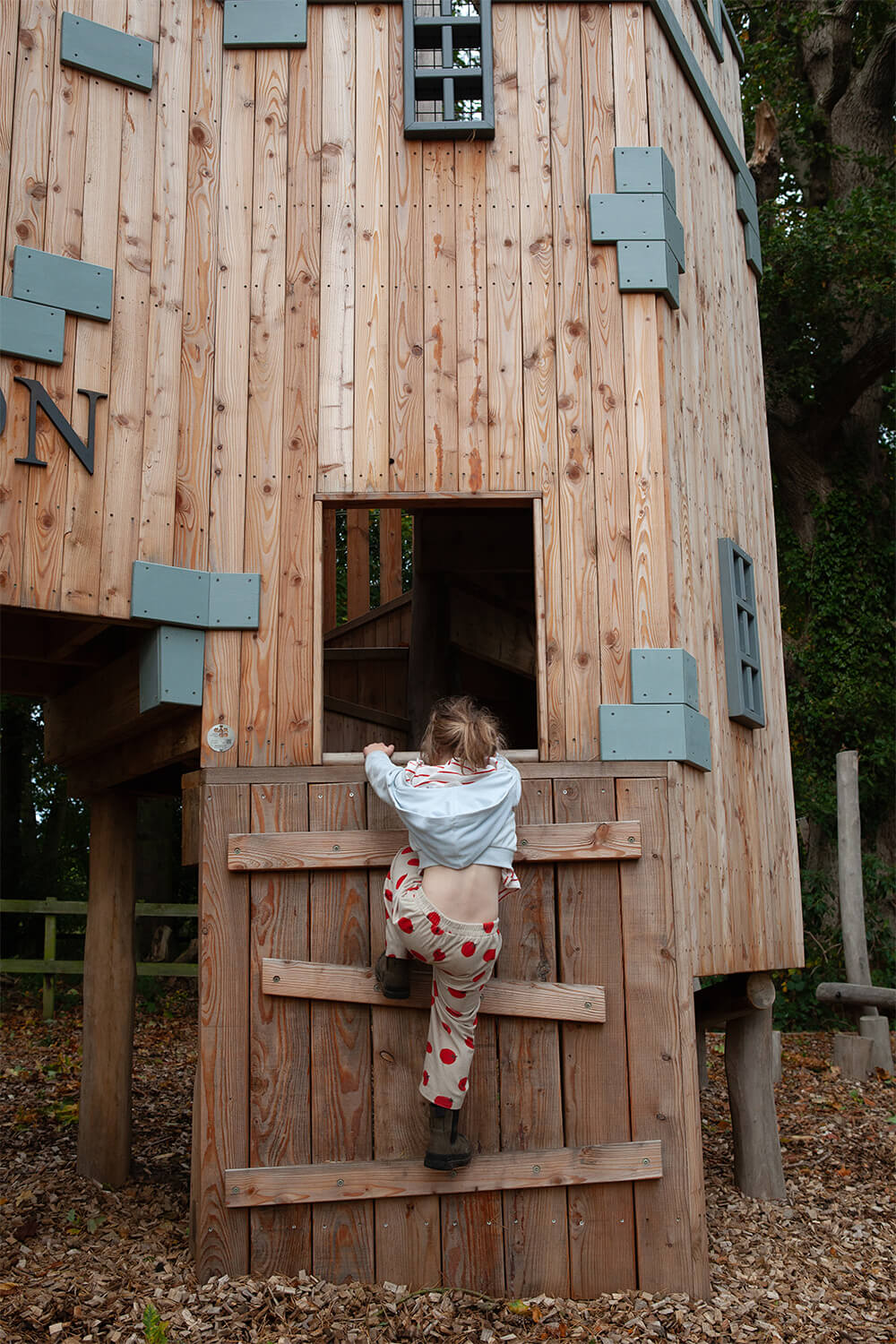
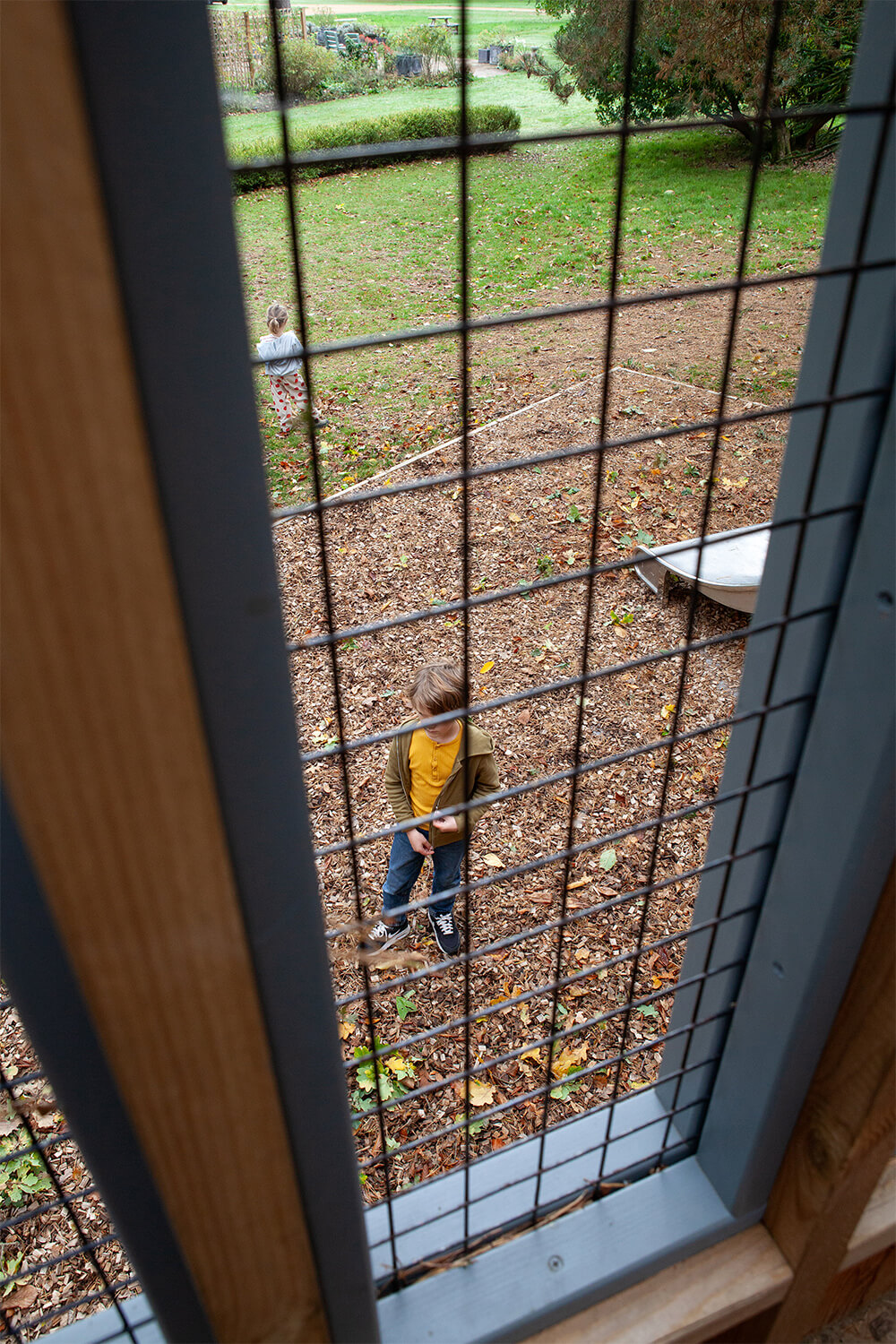
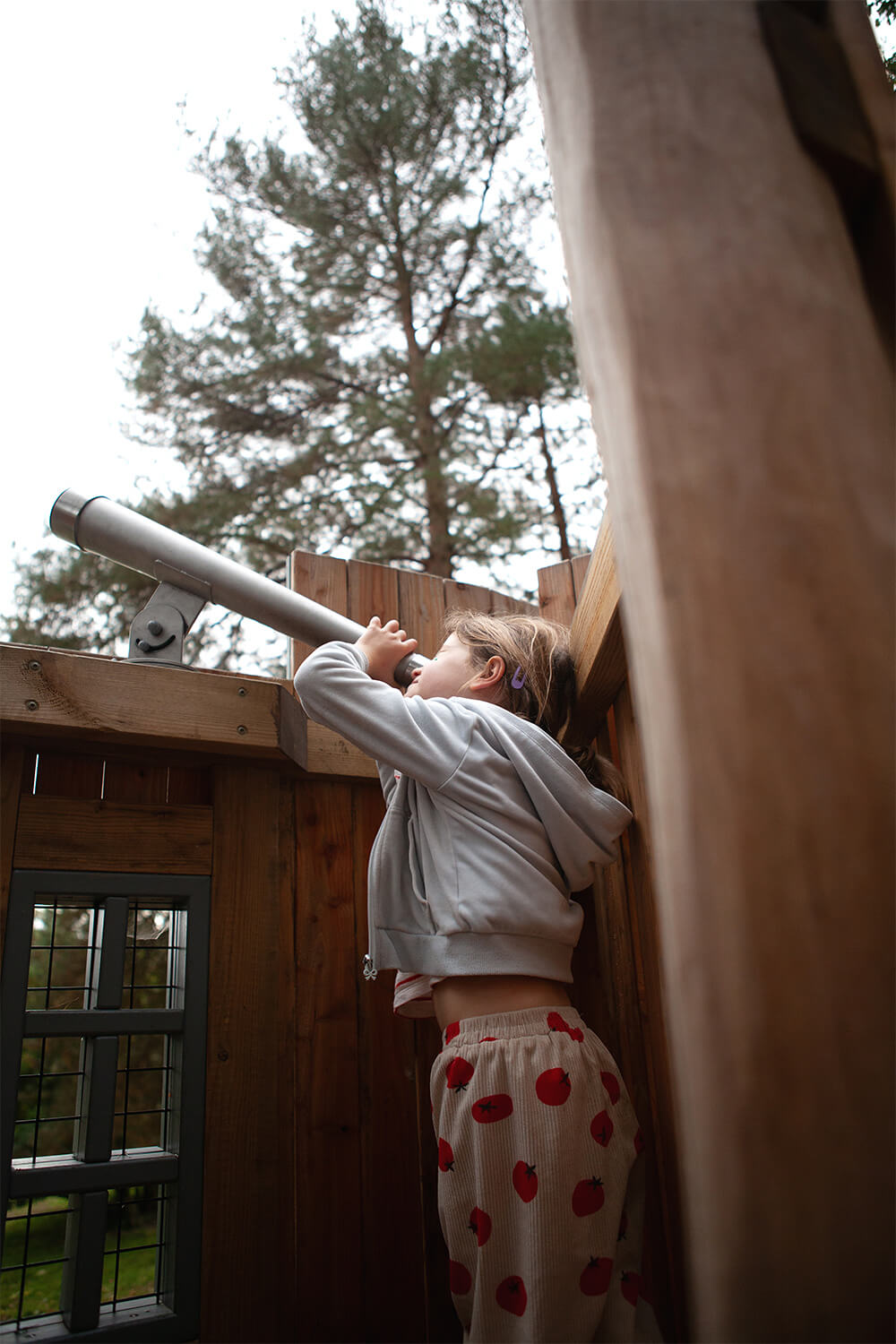
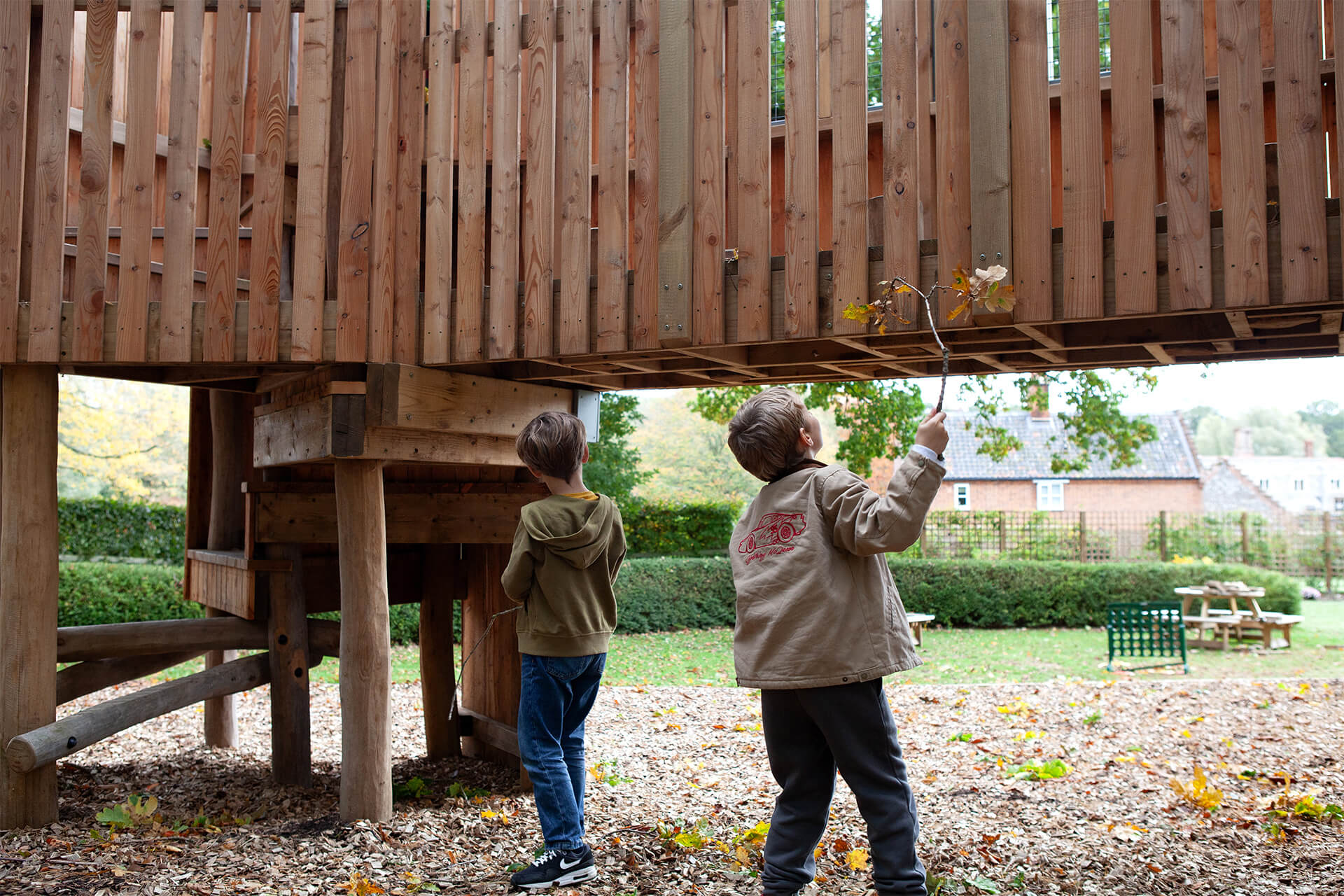
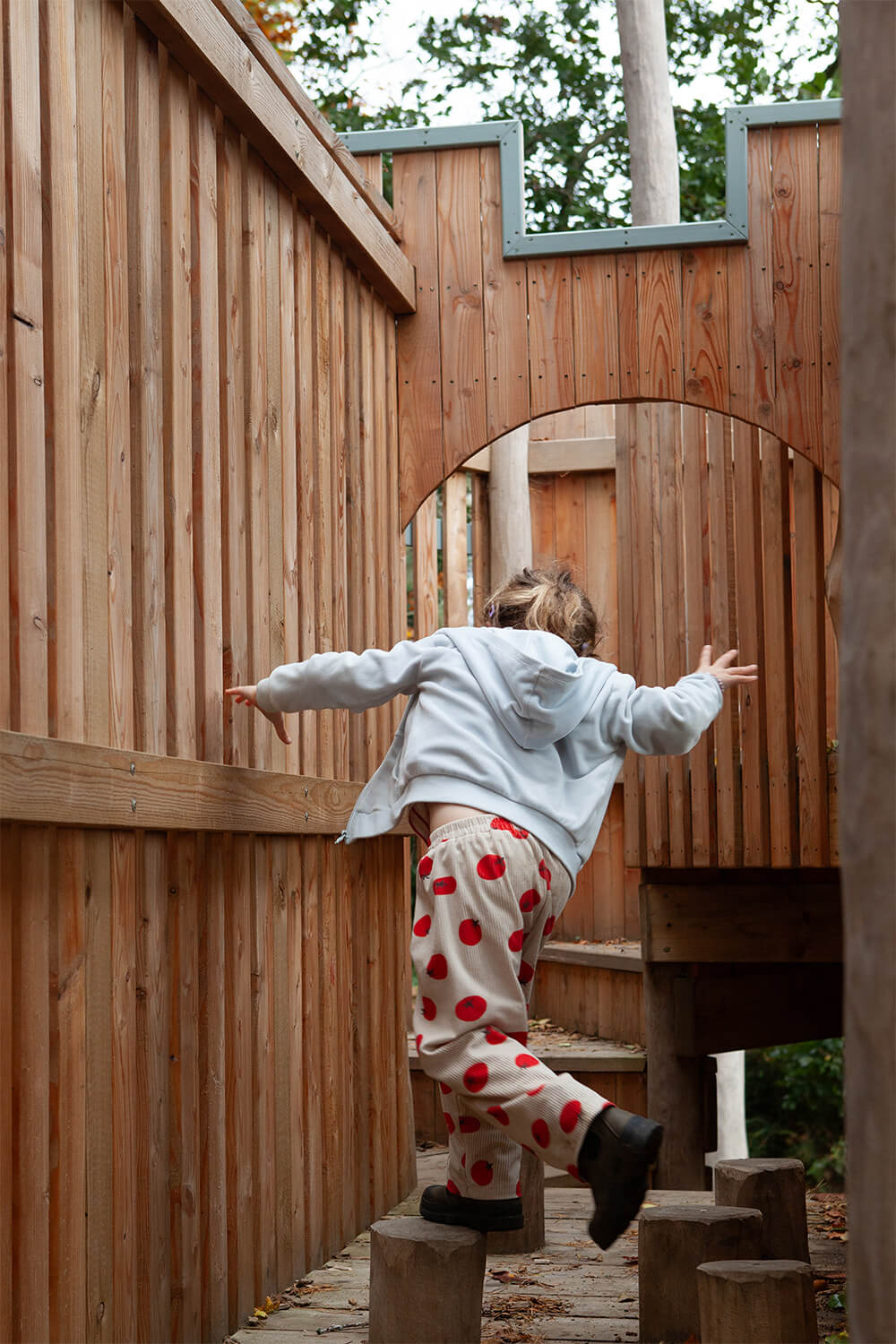
A double wide slide is made for racing, while a firepole, a climbing wall and a climbing net at the rear offer other ways down or up. Within the towers, an internal spiral staircase, a wonky ladder lead to a lookout deck with a telescope, and a stepping stone bridge links the two towers. A Mannington pairs game is built into the structure for quieter moments, and a ground play trail of robinia logs and stumps runs along one side. The existing swings were re-positioned to sit alongside the new structure, so the whole space reads as one place.