Dorset
Moors Valley Forestry England


Moors Valley first opened in 1988 as a joint venture between Dorset Council and Forestry England, covering a unique habitat mosaic of woodland, lakes and extensive recreational parkland. With huge popularity the park installed their iconic play trail in the early 90’s and has been welcoming roughly 800,000 visitors annually.
Across three phases, we worked closely with Forestry England to weave our thinking into their celebrated play trail. Each structure carefully connects with the surrounding woodland in their own way, tapping into Moors Valley distinct approach and sensitively bringing the story of the forest to life through play.
Woodland Rhapsody
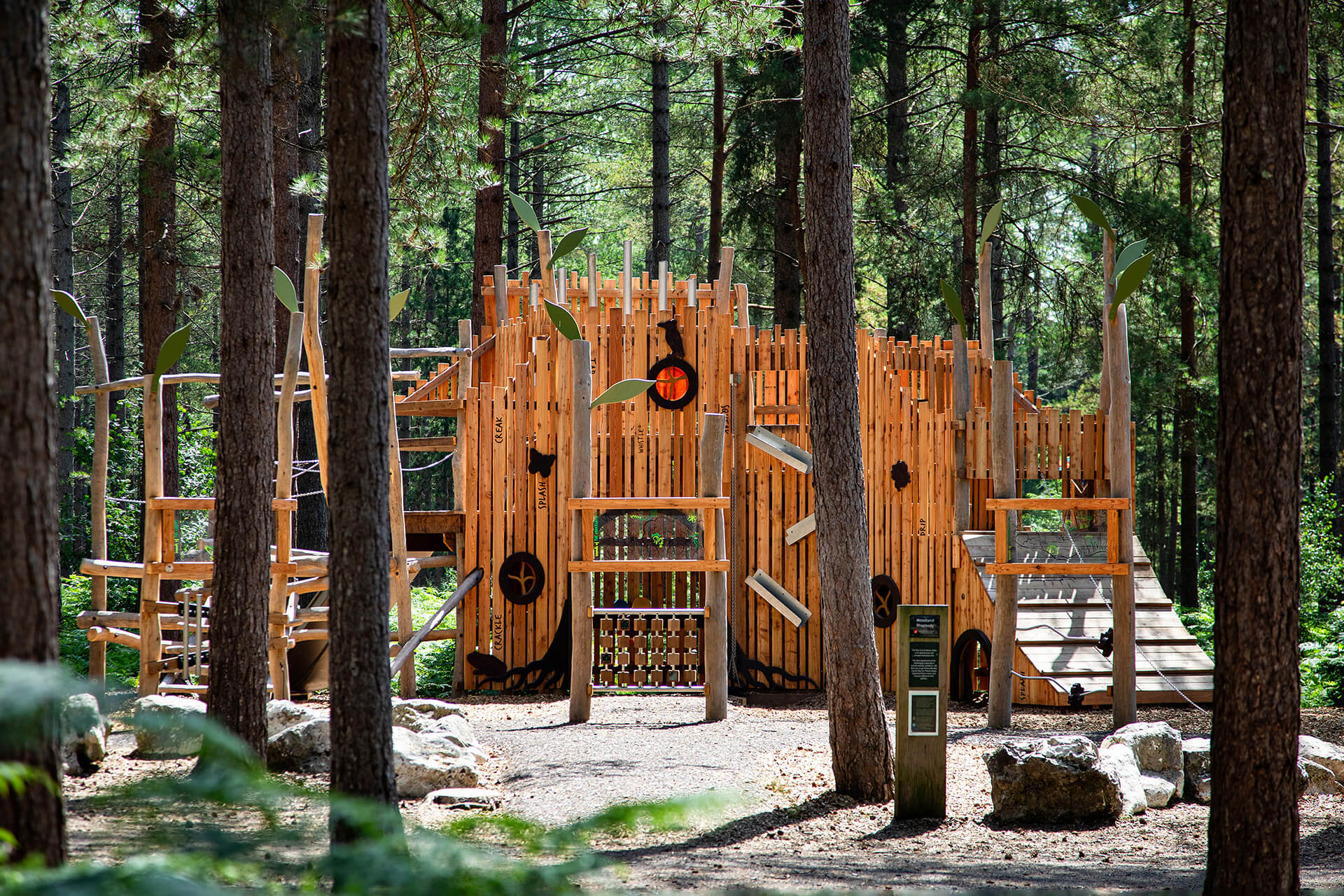
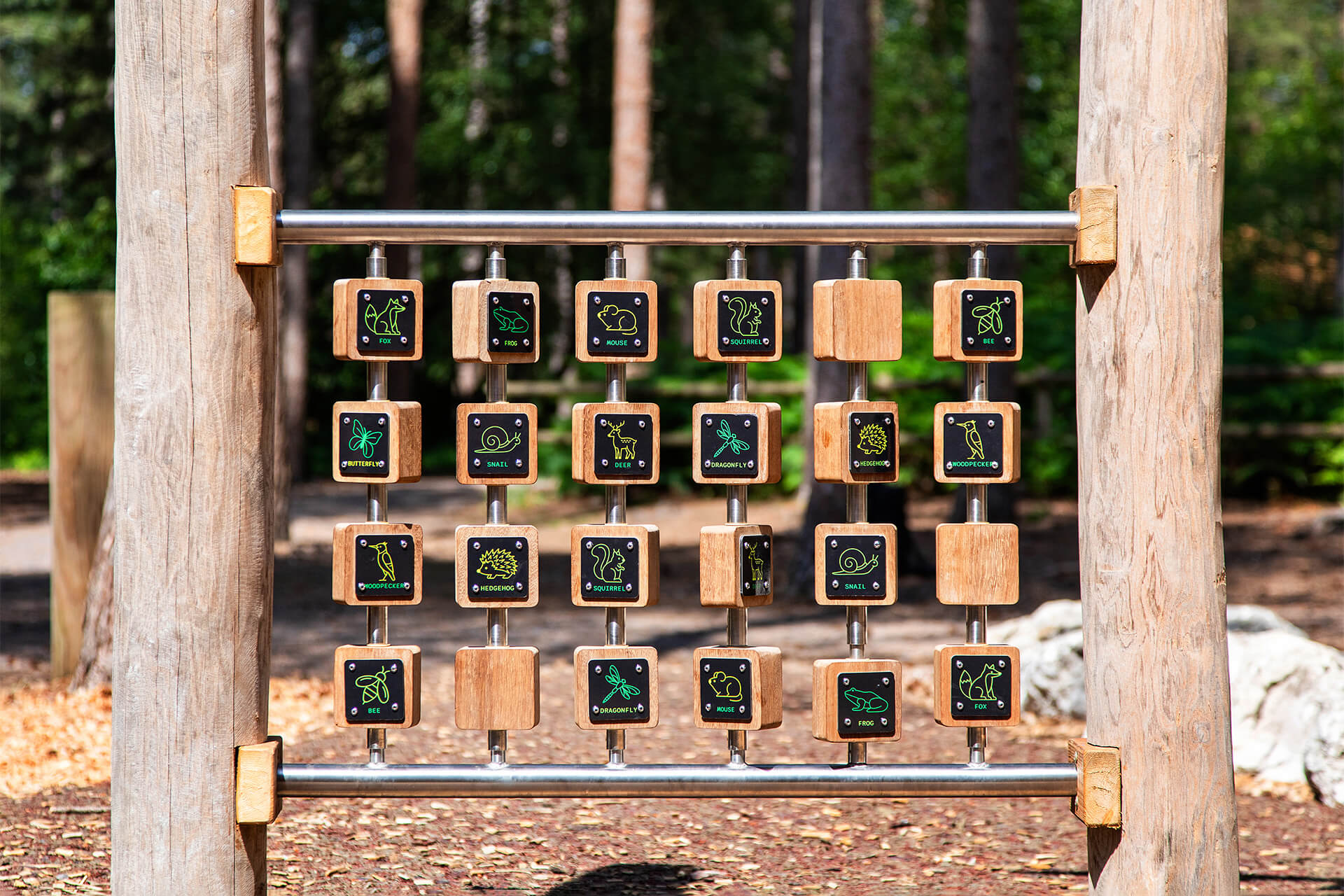
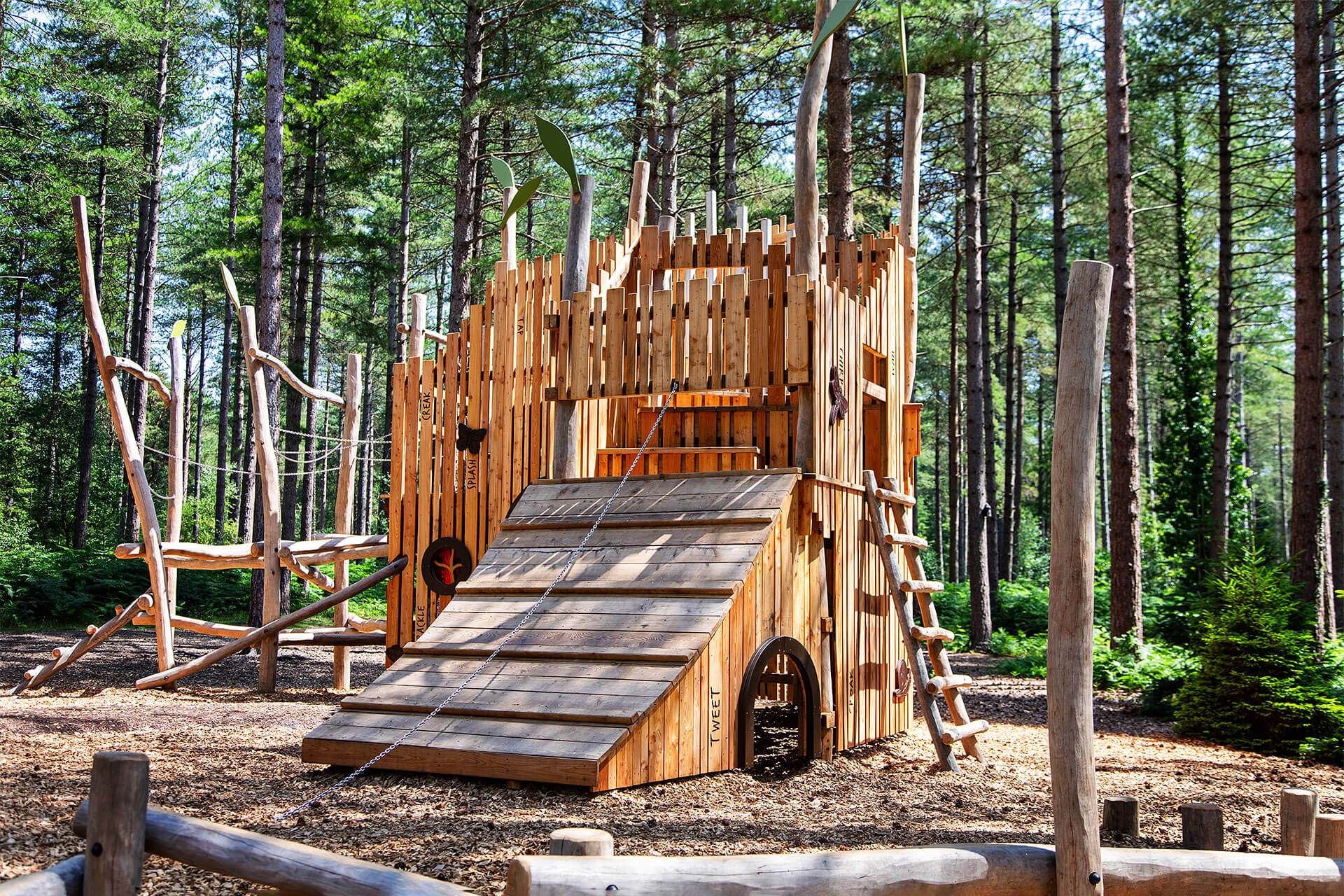
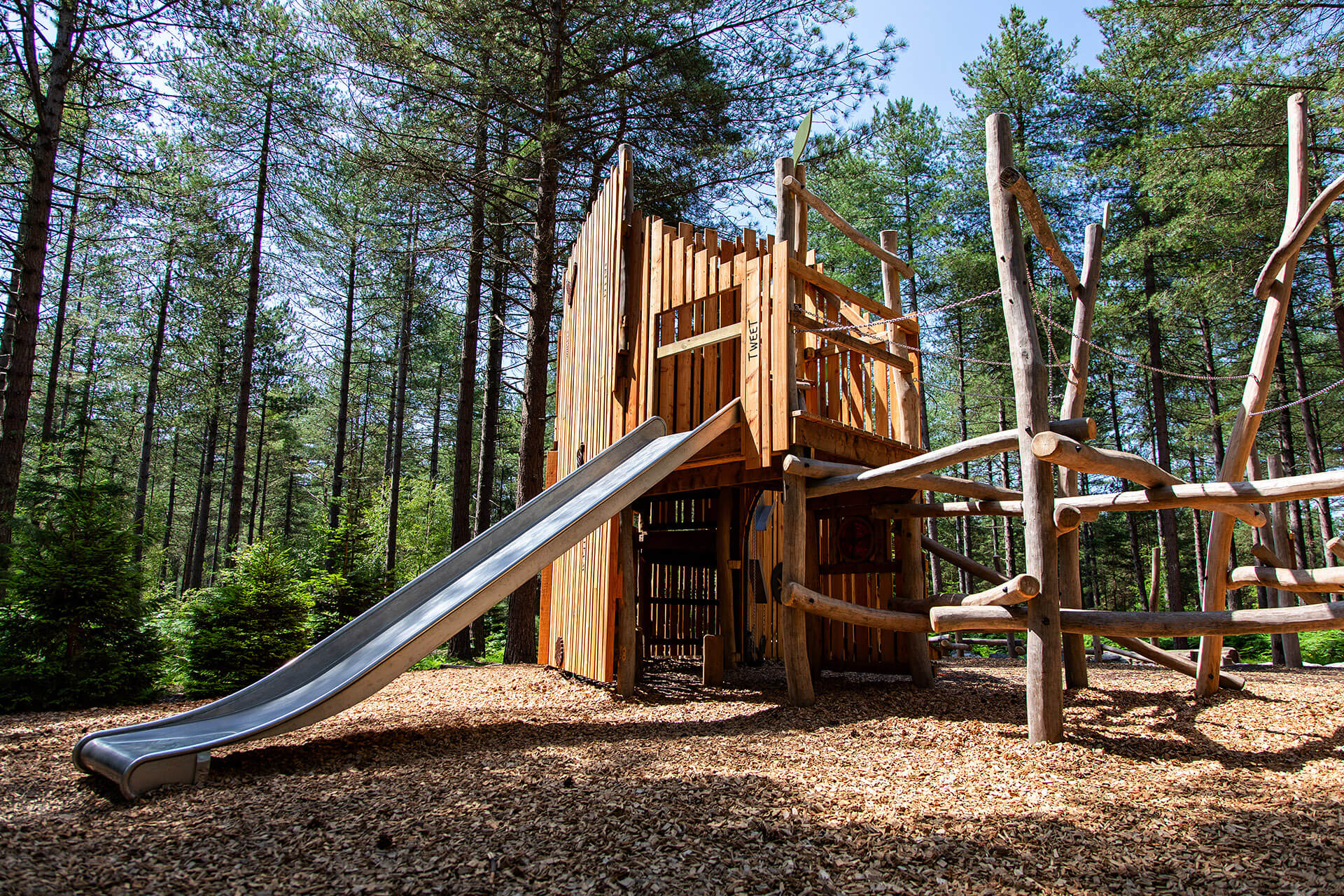
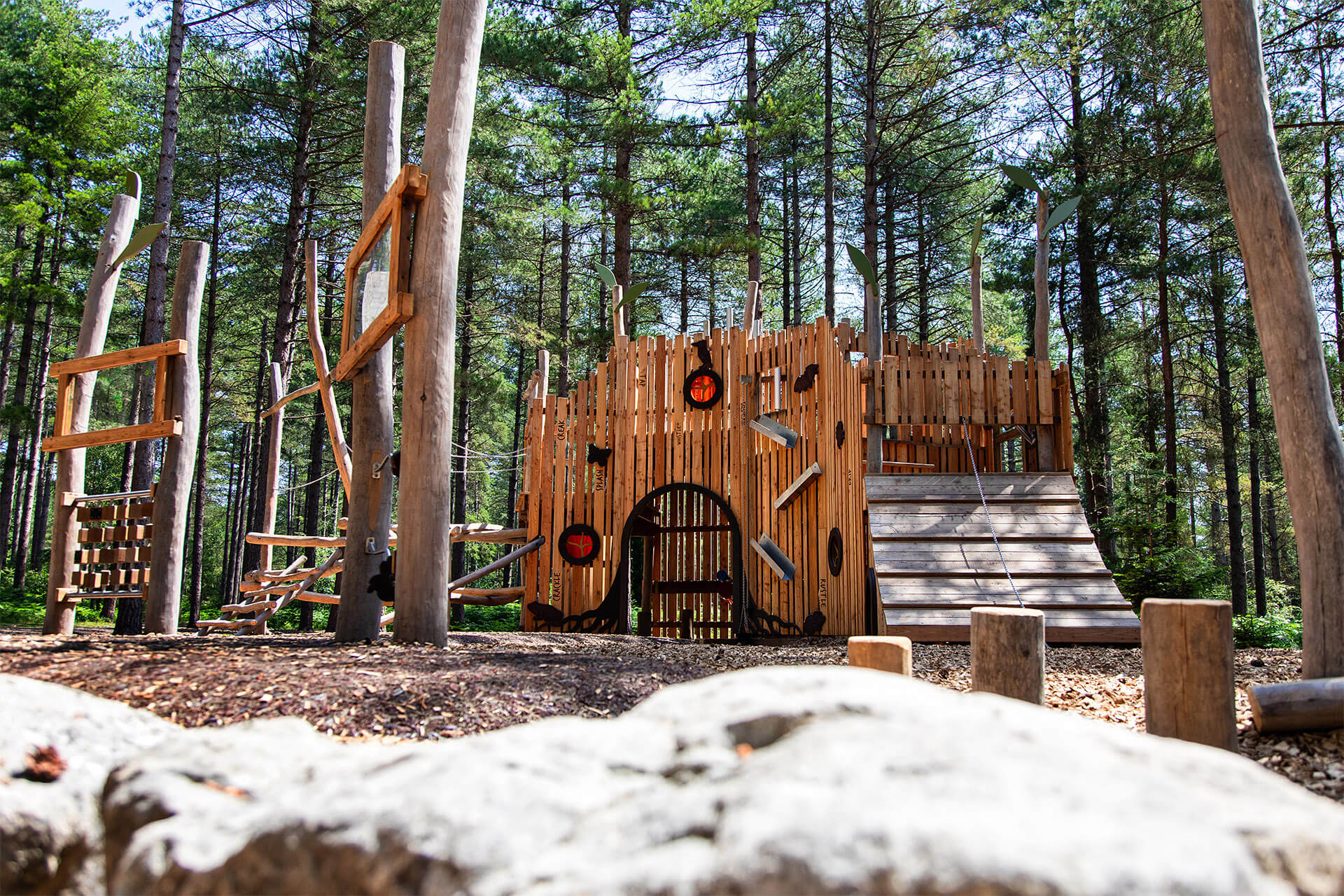
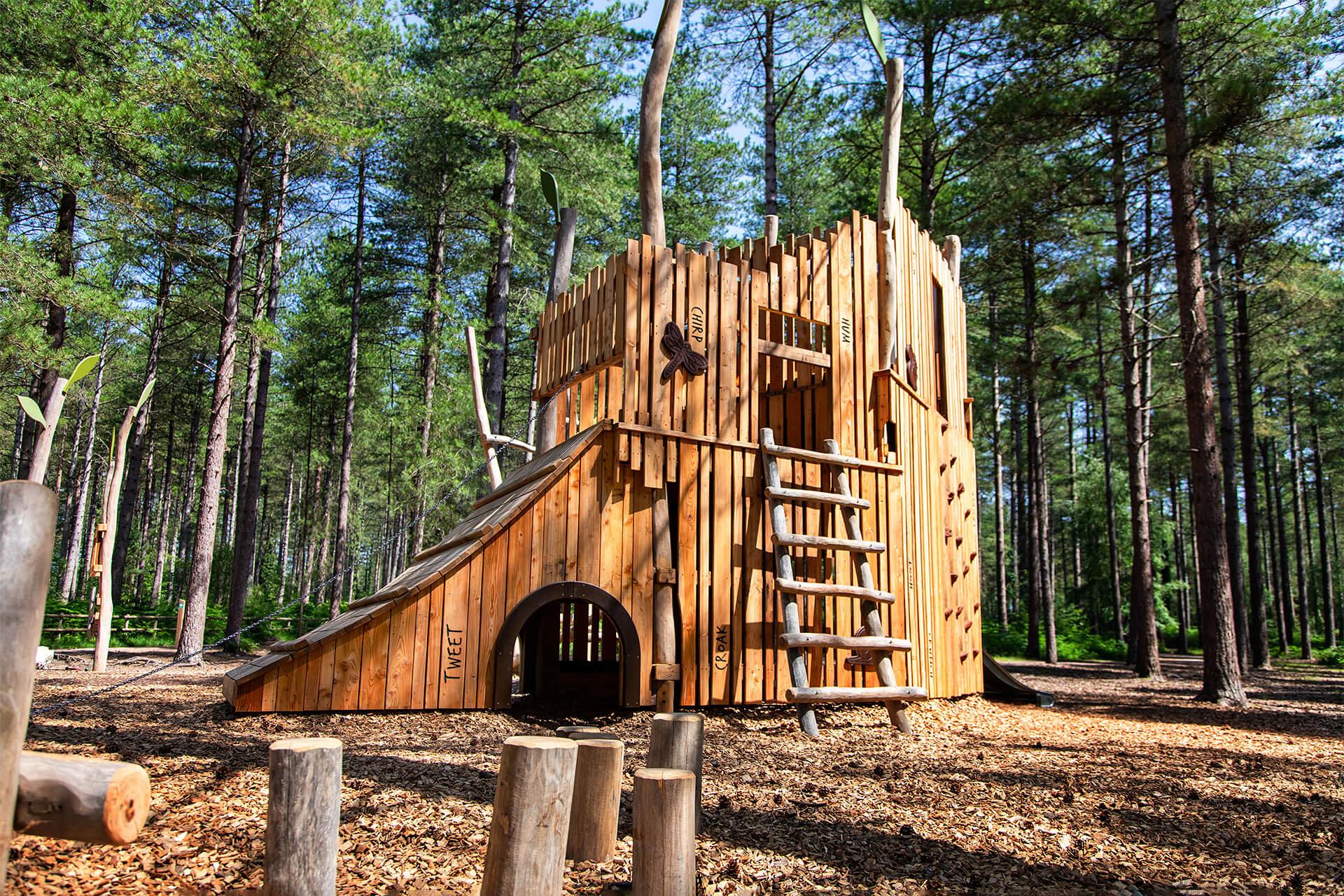
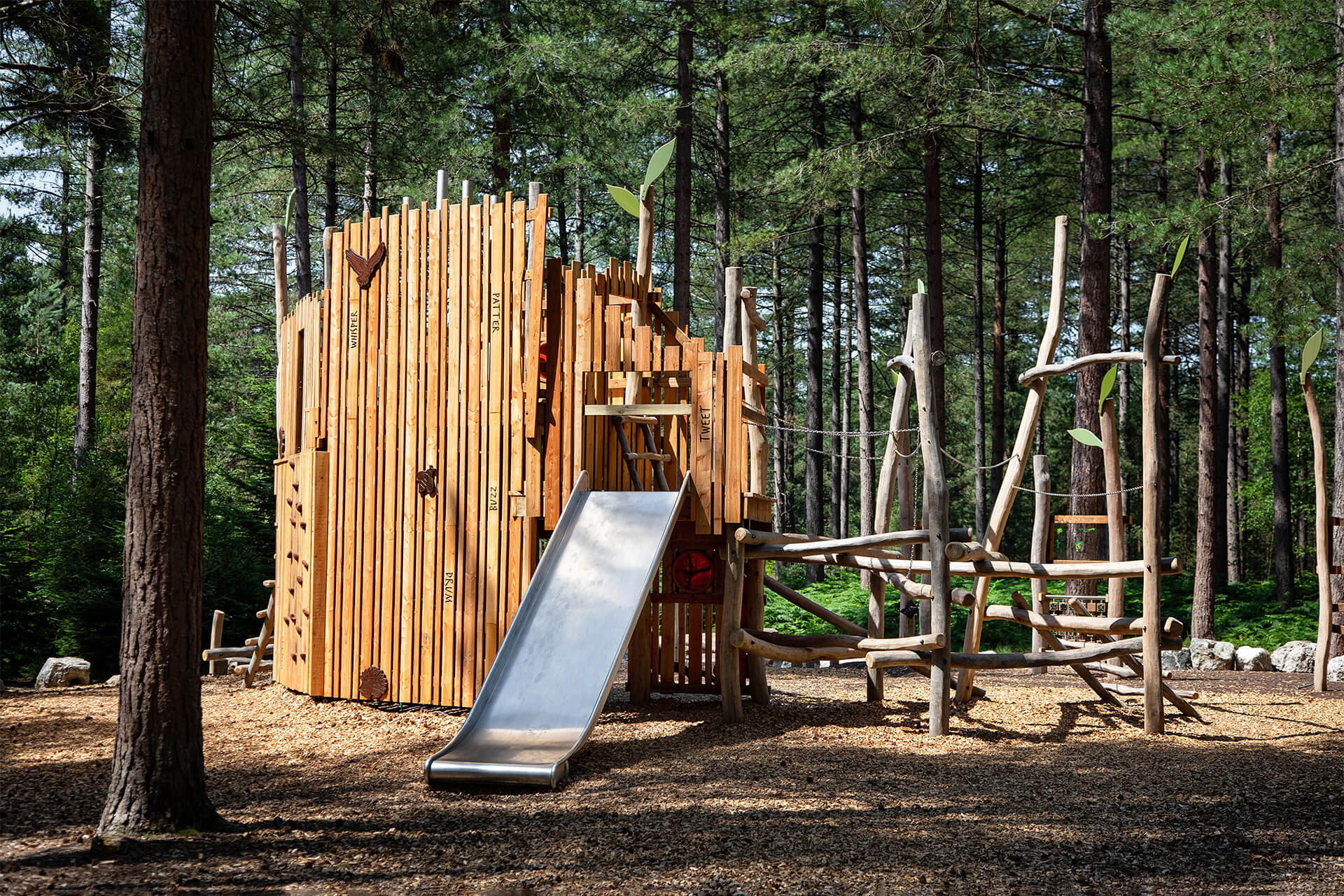
This was a unique and abstract brief to explore the forest soundscapes through play. The surrounding flora and fauna inspired auditory and tactile interactions, allowing children to experience the woodland through senses beyond physical play.
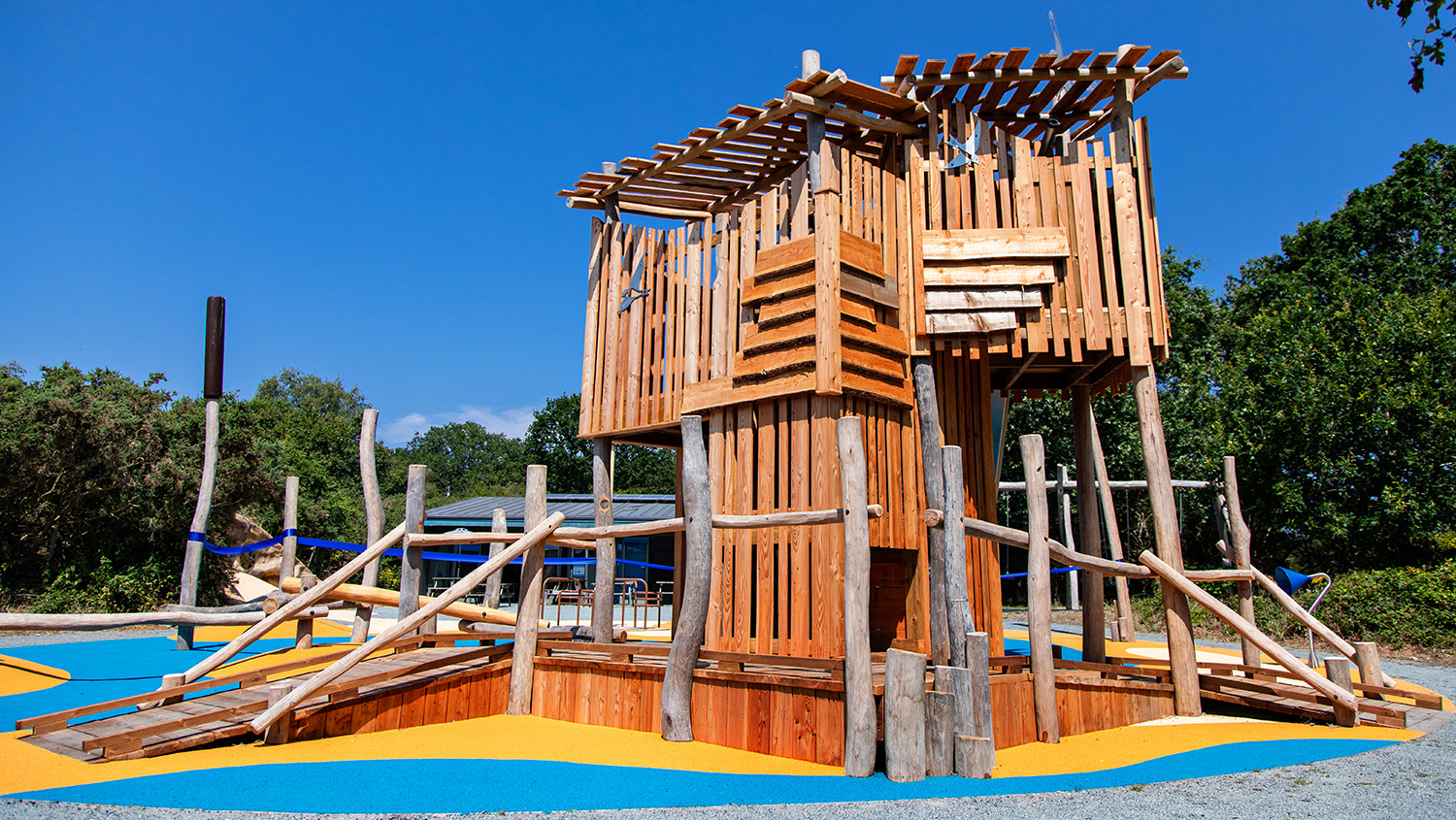
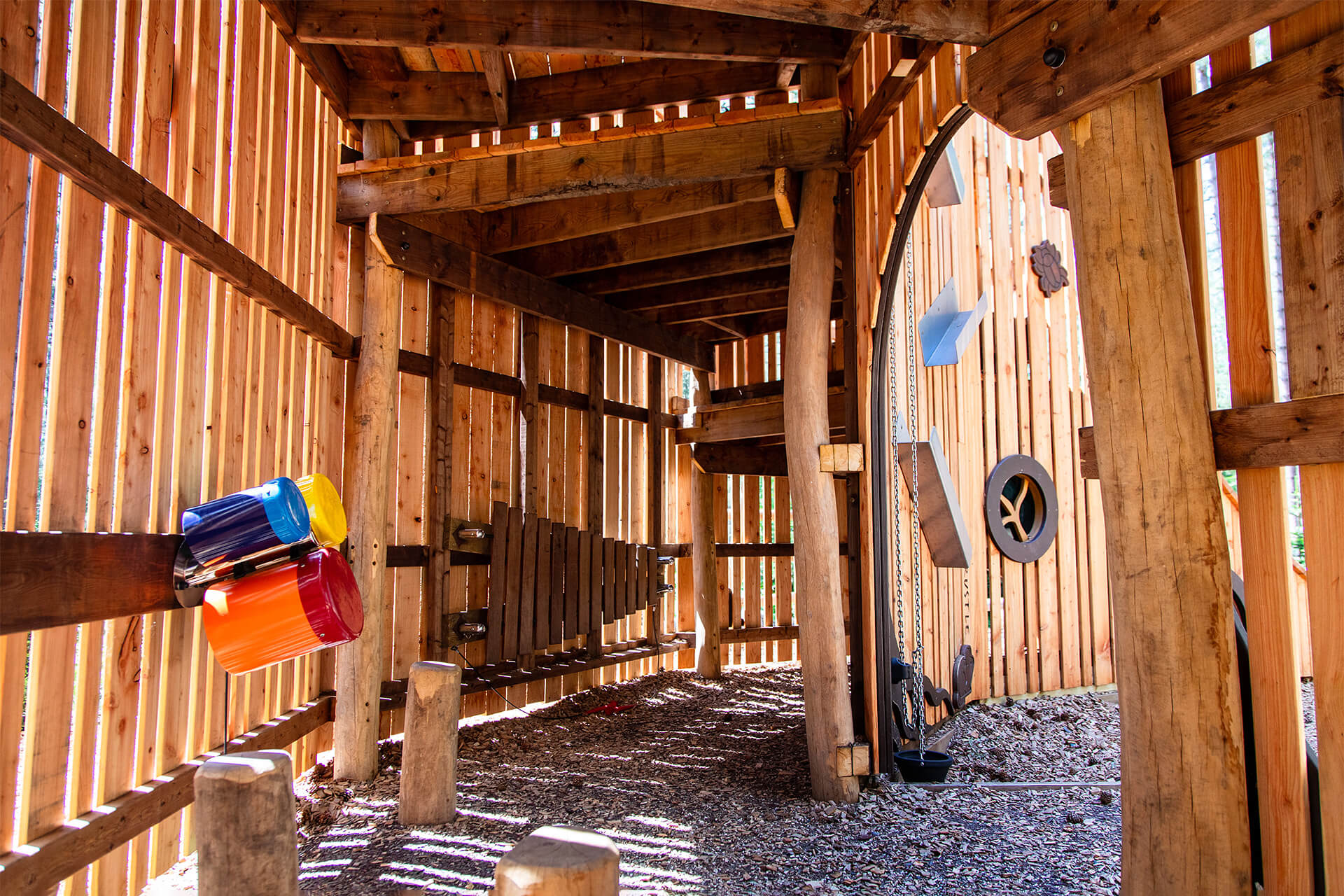
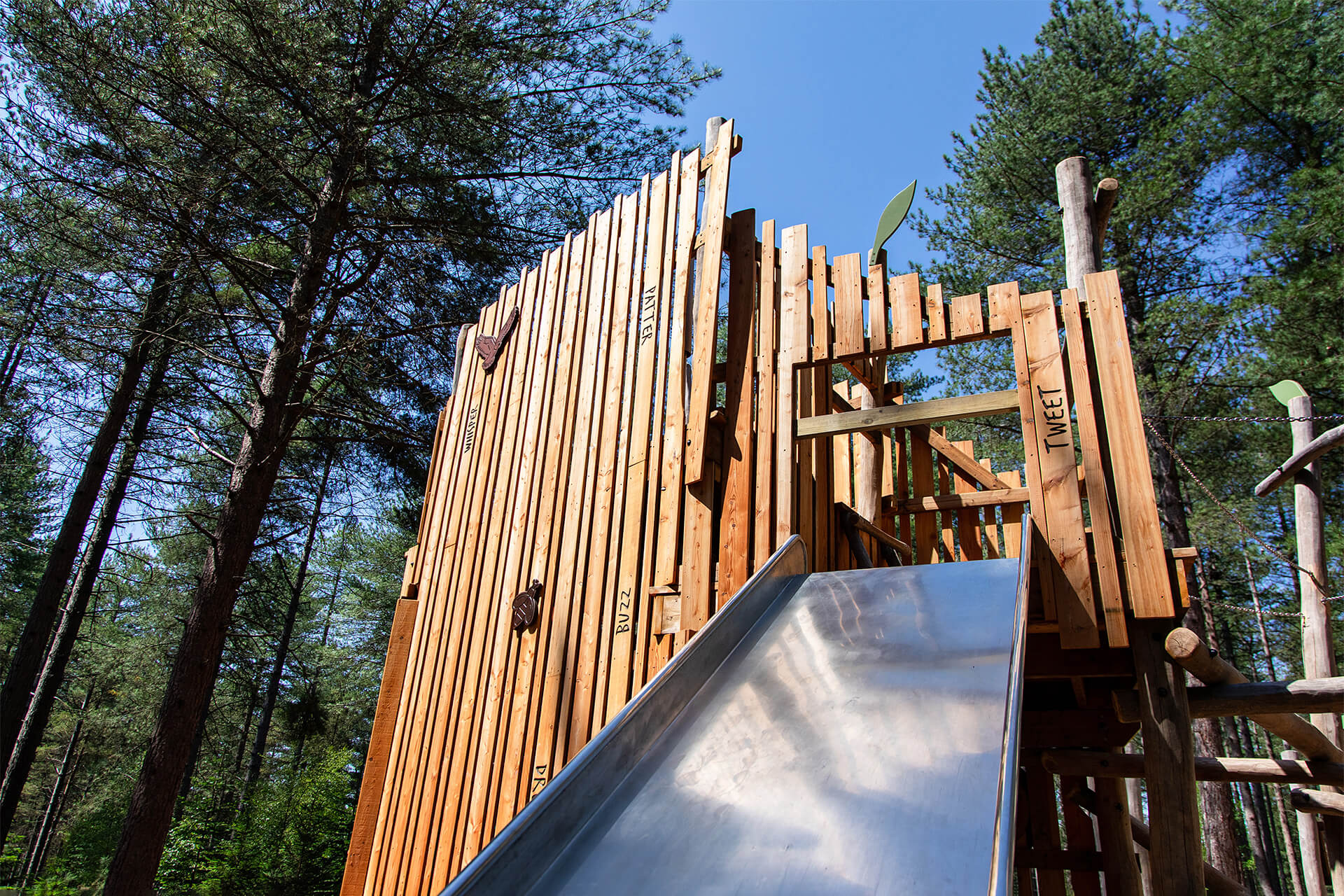
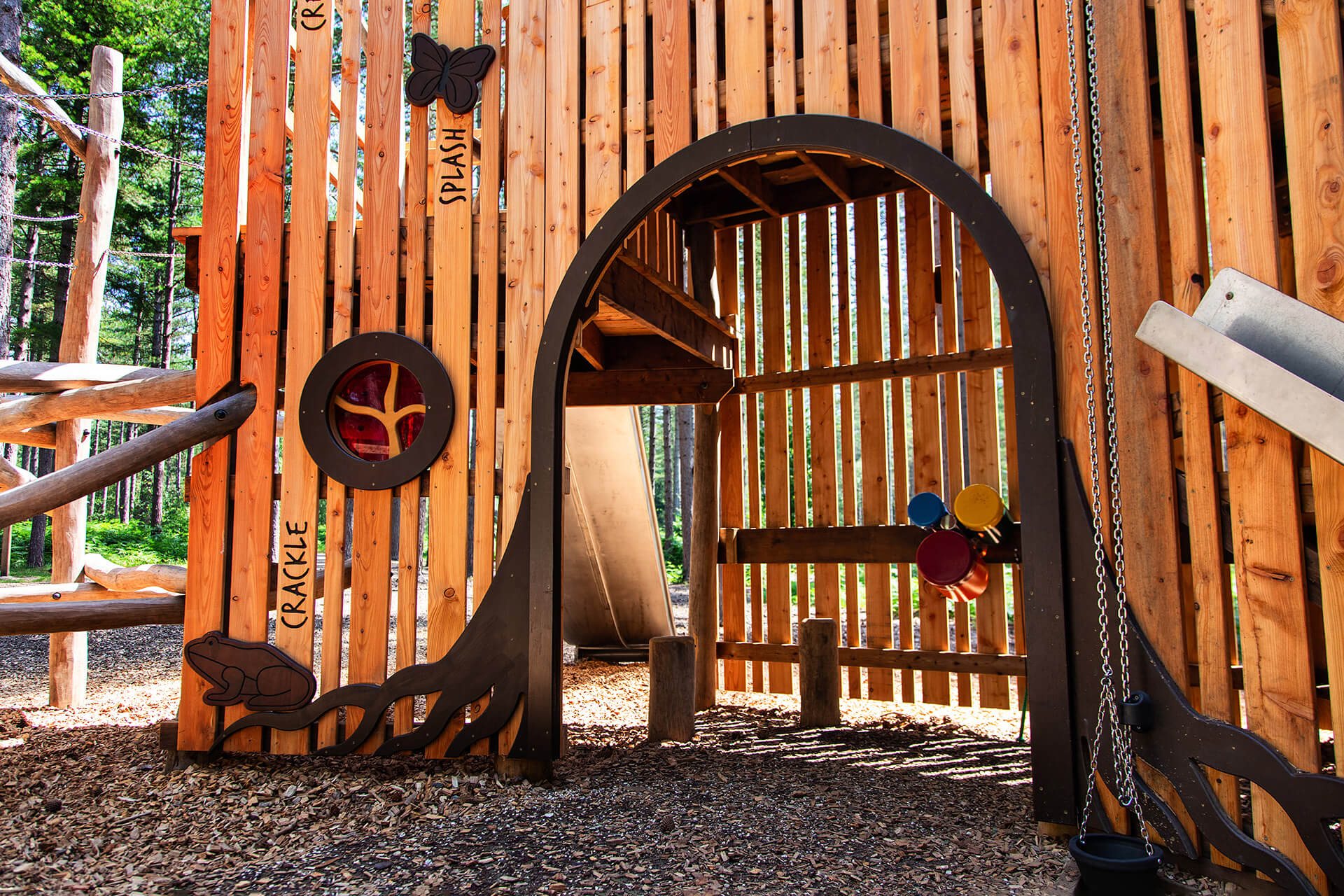
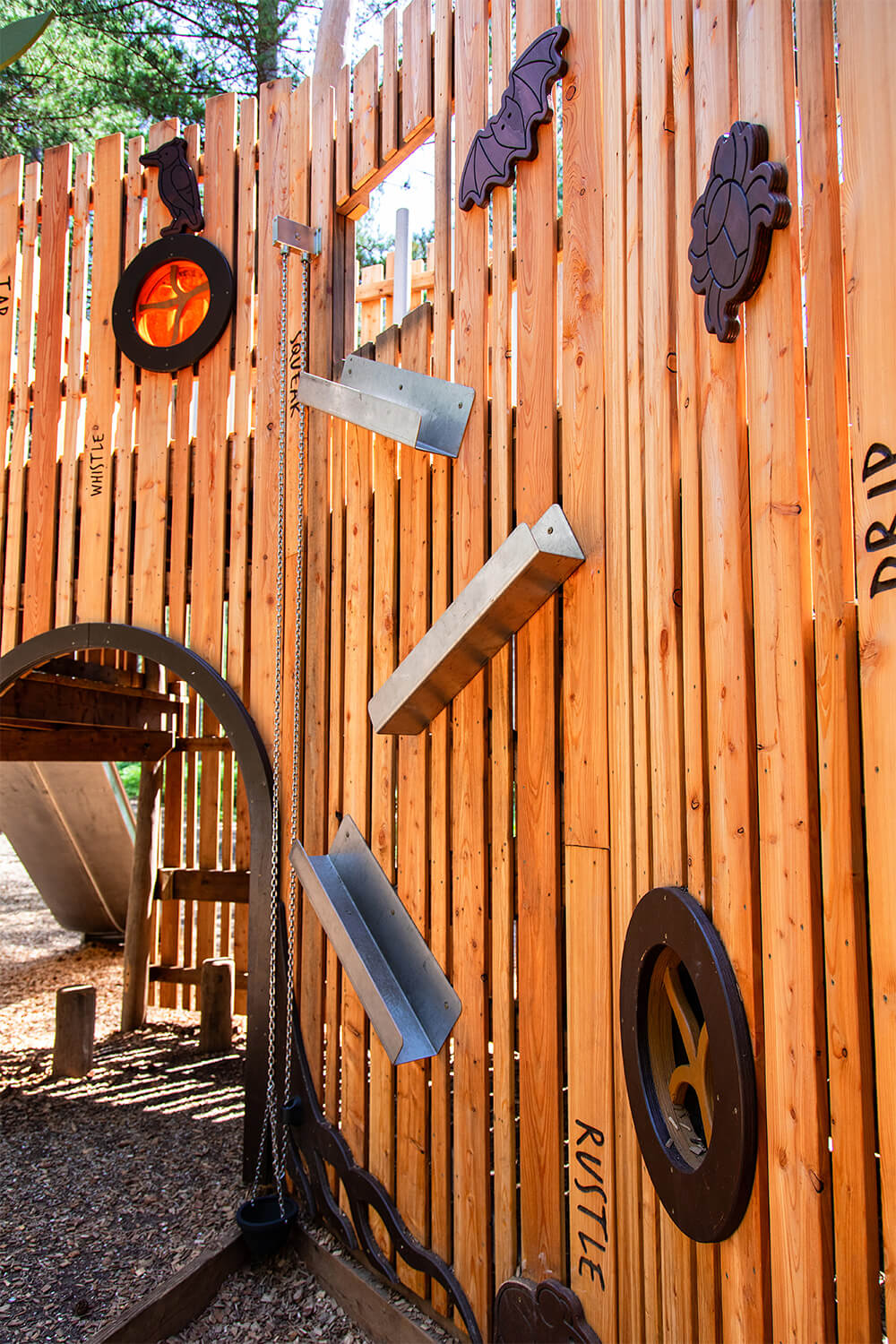
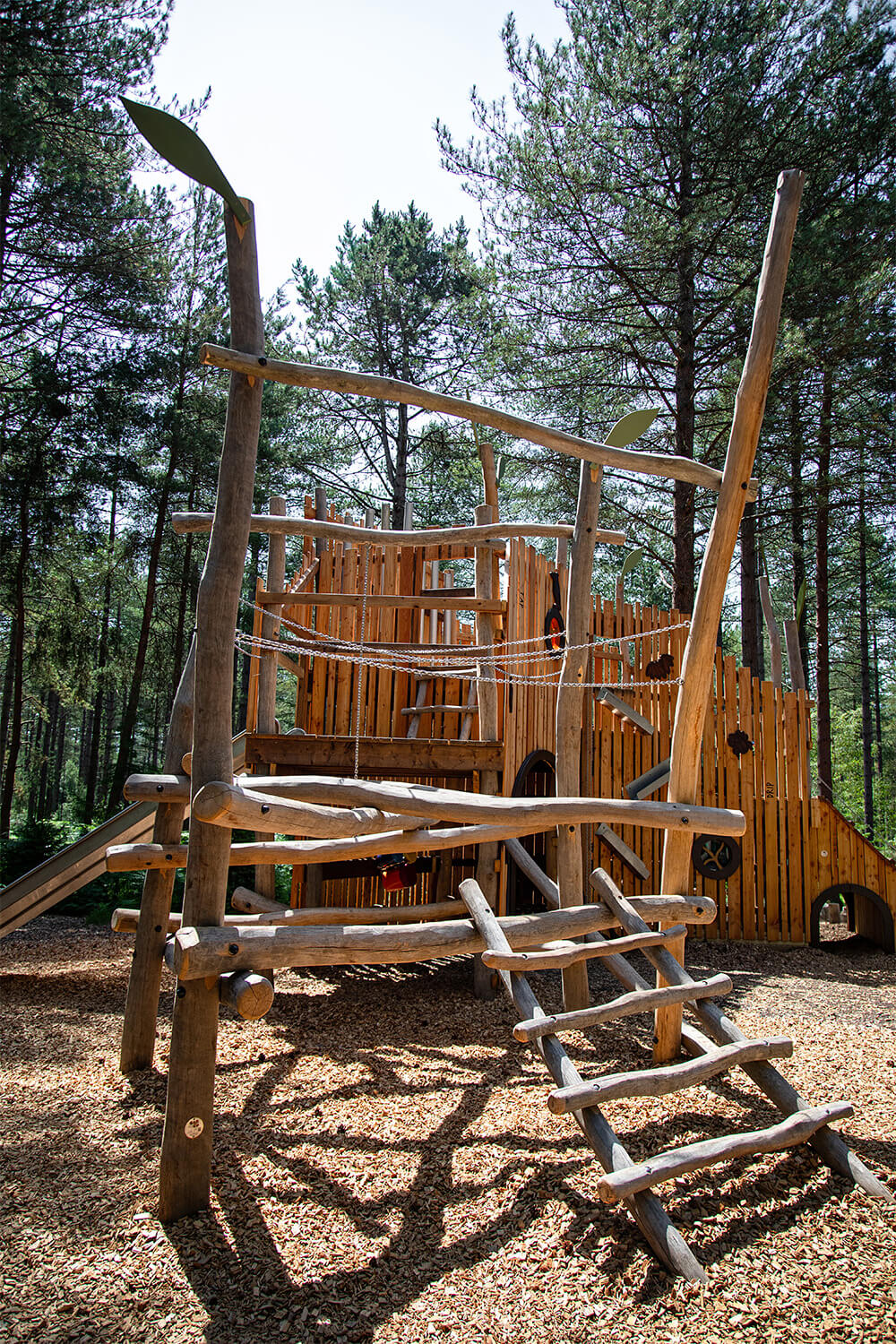
Climbing to the top sets the birdsong going, while the understory below hides a den of drums waiting to be played. Shingle rattles down steel chutes to conjure a burst of rain, pulleys ring out chimes, and a xylophone sits tucked among the posts. At the centre, an accessible Conductor's Stand offers a platform to direct the show, linked to the wider structure by talking tubes that encourage collaborative play.
Carved roots, leaf-topped posts and forest sounds engraved into the timber reward a closer look, alongside every other noise waiting to be found while climbing, sliding and crawling around.
Ants Nest
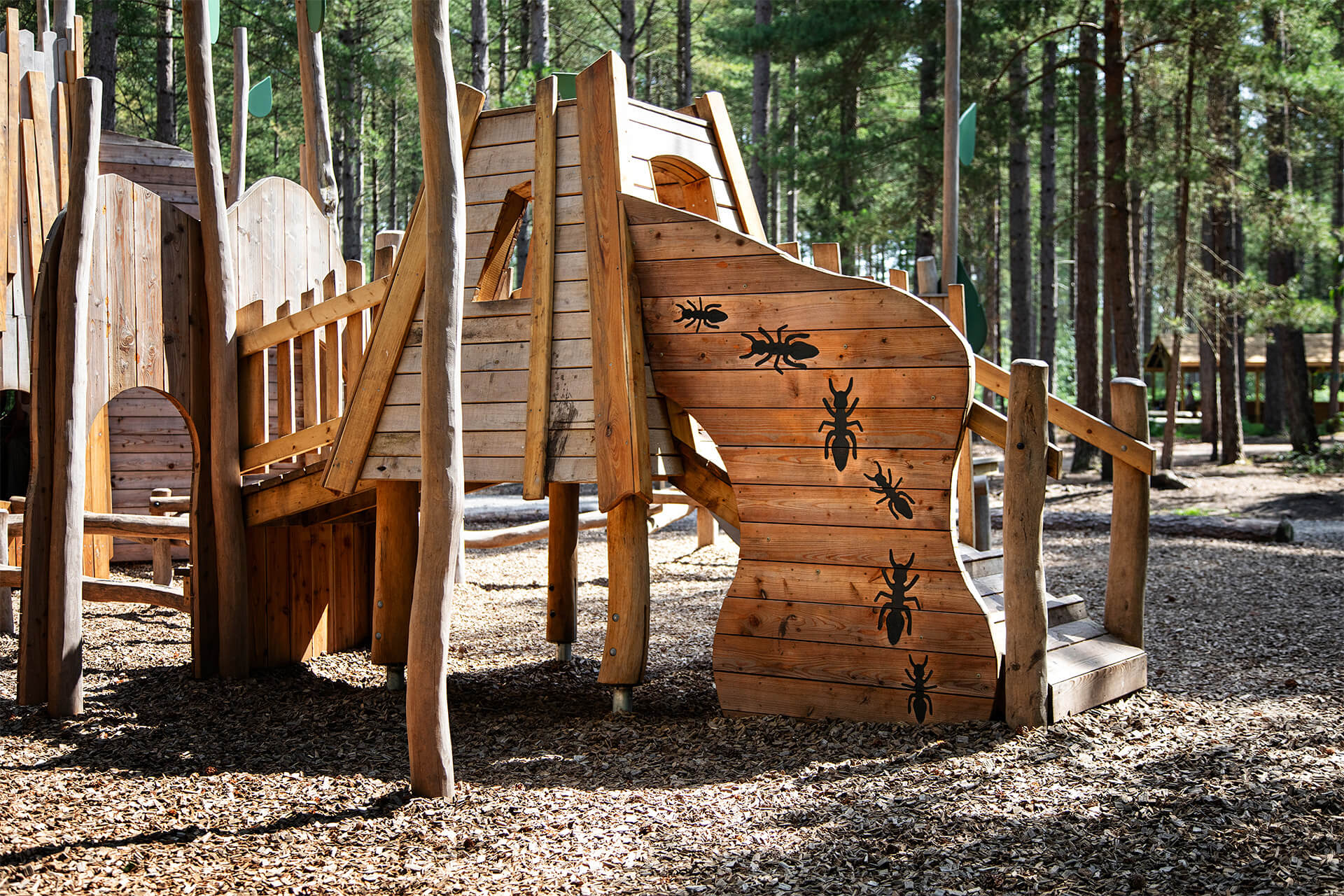
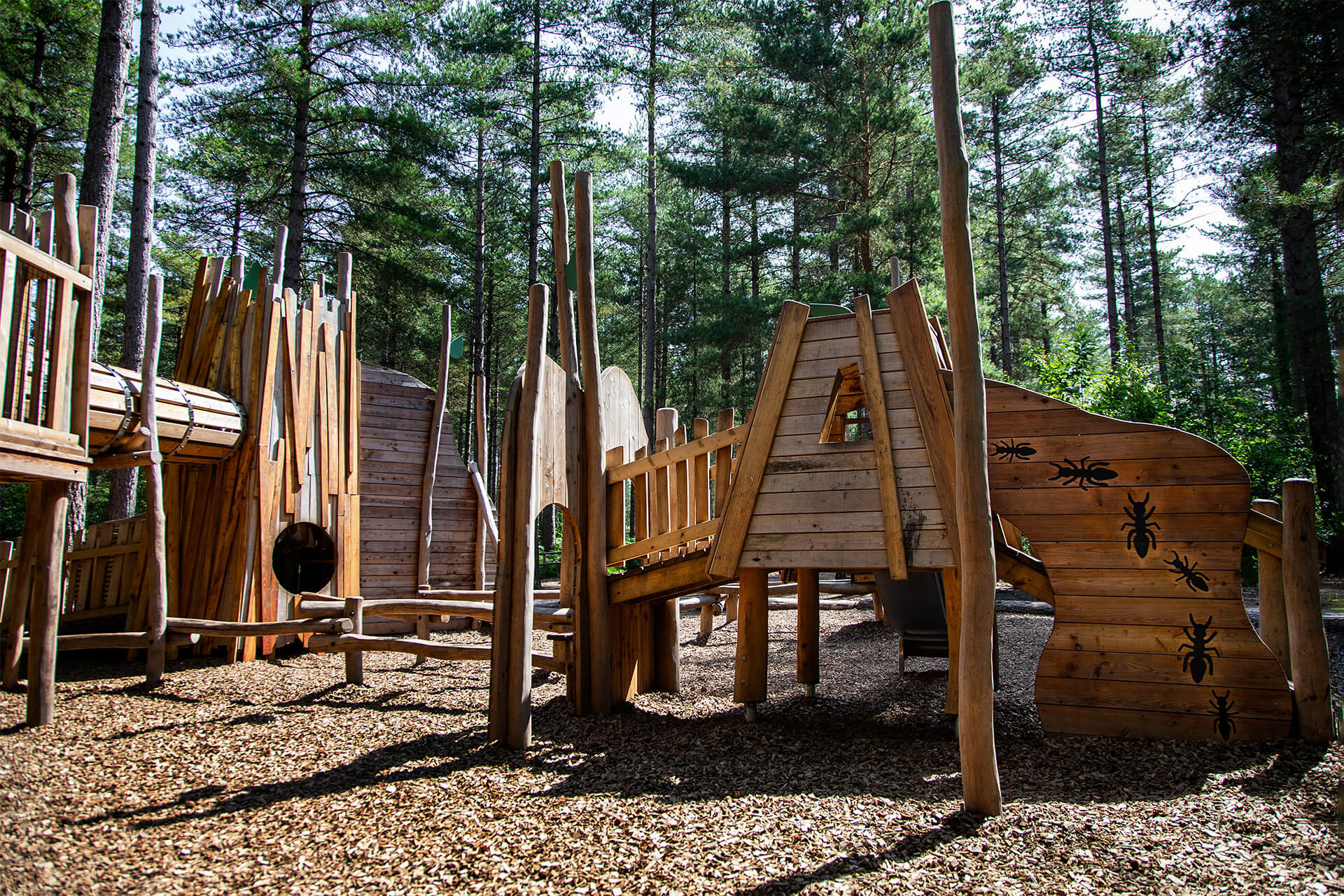
This replaced another much-loved legacy piece based on an ants' nest. The aim was to create a fresh interpretation with more play value, greater capacity and opportunities for a wider range of ages and abilities.
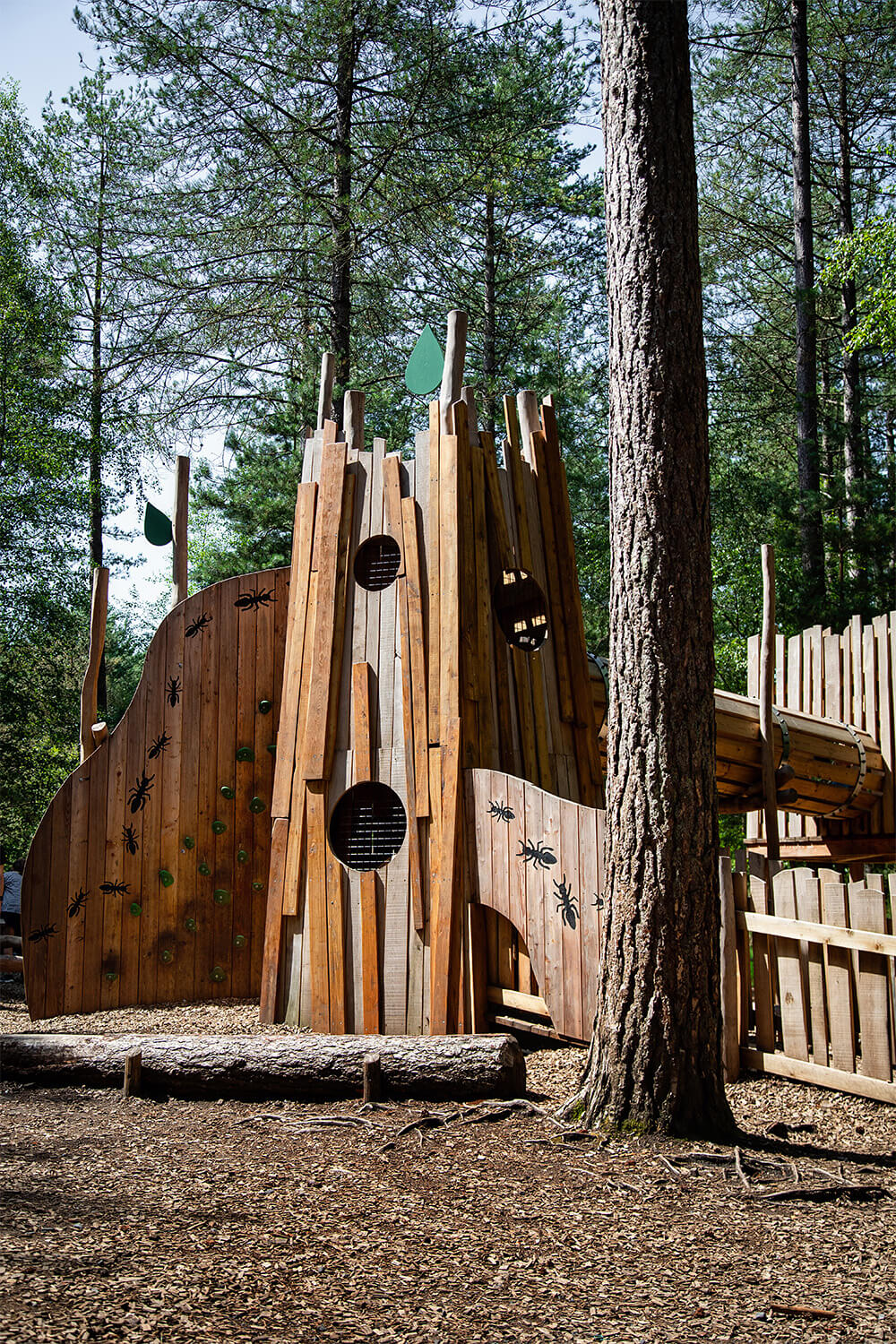
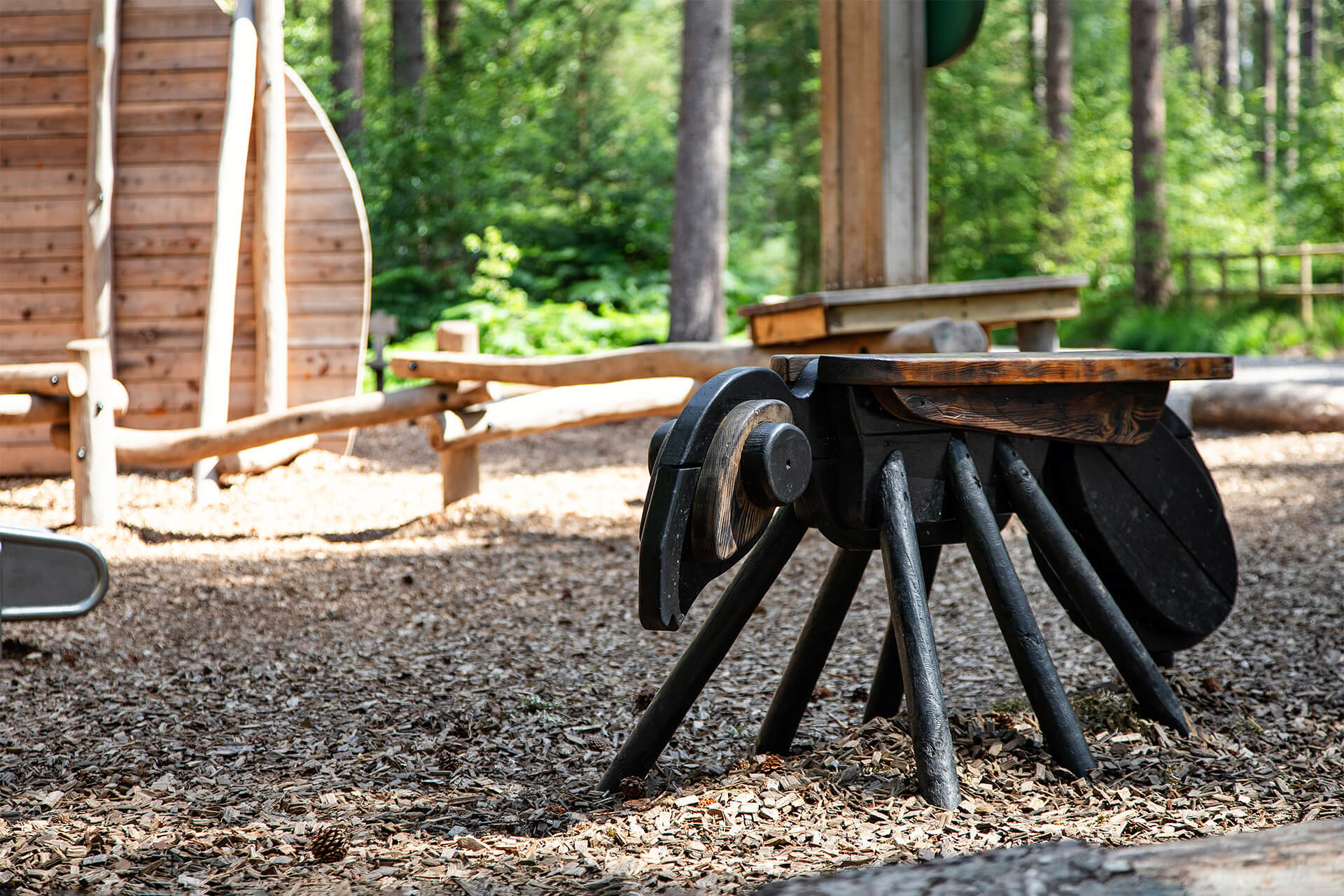
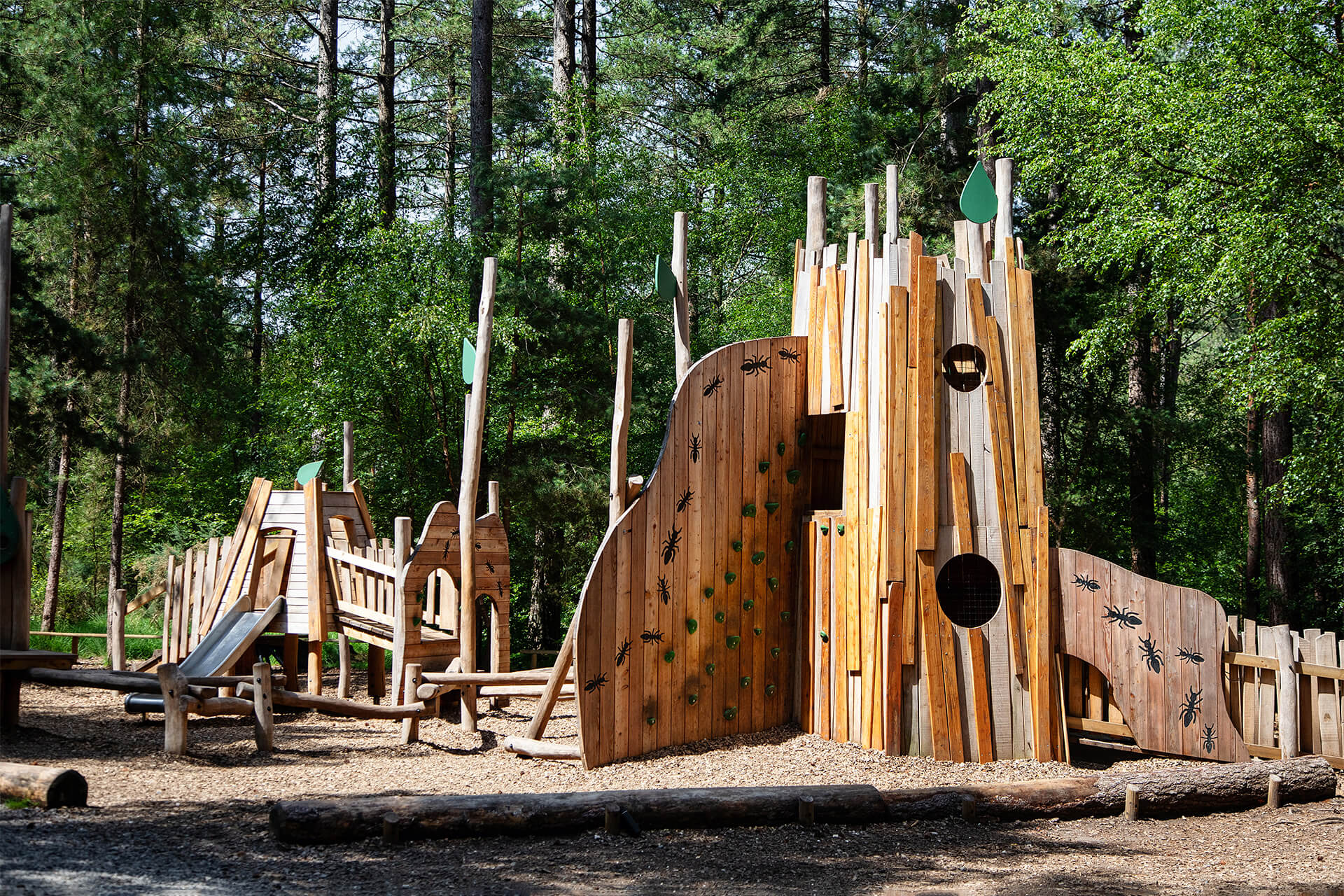
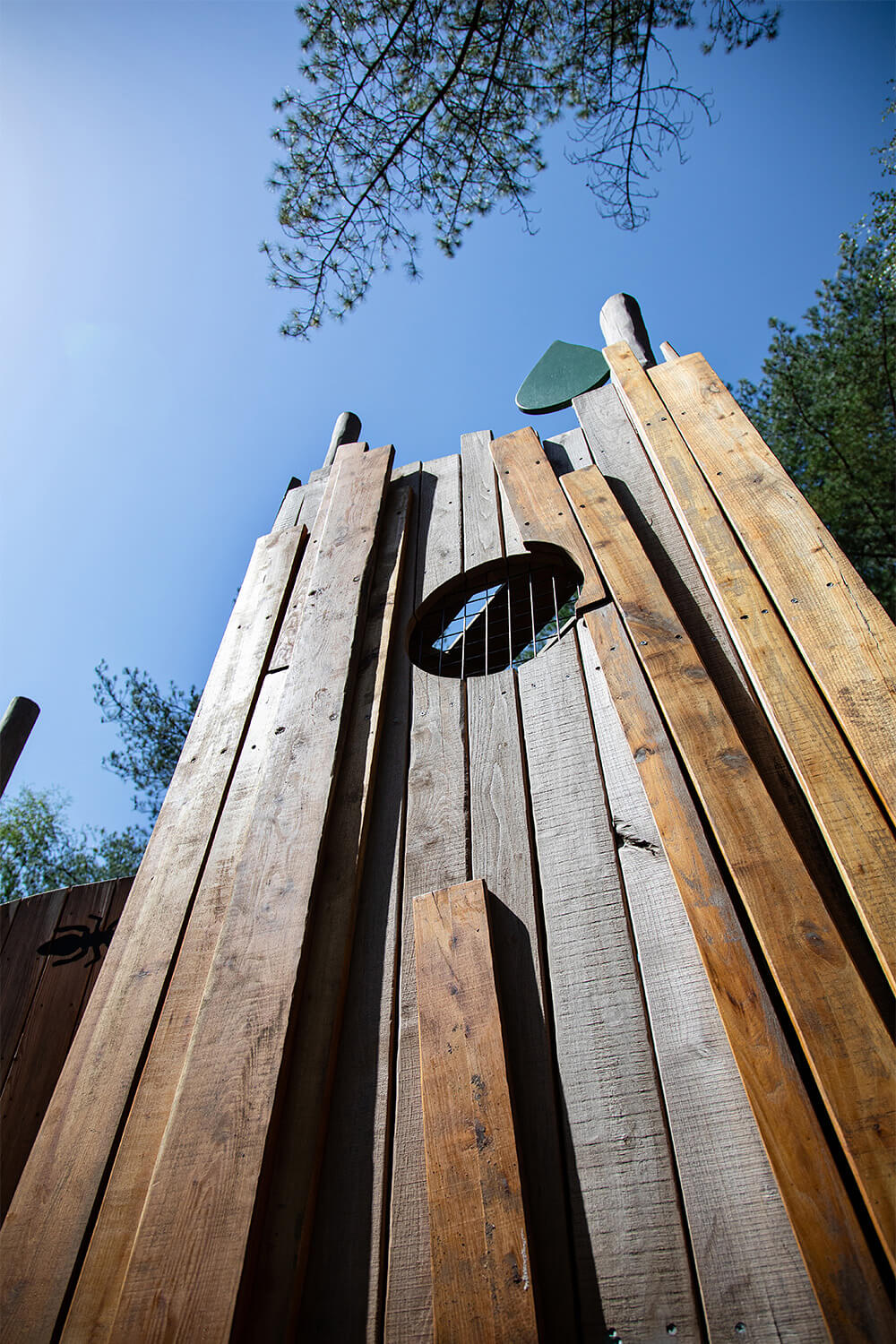
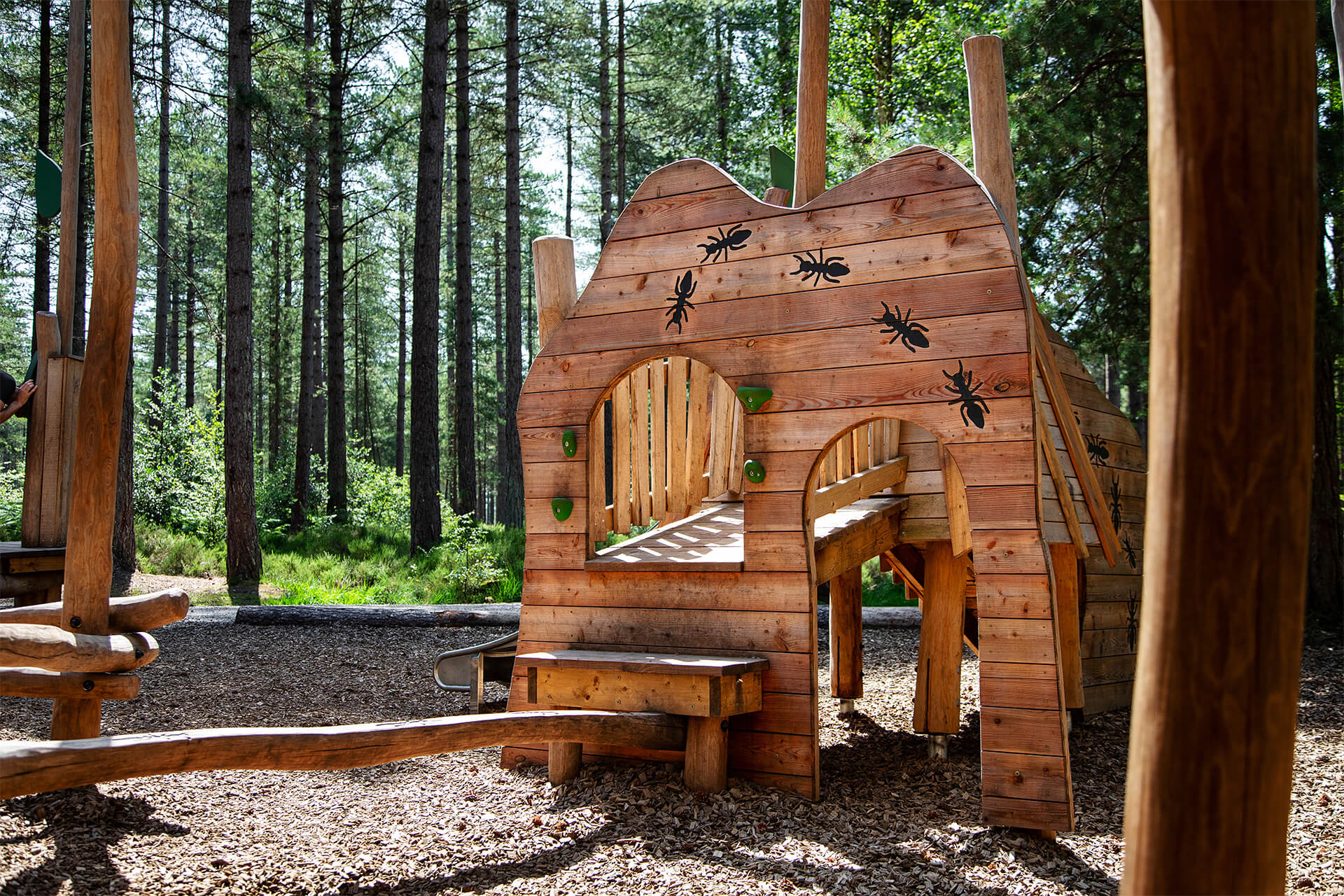
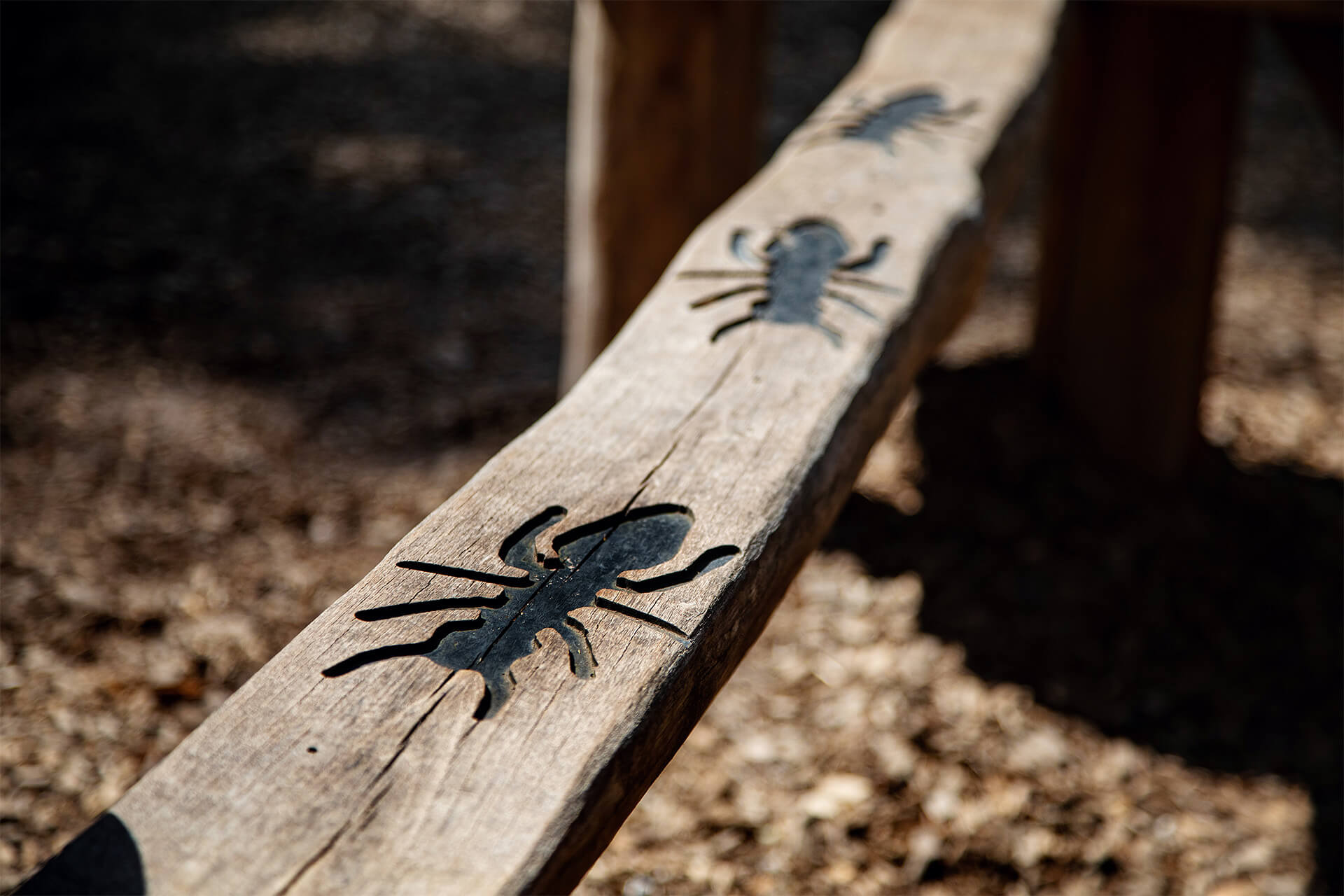
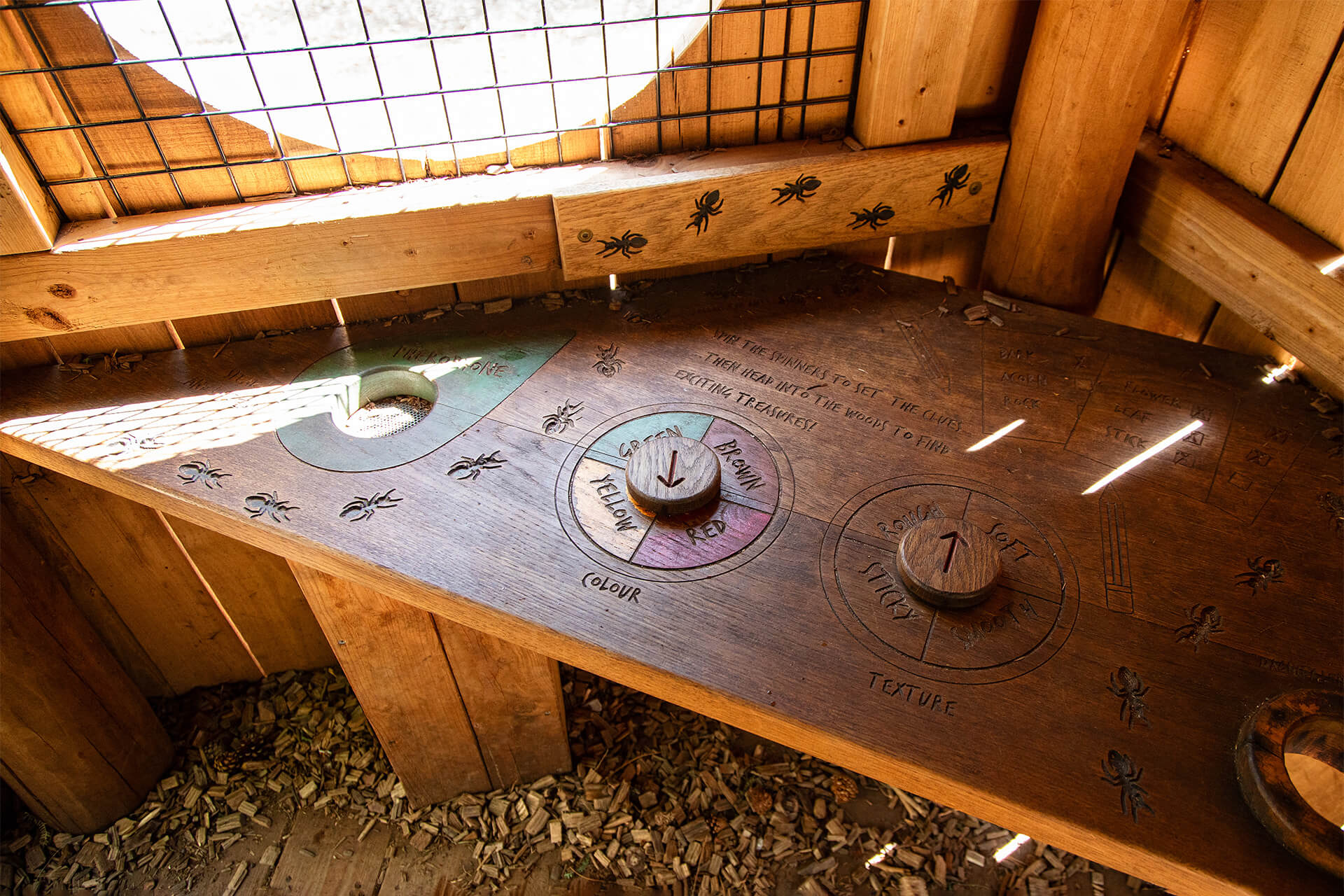
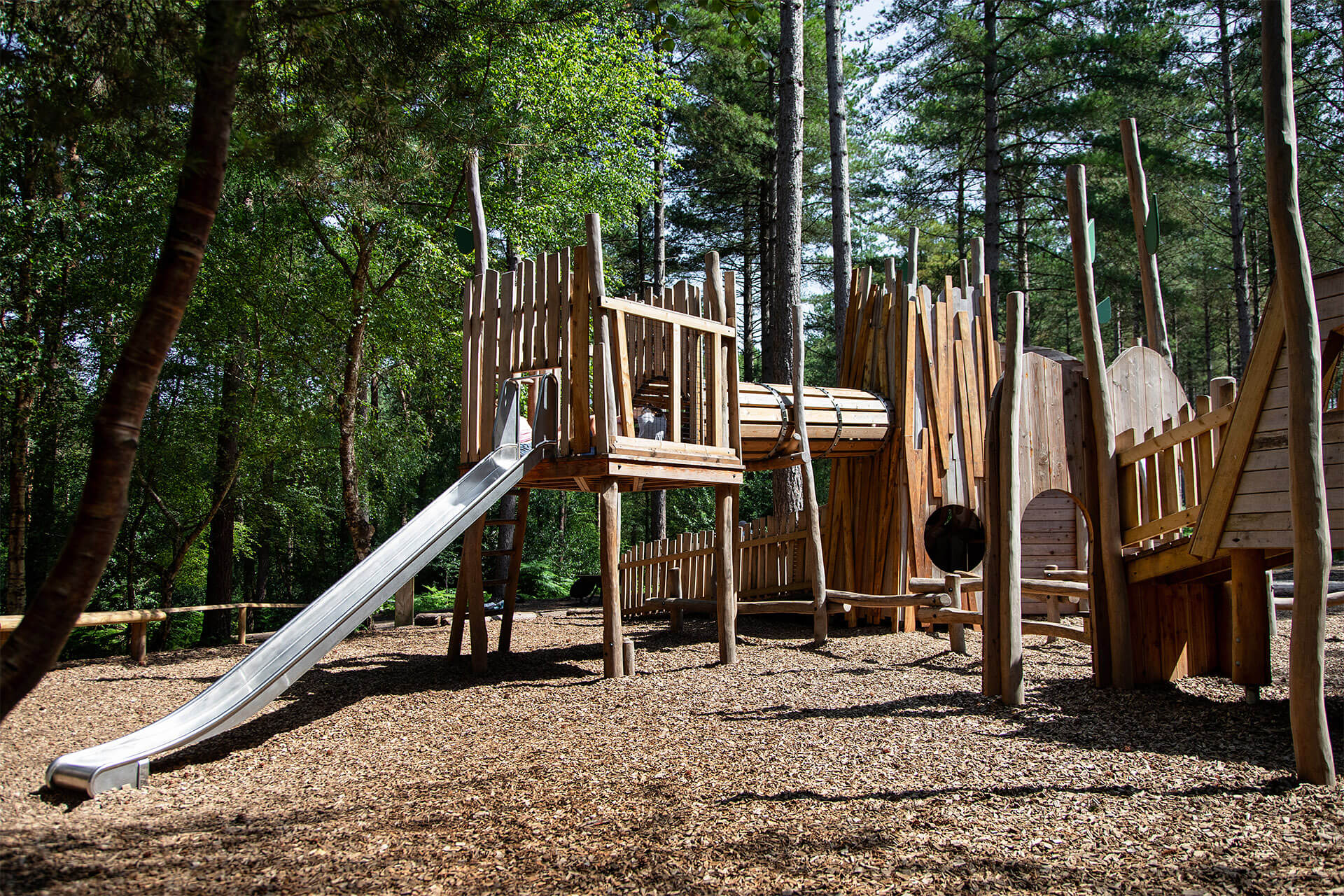
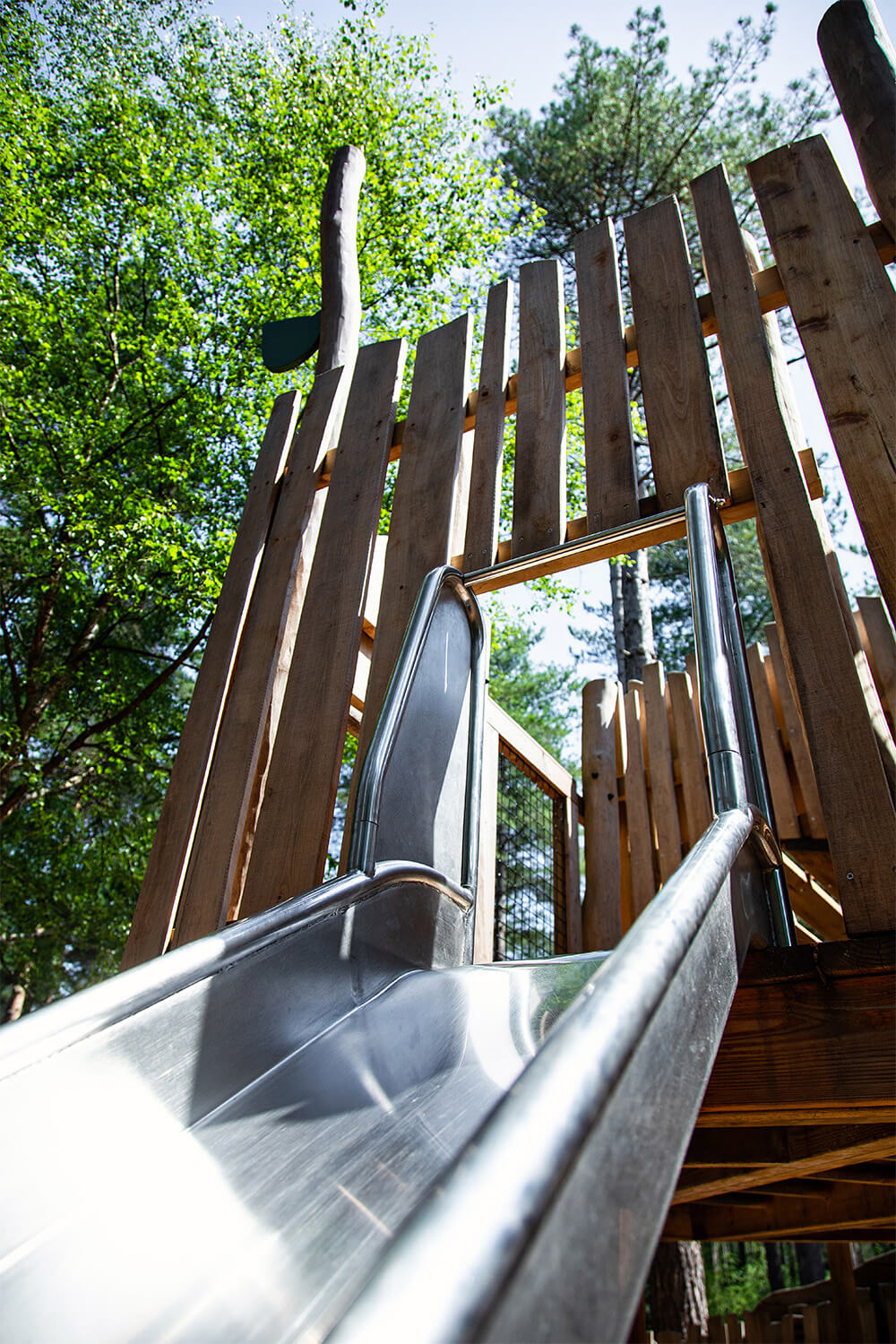
The Ants Nest invites older children to climb like an ant across the central tower which is inspired by an ant mound and forms the main nest. A climbing wall traces its own ant-trail route to the top, while timber tunnels marked with trails of their own offer a route in from below. The Forager's Trail leads children out to gather natural finds for the investigation desk, where magnifying glasses, measuring tools and a spinning scavenger-hunt dial wait to be put to use. Along the way, stridulation boards — inspired by the way ants communicate — invite a drummed-out message, and a Pherophone talking tube carries it back to the nest.
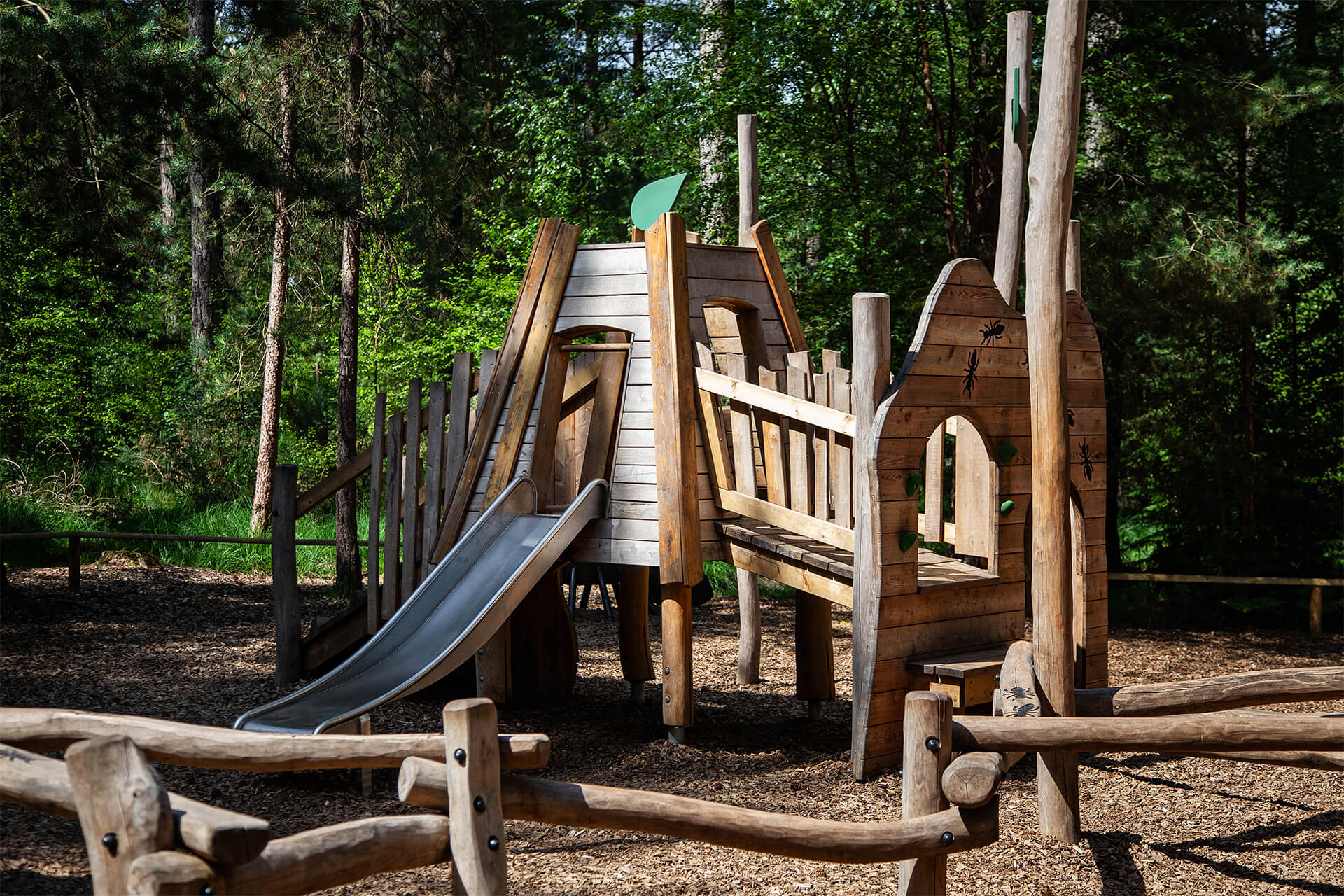
Alongside the main nest, a scaled-down Early Years Ants Nest brings the smallest colony members into the adventure at their own level. A toddler-height tower, gentle bridge crossing and low-level slide give younger children the same sense of scrambling through the nest, while a crawl-through panel offers a first taste of the tunnels the older children are navigating above.

Timber!
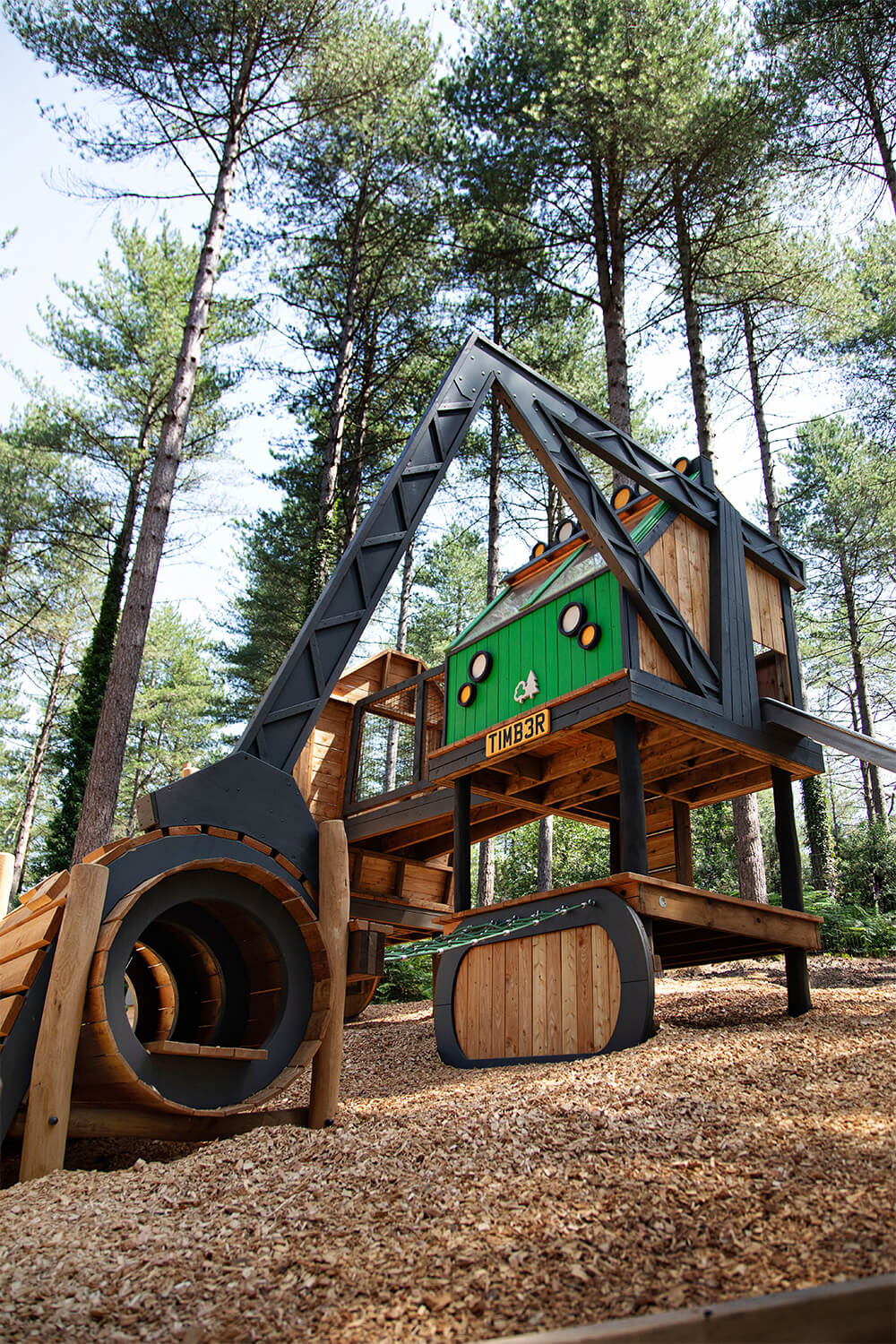
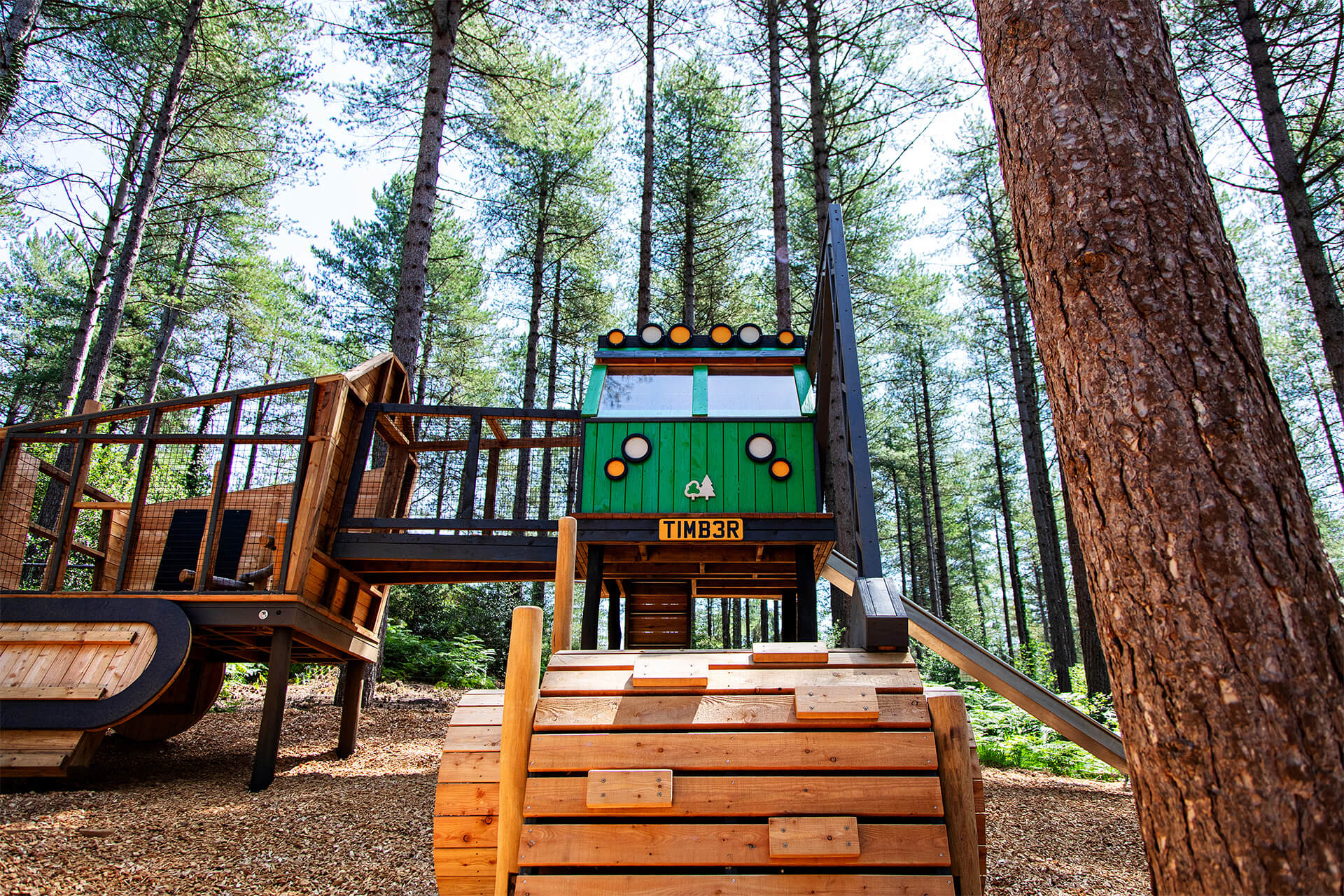
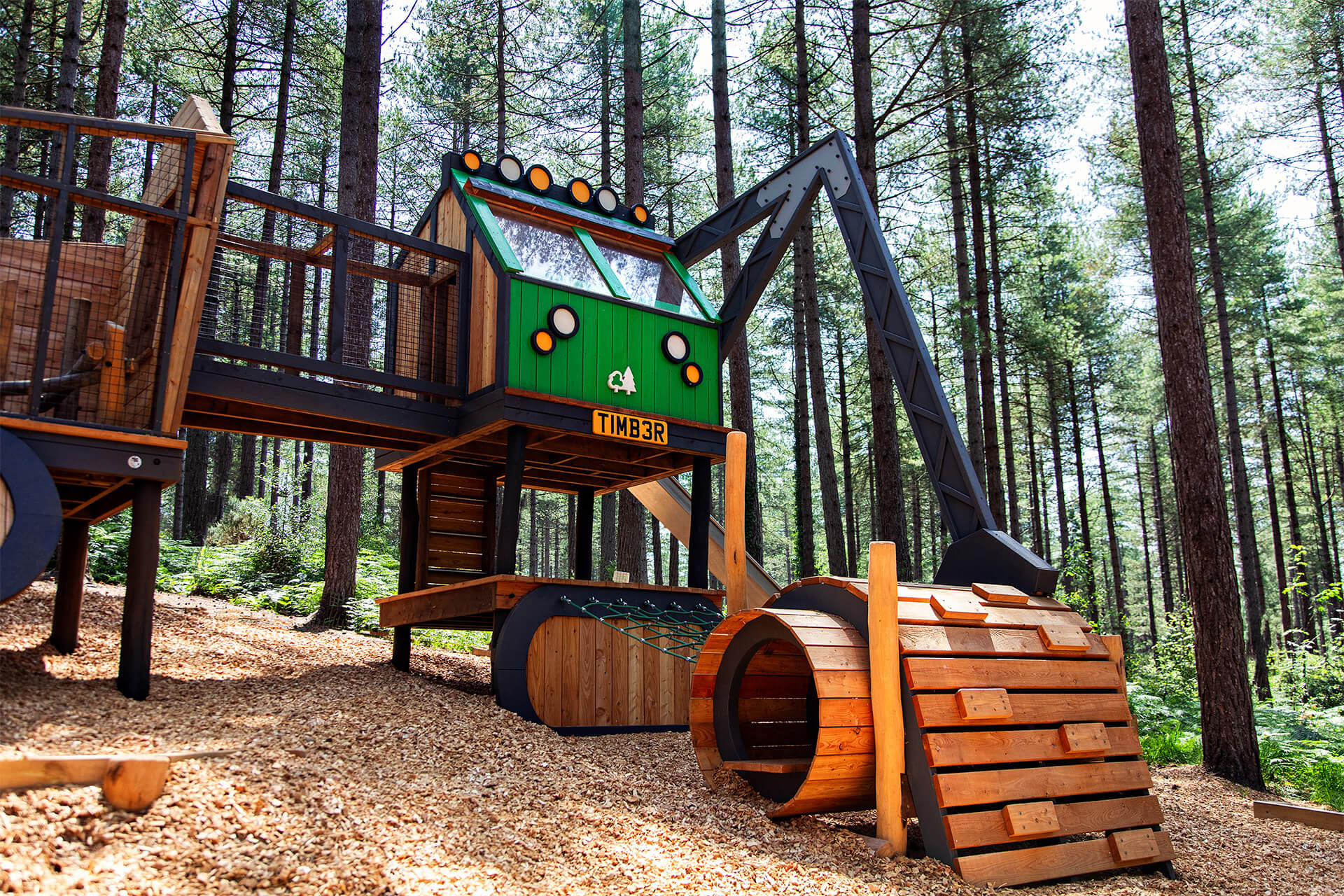
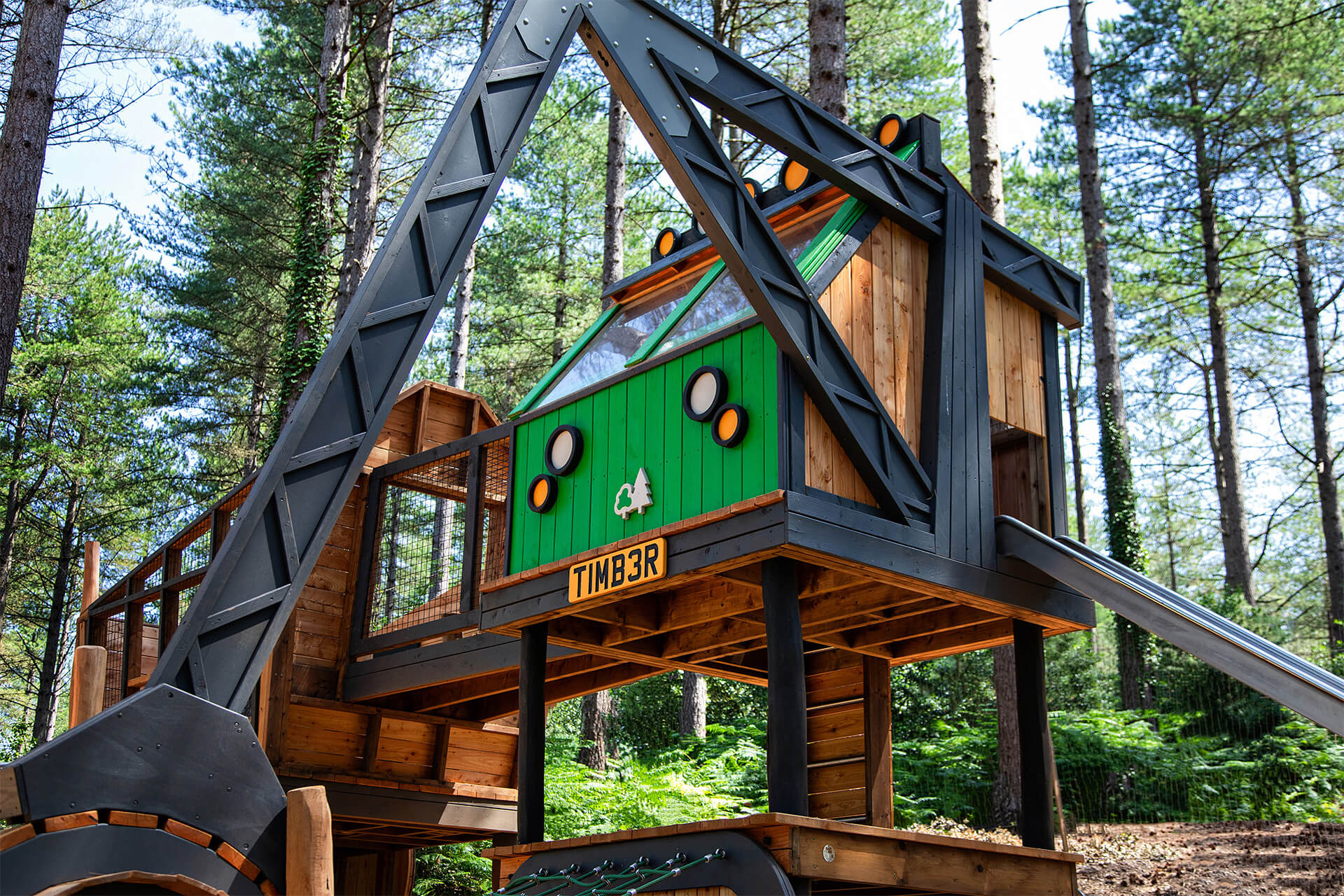
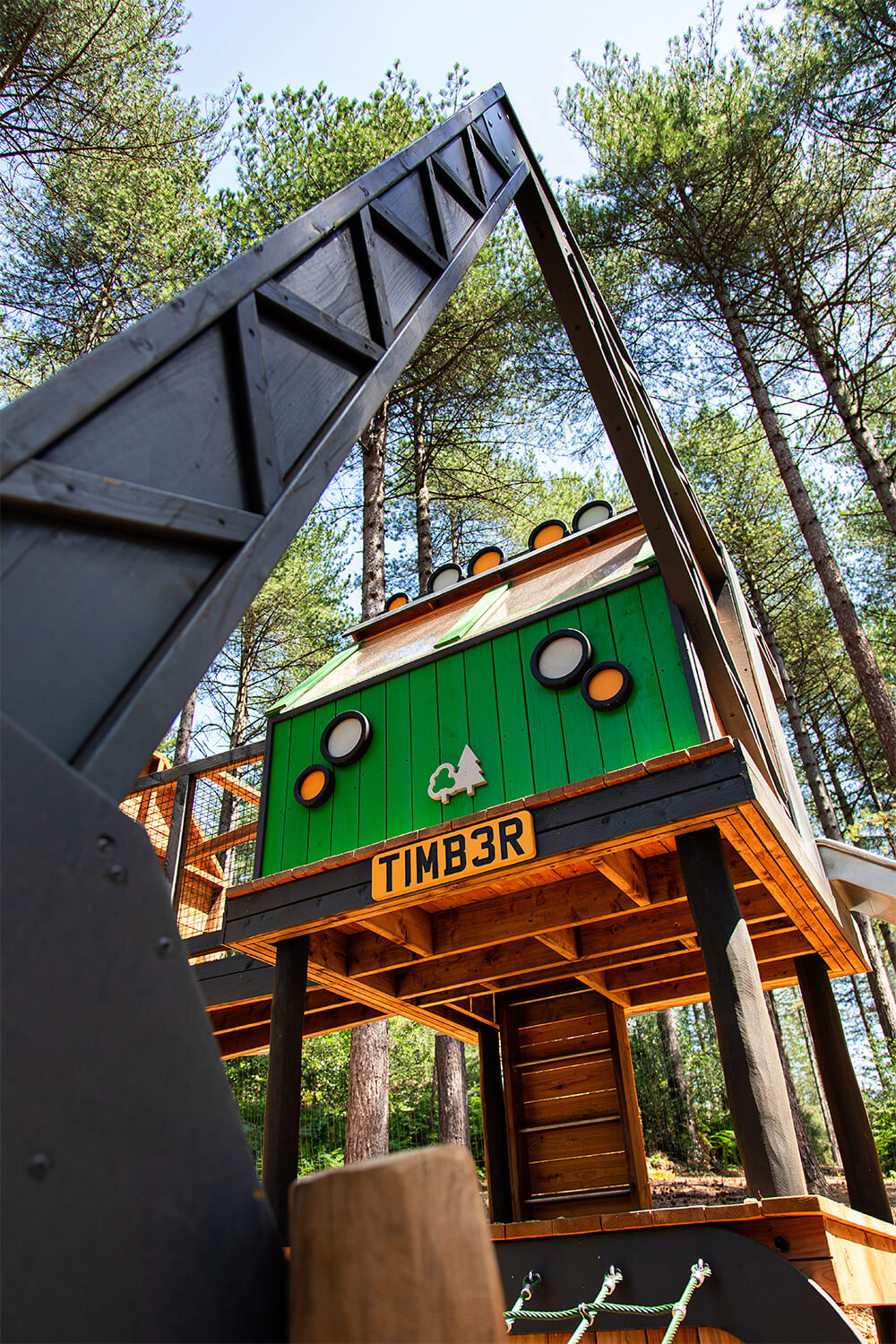
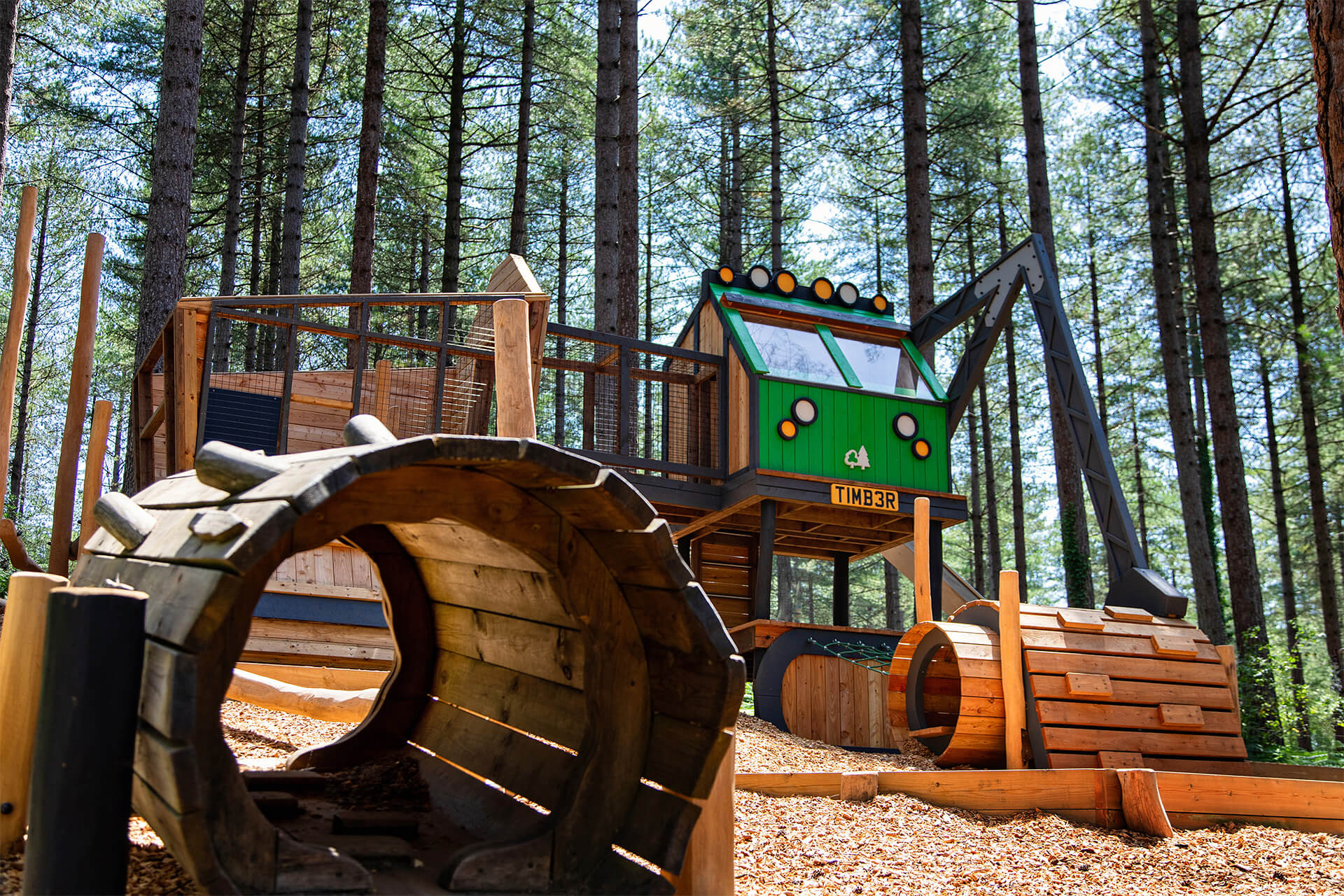
Timber! brings the story of a managed forest and the harvesting process to life. The concept focuses on the people and processes behind managing the woodland, letting children immerse themselves in imaginative play and creating their own version of a day in the life of a Forestry England forester.
The journey begins at the accessible Forester's Cabin at the bottom of the hill, where children can process seeds, check the noticeboard, or talk to their team using a walkie-talkie-inspired talking tube.
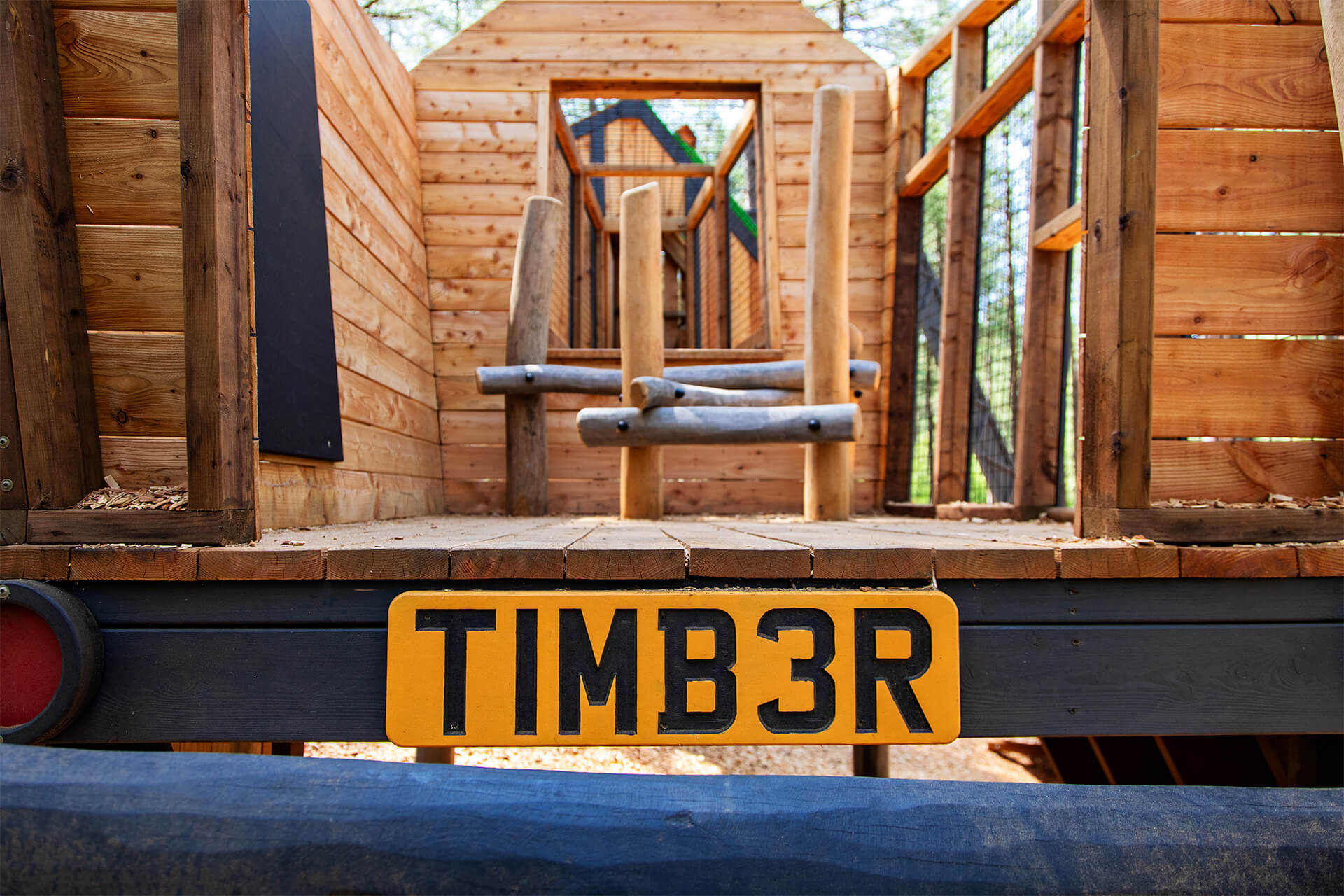
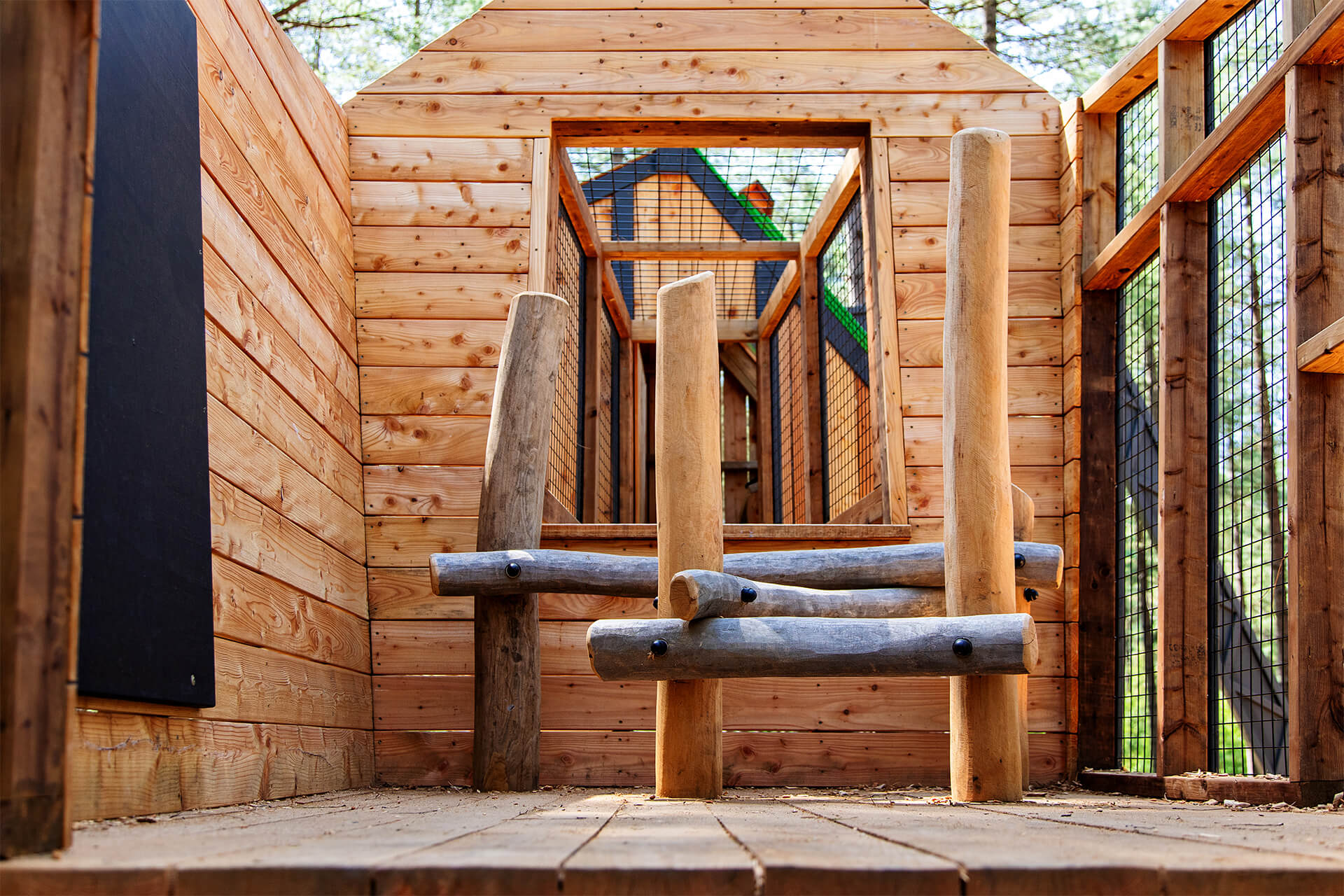
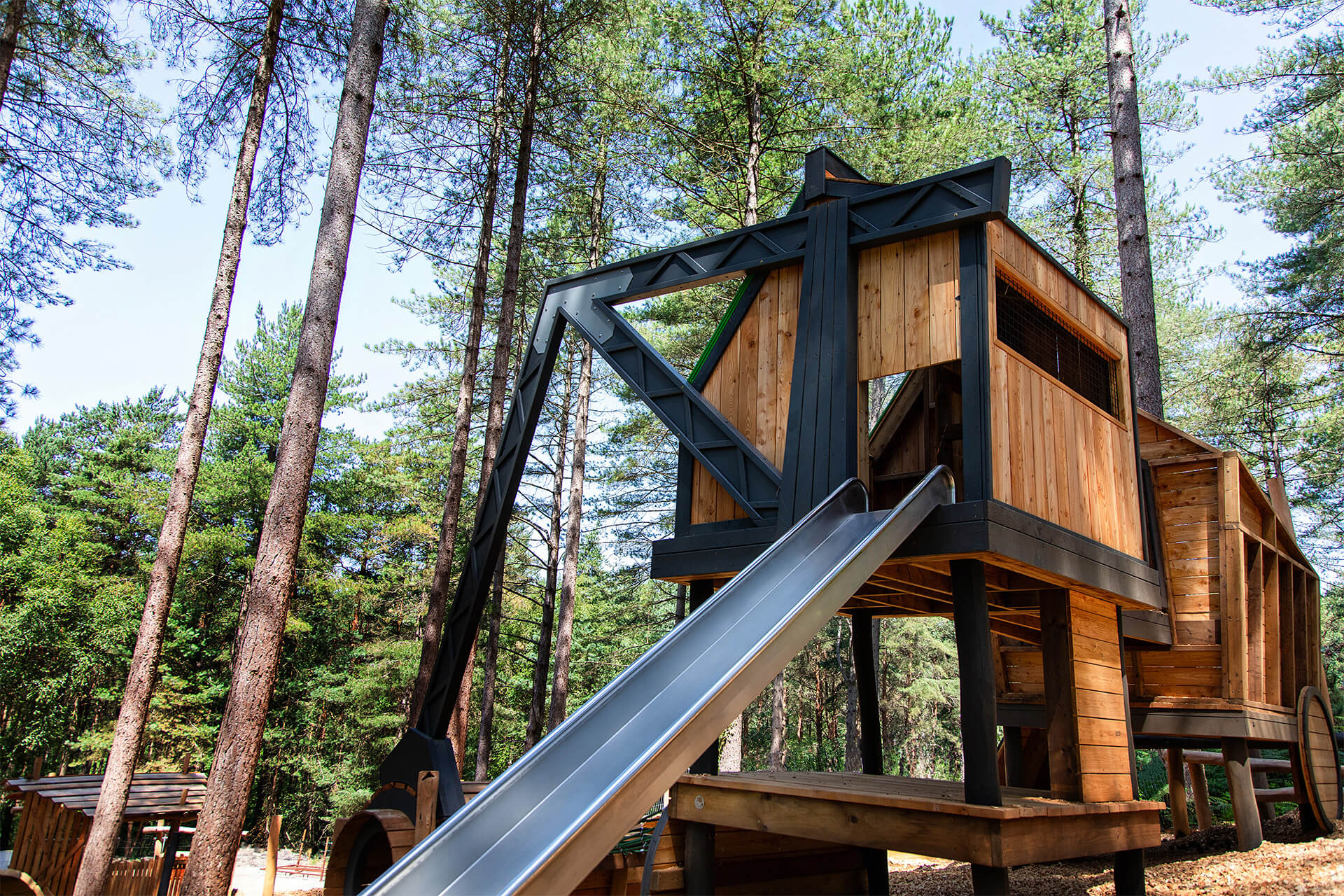
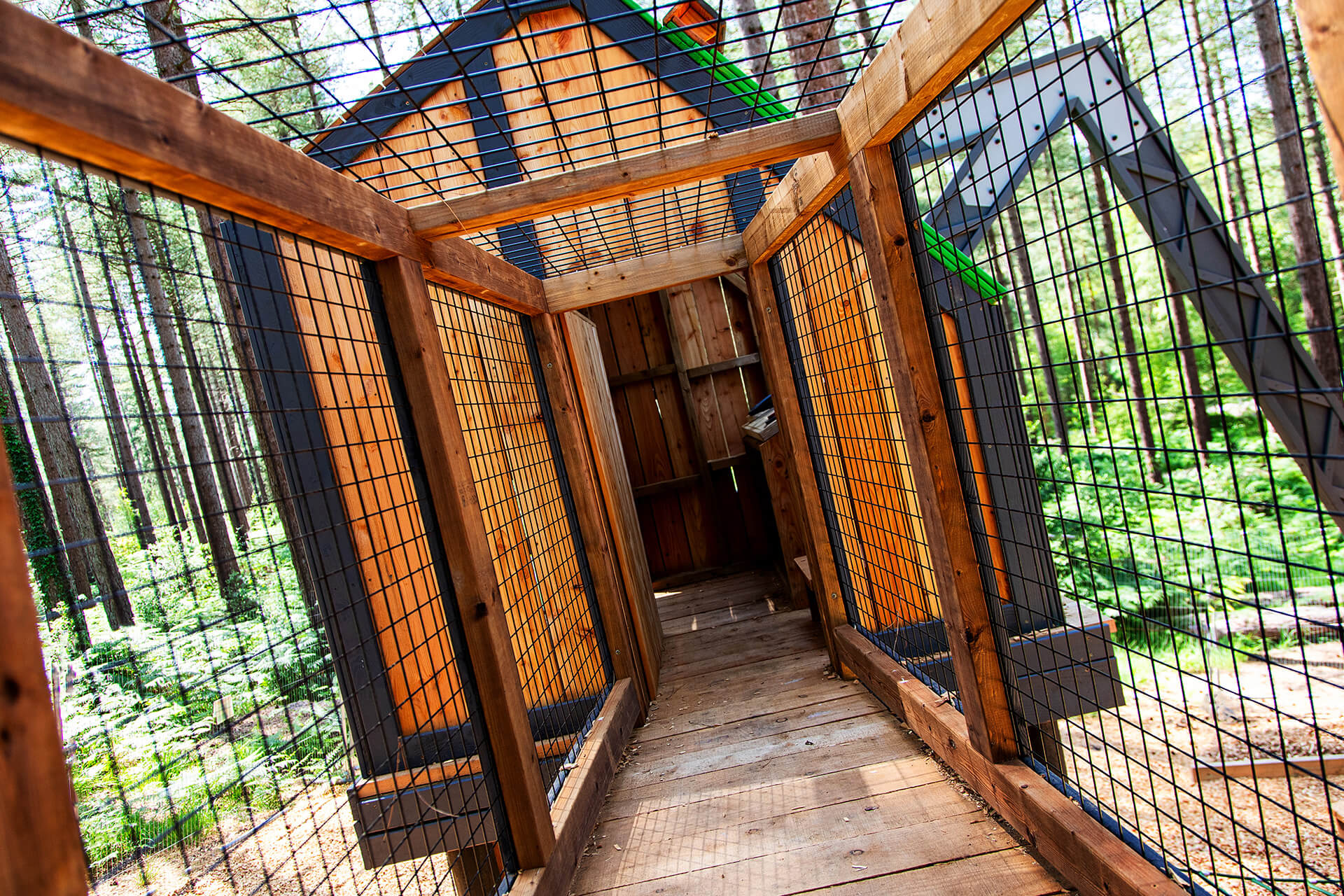
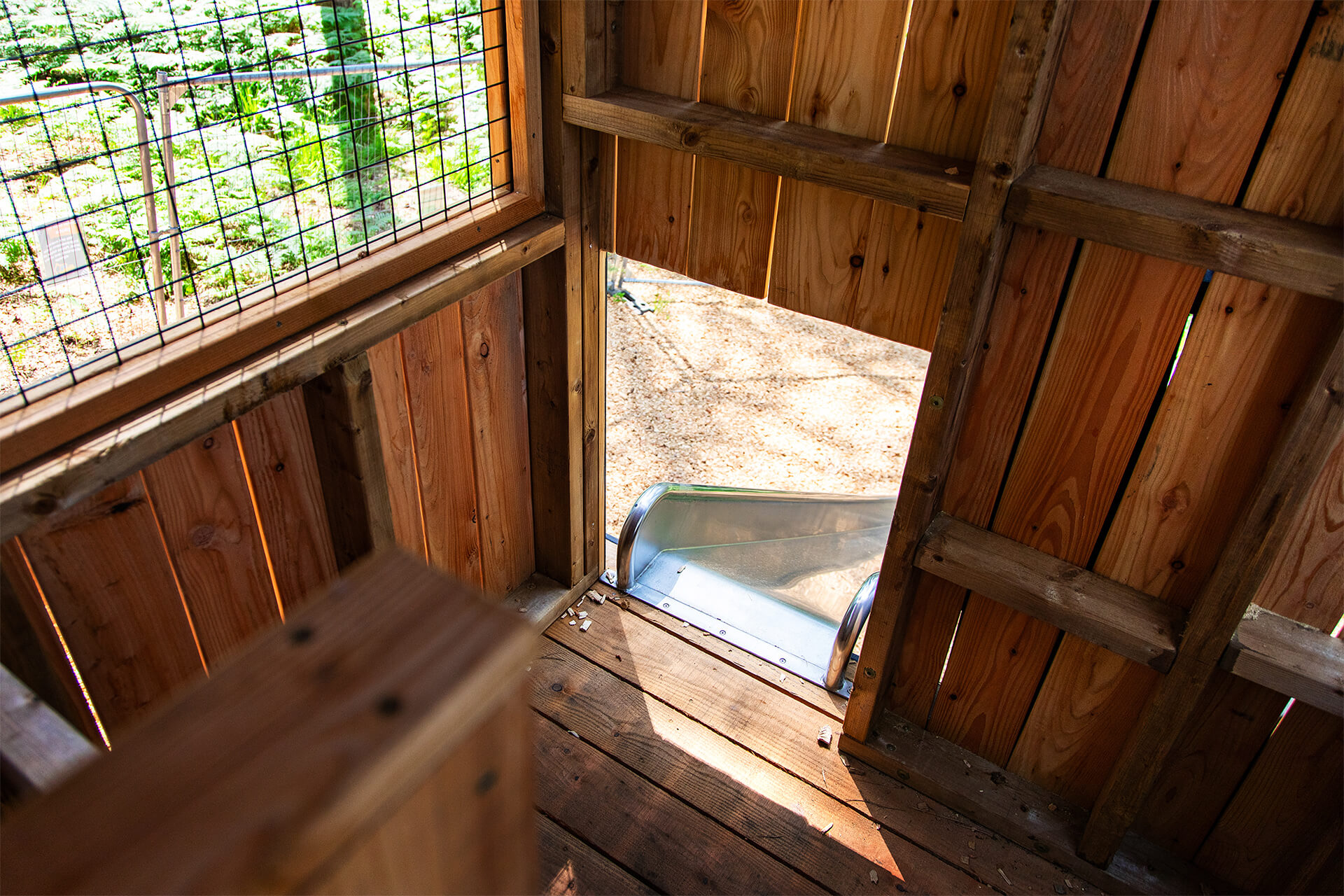
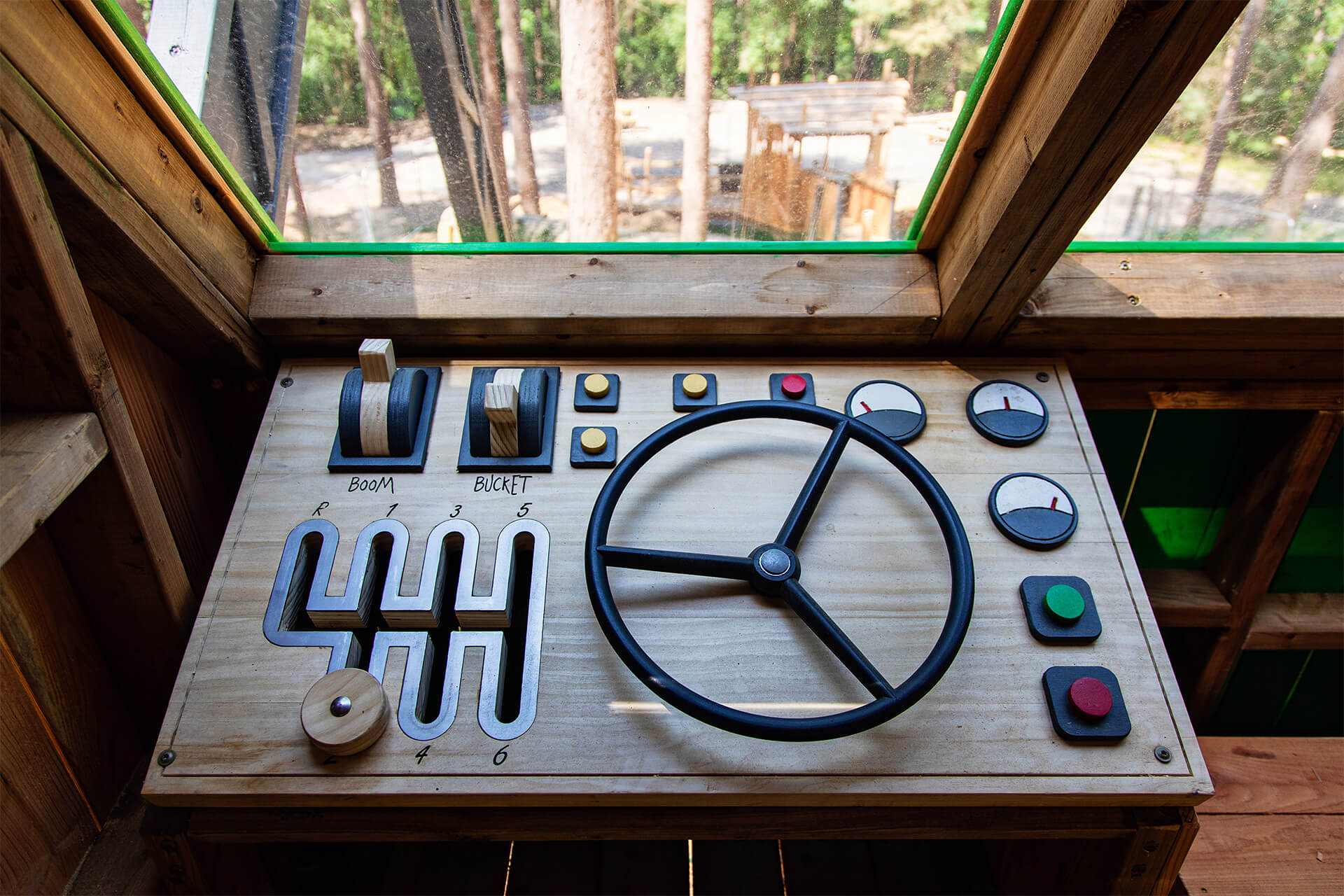
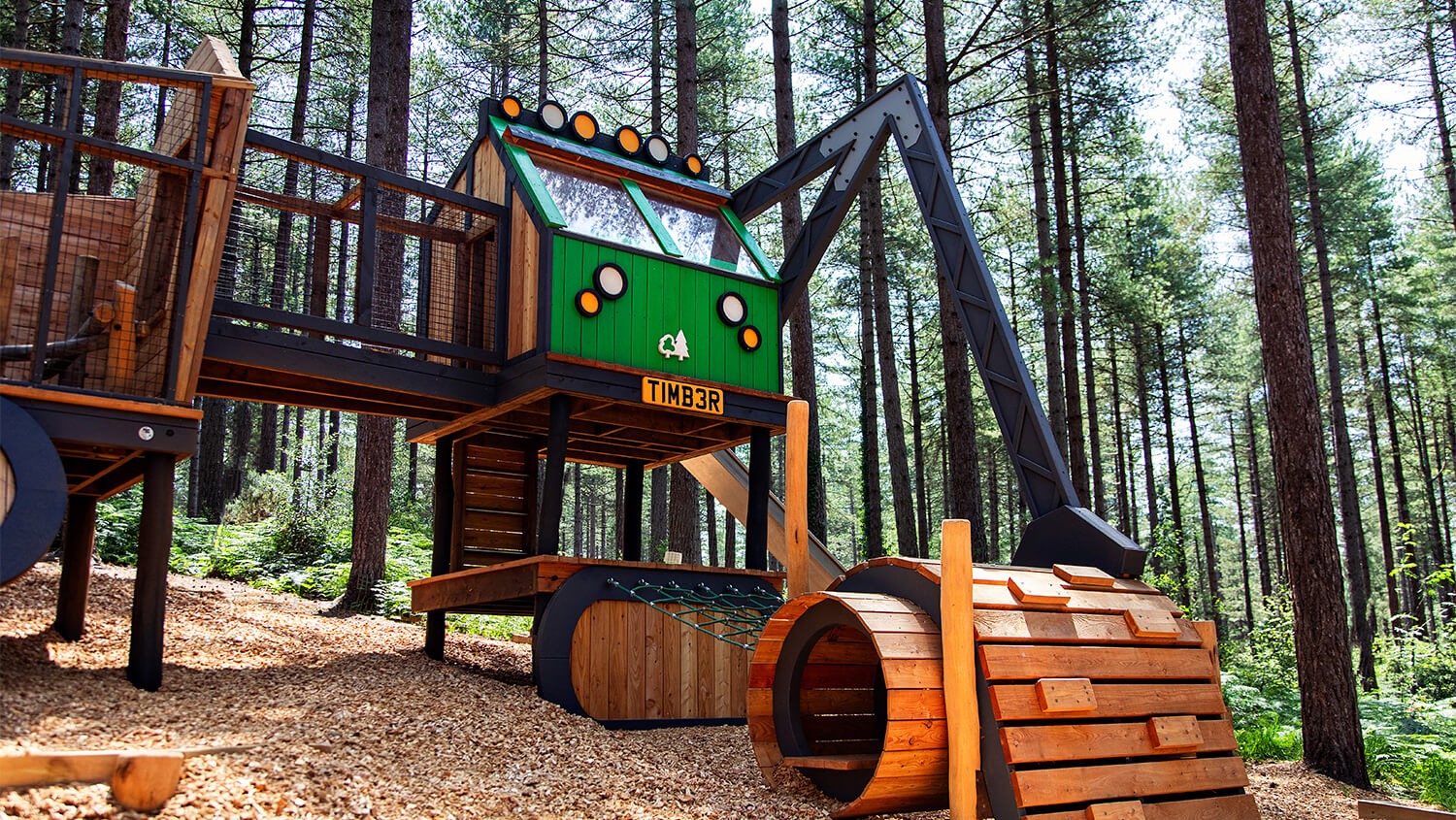
From there, they work their way uphill through balancing, climbing, crawling and tunnelling challenges — reusing some of the site's legacy tunnels among plenty of logs and timber — until they reach the harvester at the top, caught seemingly mid-felling a tree. As well as being a physical play structure, the cab is fitted with its own dashboard and controls, letting children create their own forestry stories and pretend to operate machinery they might really see at work in the forest. The harvester also offers wheel tracks and "freshly felled" logs to clamber over on the trailer deck, and a crawl tunnel leading into the cab itself.