RSPB Minsmere, Suffolk
The Perch Play at RSPB Minsmere


The Perch Play
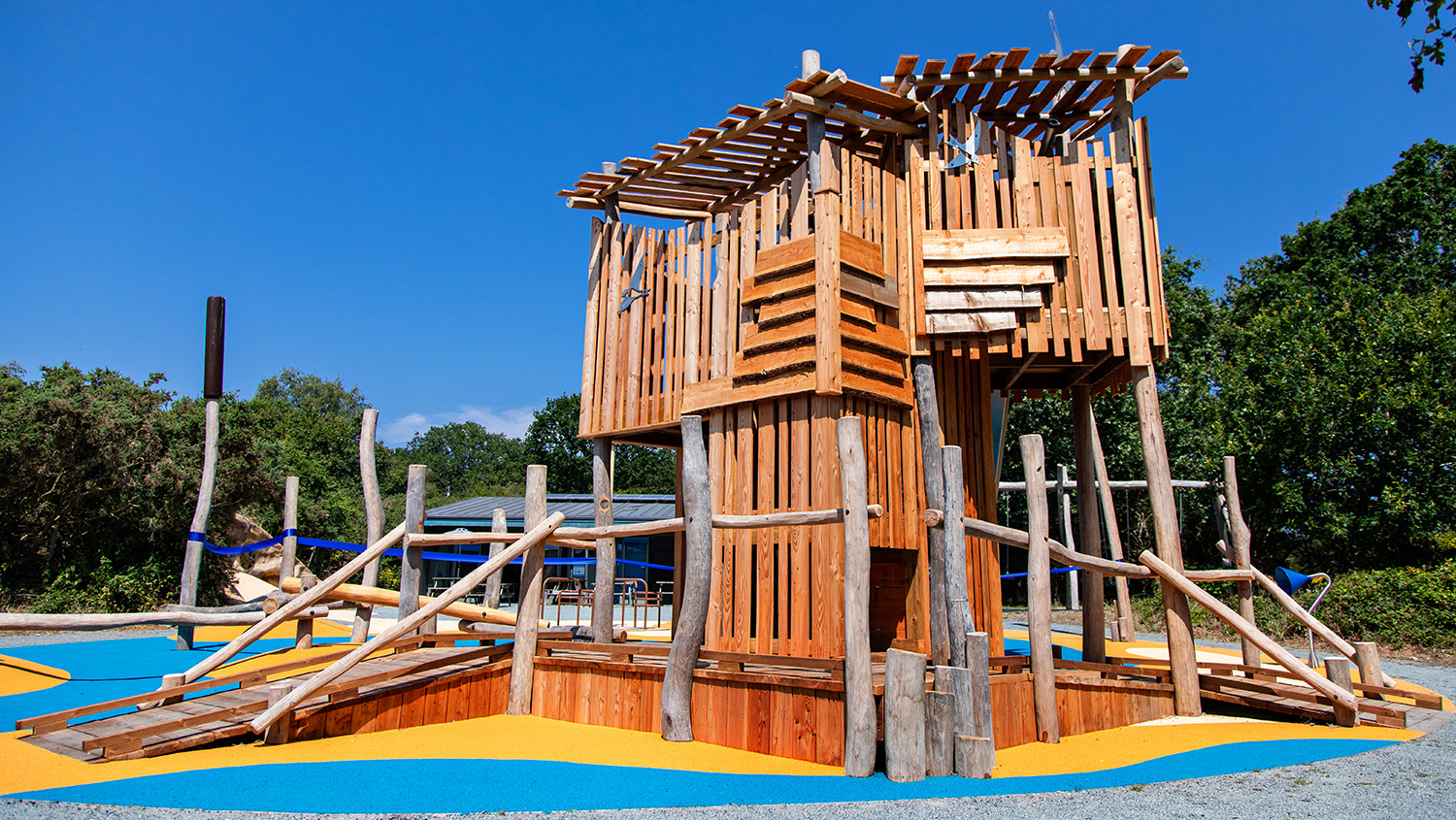
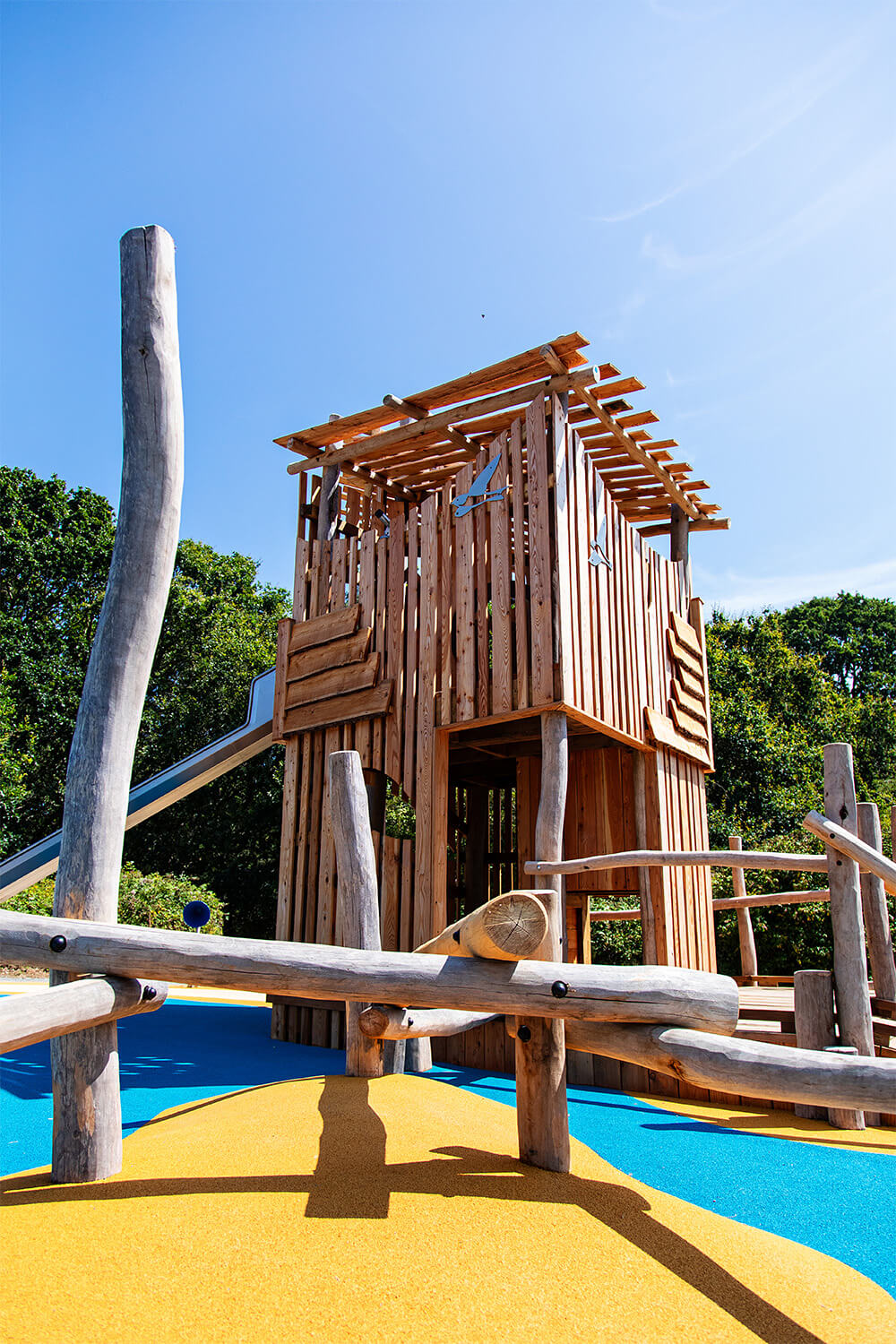
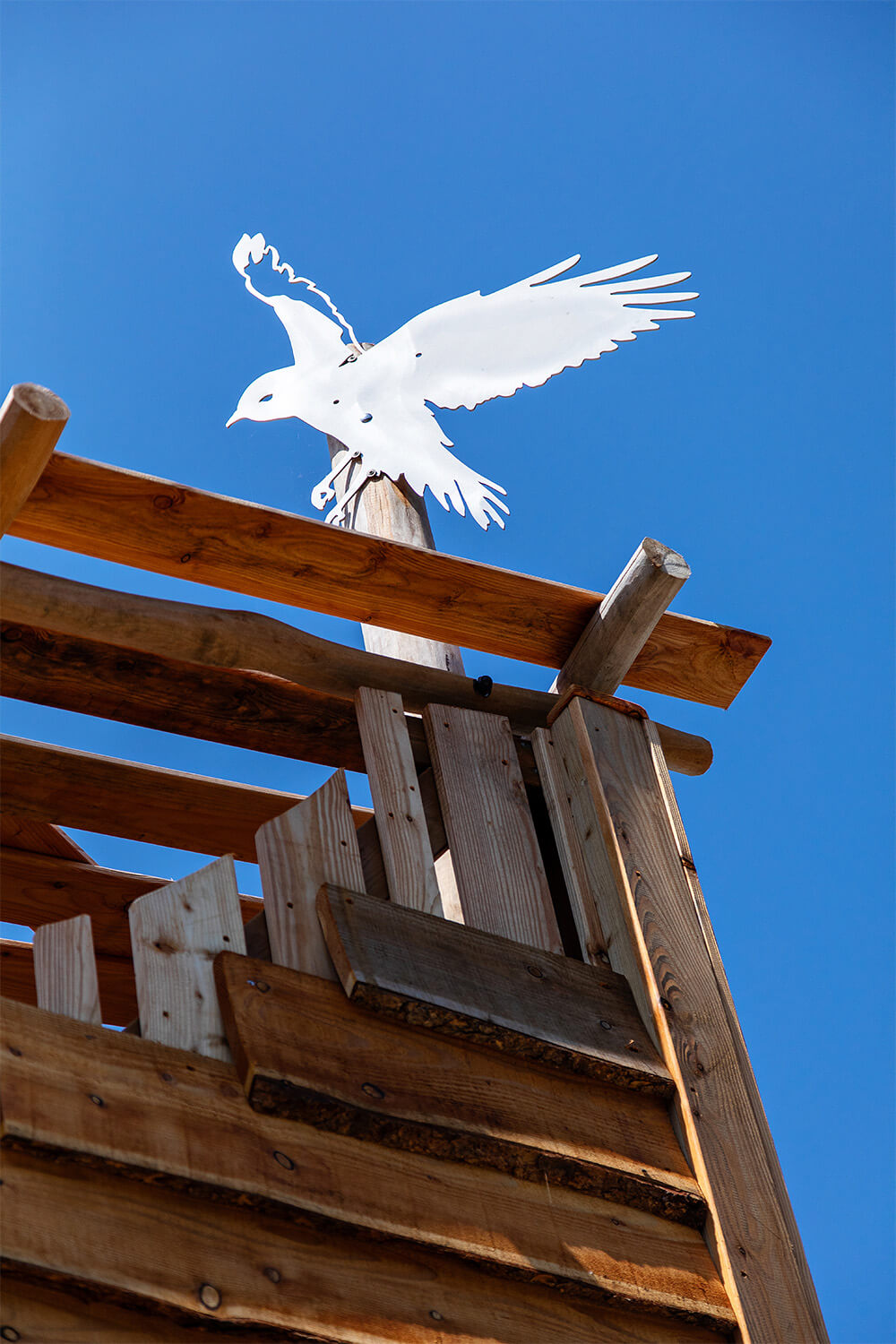
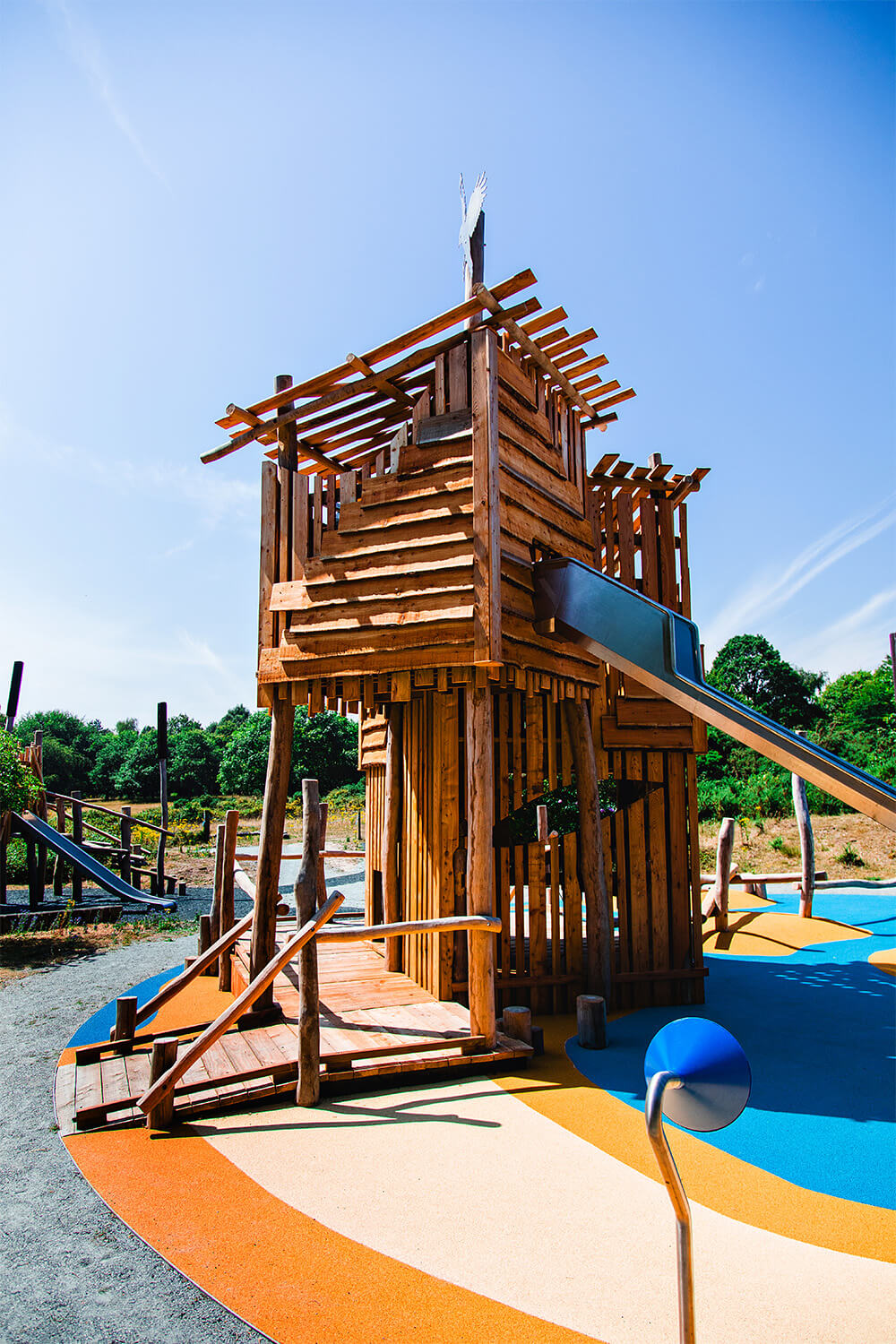
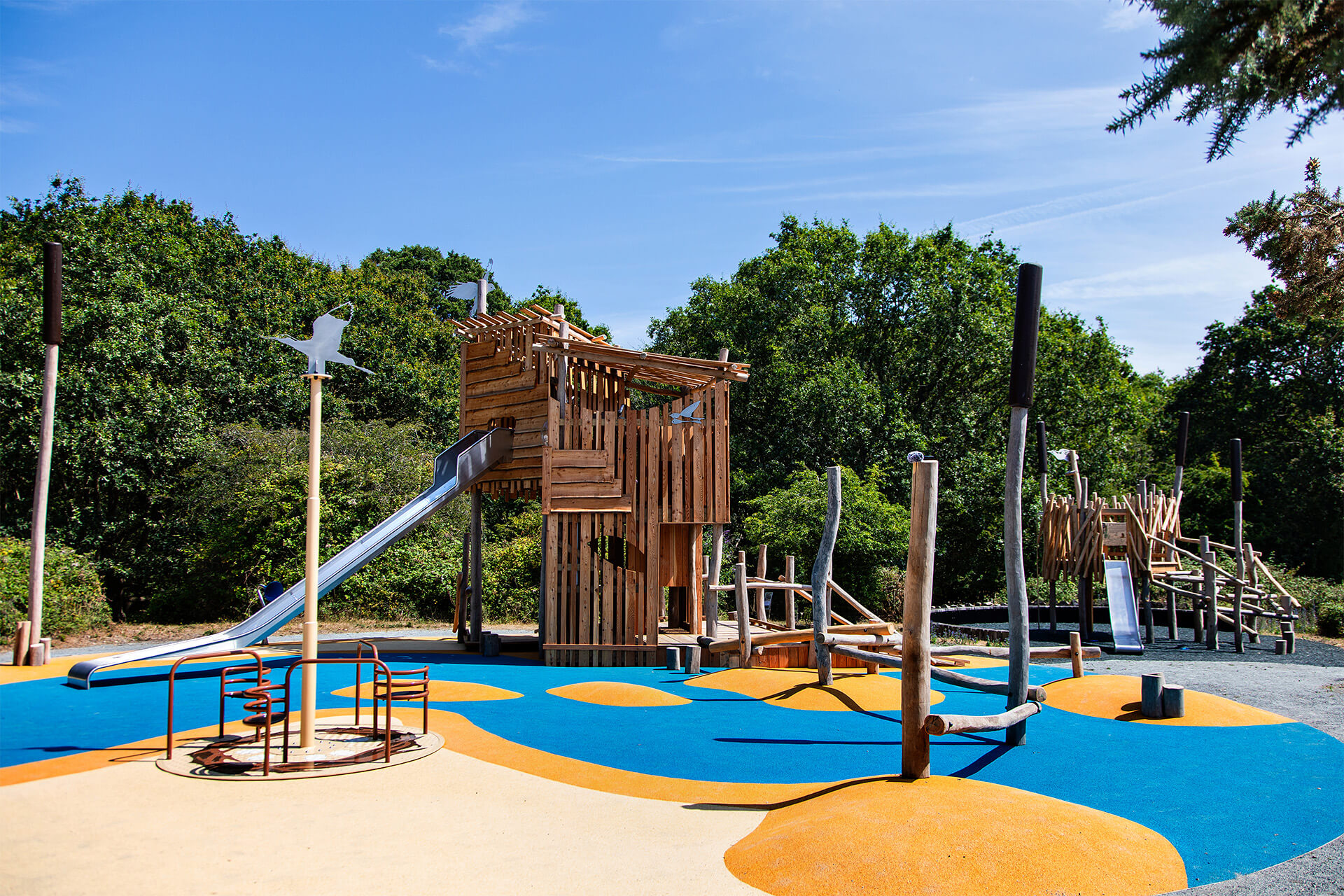
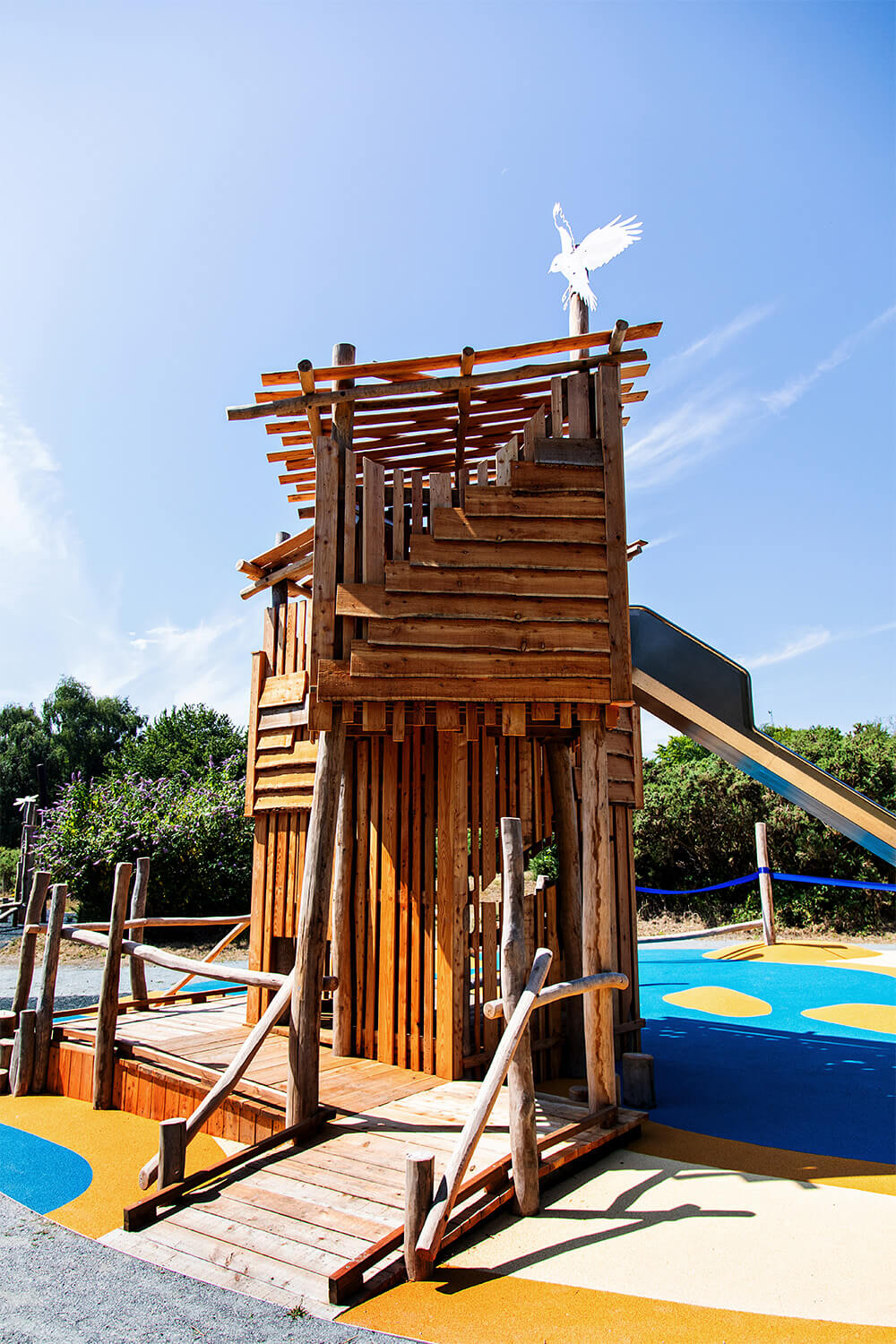
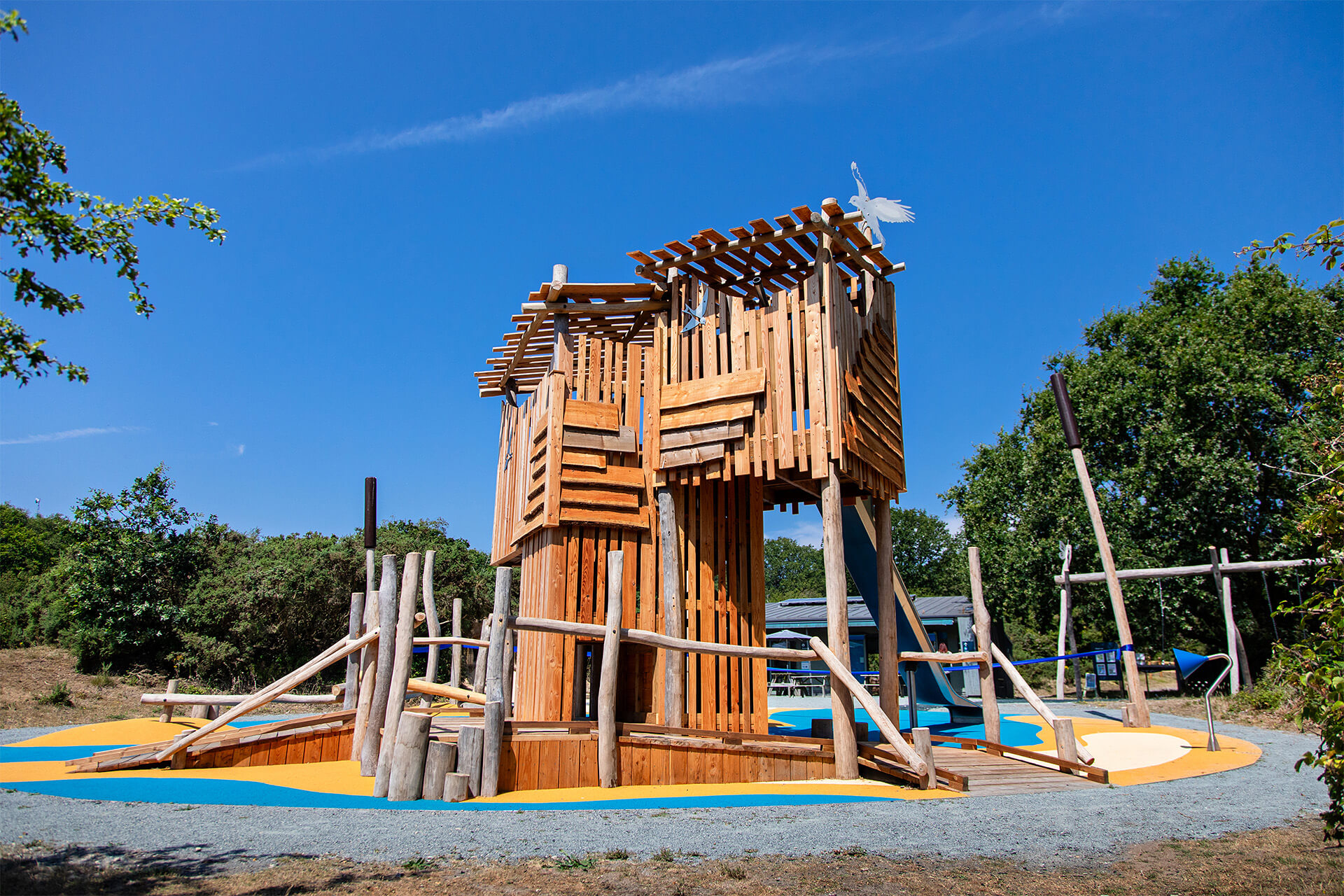
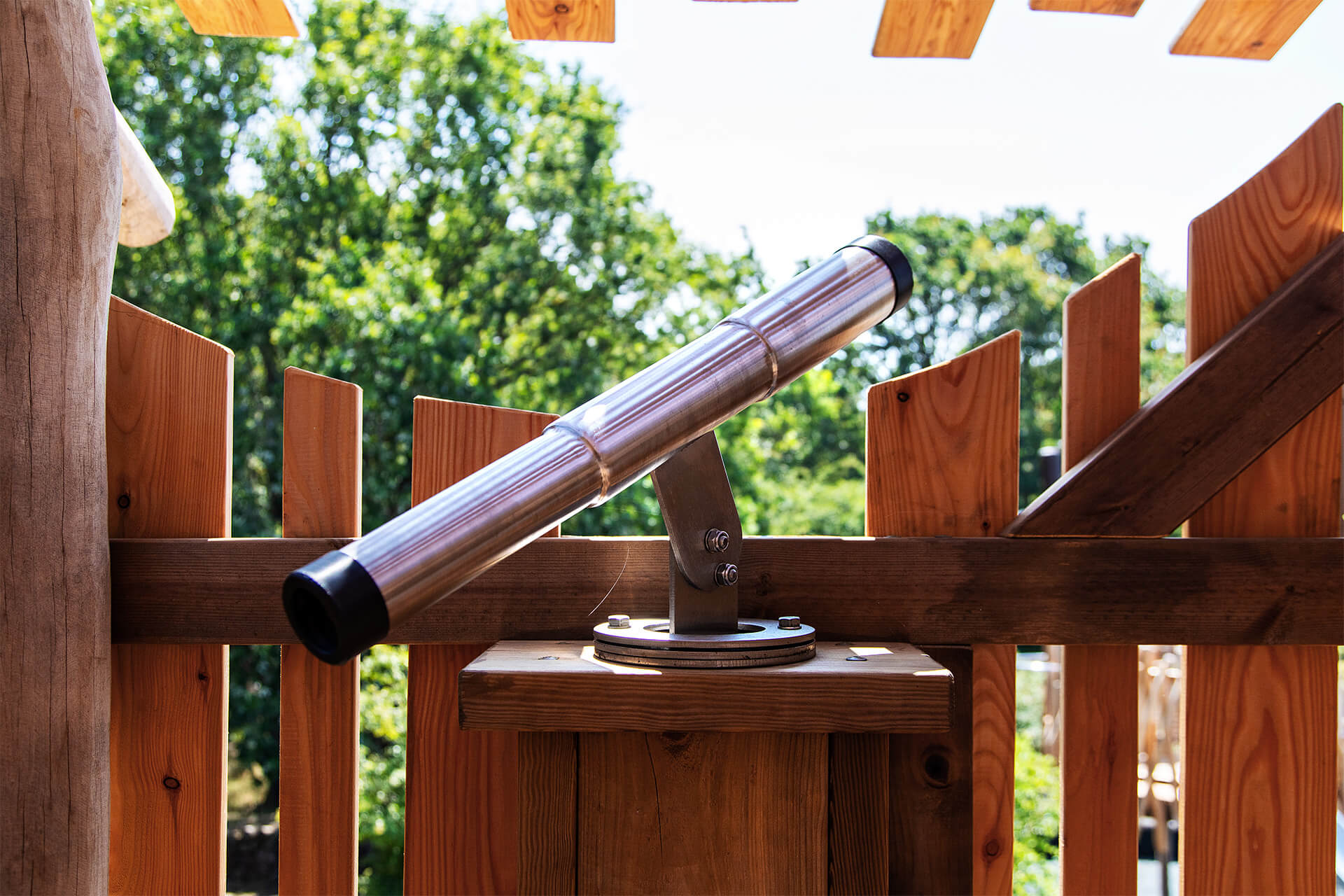
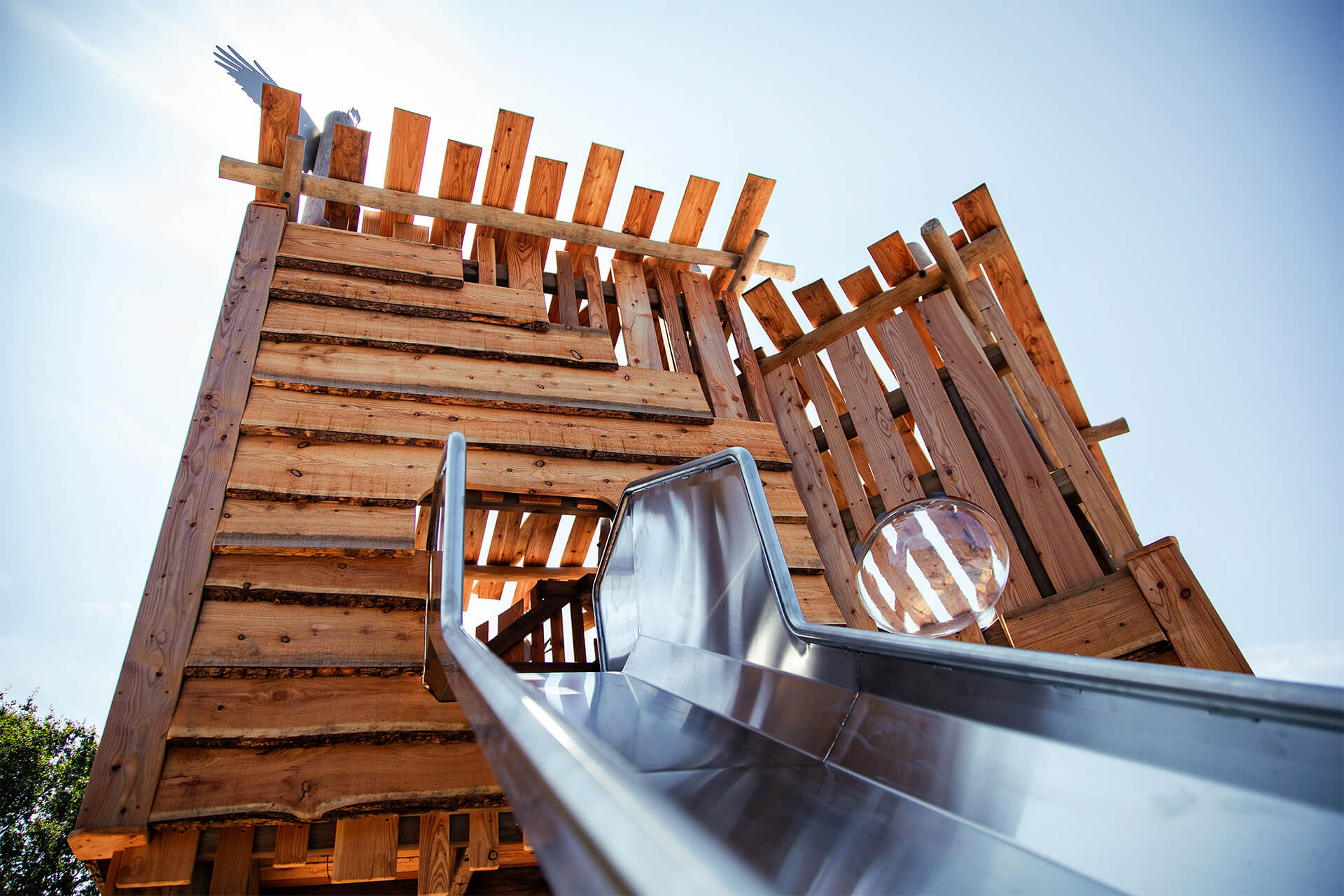
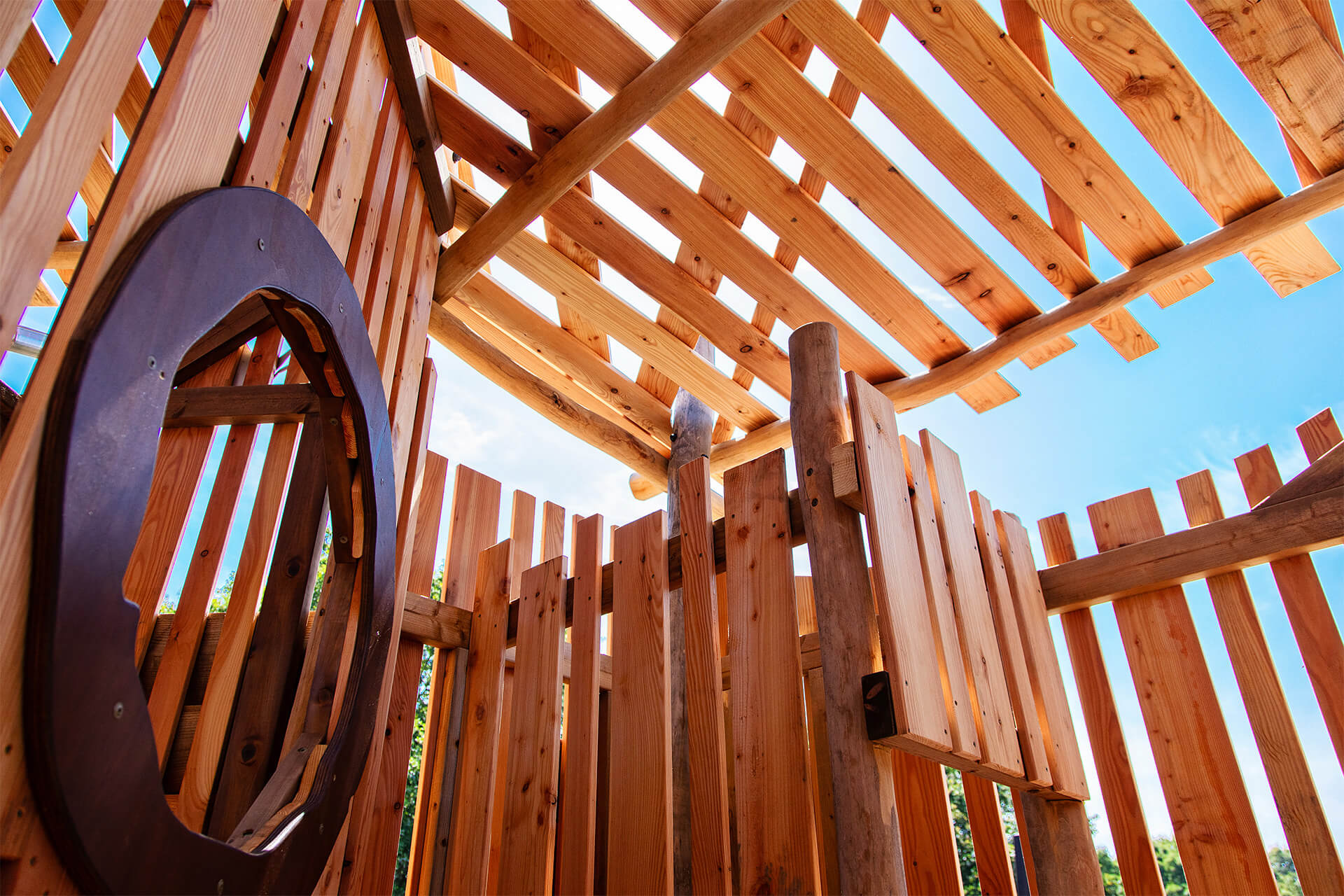
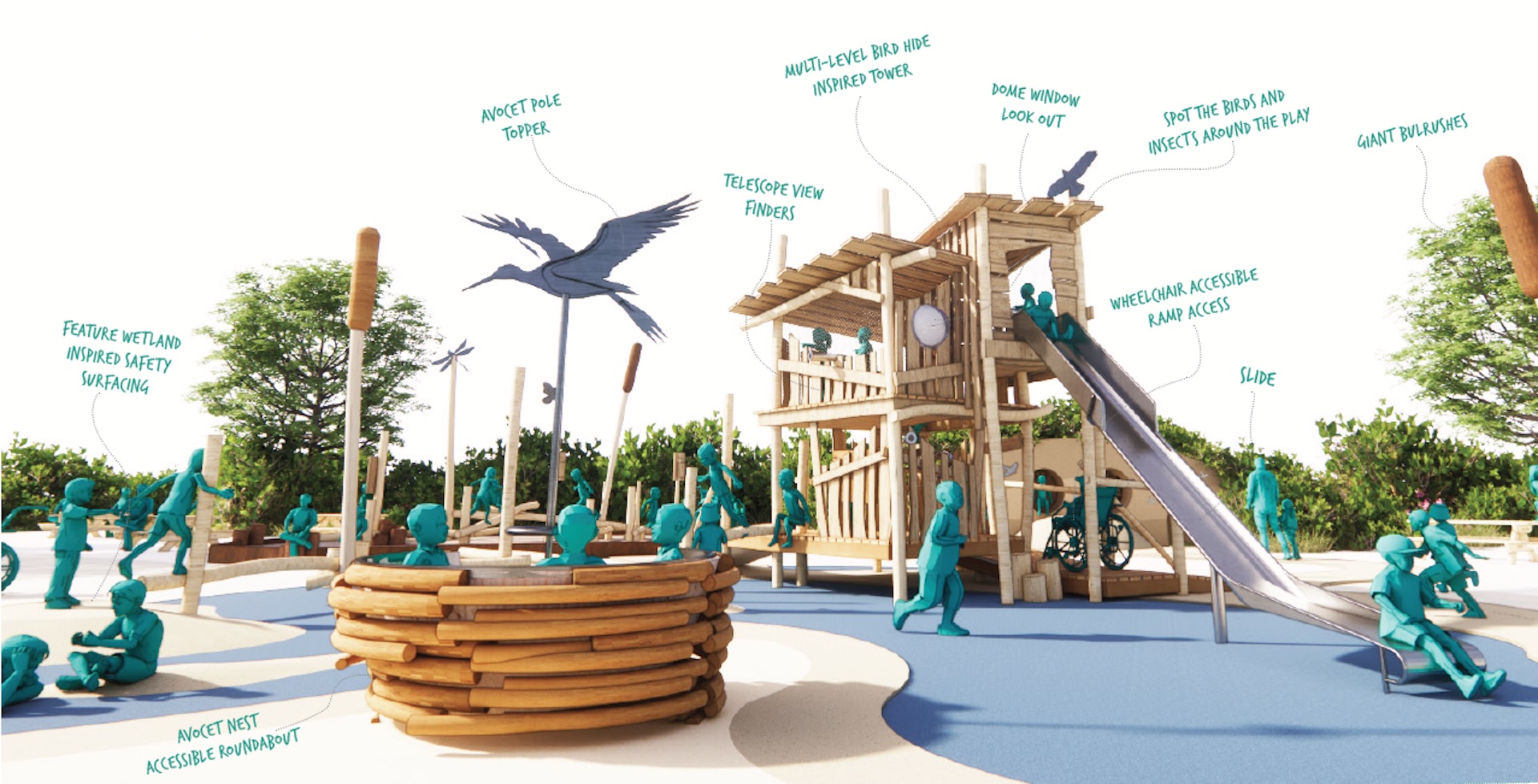
At the heart of the RSPB Minsmere play scheme stands The Perch, an impressive but of it's place play tower, rising through three levels. The wheelchair-accessible ramp leads onto a lower deck, featuring musical chimes and a walkie talkie, linked to the deck above for sharing discoveries easily between levels. A climbing route with a full internal climbing wall takes visitors up through the tower to a dome window and a set of viewfinder telescopes looking out across the reedbeds. From the top, a racing slide sweeps everyone back down into a wetland-inspired play landscape of gentle undulations and low-level traverse routes, replacing the site's old flat rubber surfacing.
Avocet nest roundabout
The Avocet, Minsmere's most iconic resident and a symbol of the RSPB itself, gave us one of the site's fully accessible features. It's a fully wheelchair-accessible roundabout set within its own Scrape, with the base detailed with a visual of a nest and eggs, and an Avocet, wings spread, is mounted on the central pole and turns with the roundabout as it spins. It’s a small piece of choreography that only becomes visible when the ride is in motion.
Discovery play trail and Sand Martin tunnels
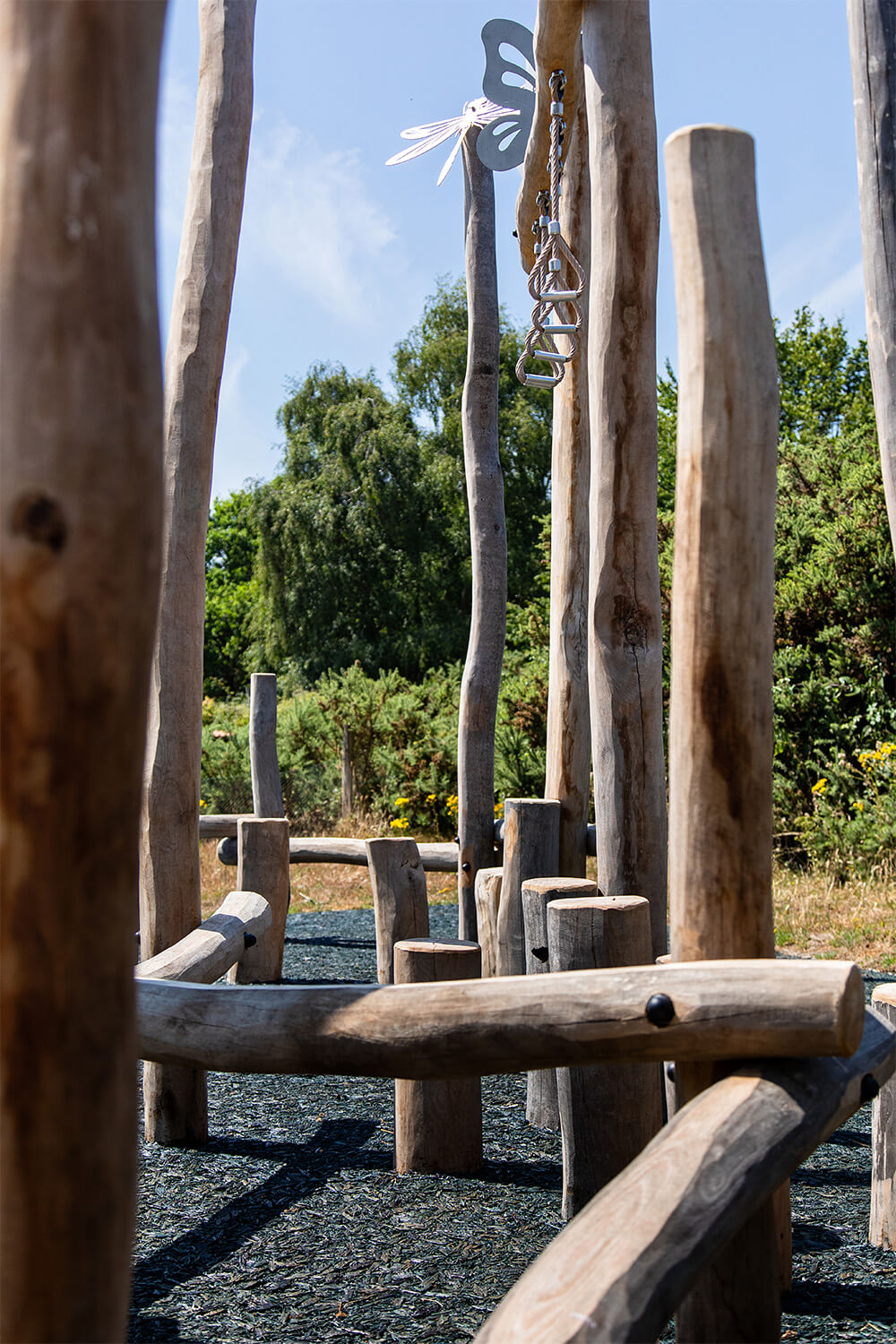
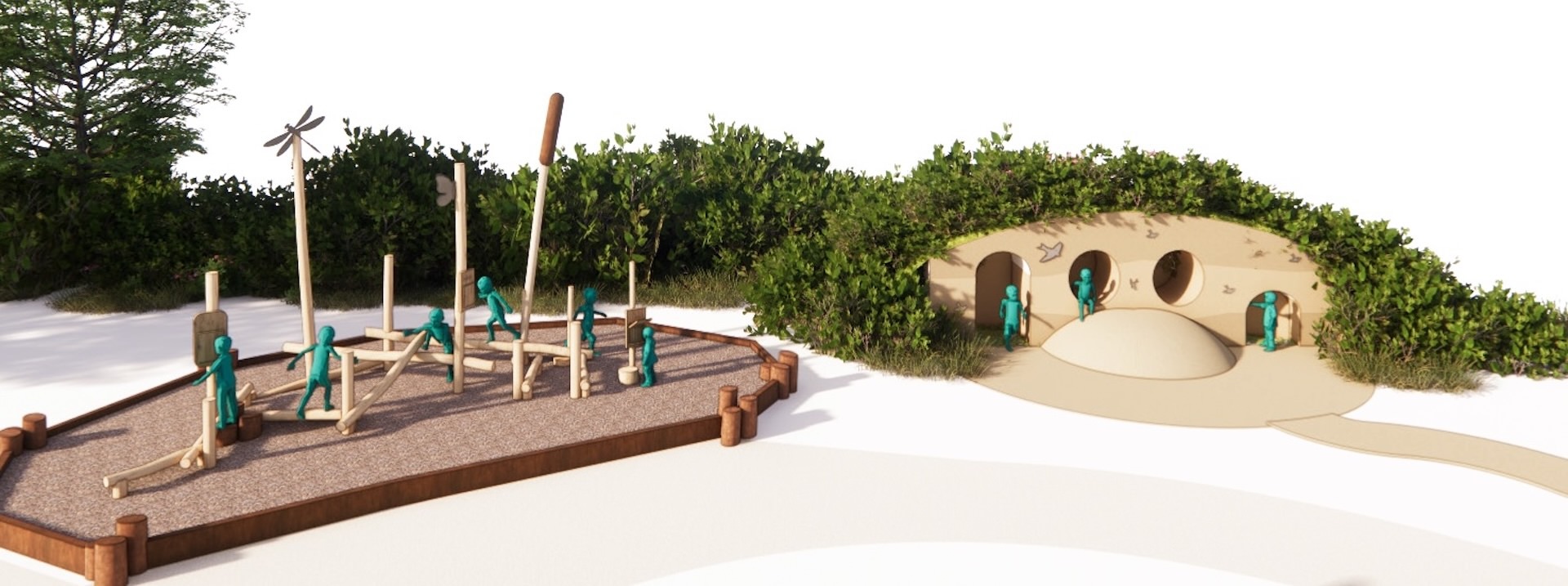
Newly refreshed surfacing links the central play hub with the site's beloved sand martin tunnels, now resurfaced and brought into the new scheme, their entrances tucked into a grassy mound alongside a representation of sand martins in flight. The neighbouring play trail continues the journey of discovery, with balance beams, log hops and trapeze handles sitting amongst laser-cut creatures fixed to the structures, rewarding visitors who slow down enough to spot them, just as they would if they were looking for wildlife on the reserve's own trails.
Bittern nest tower
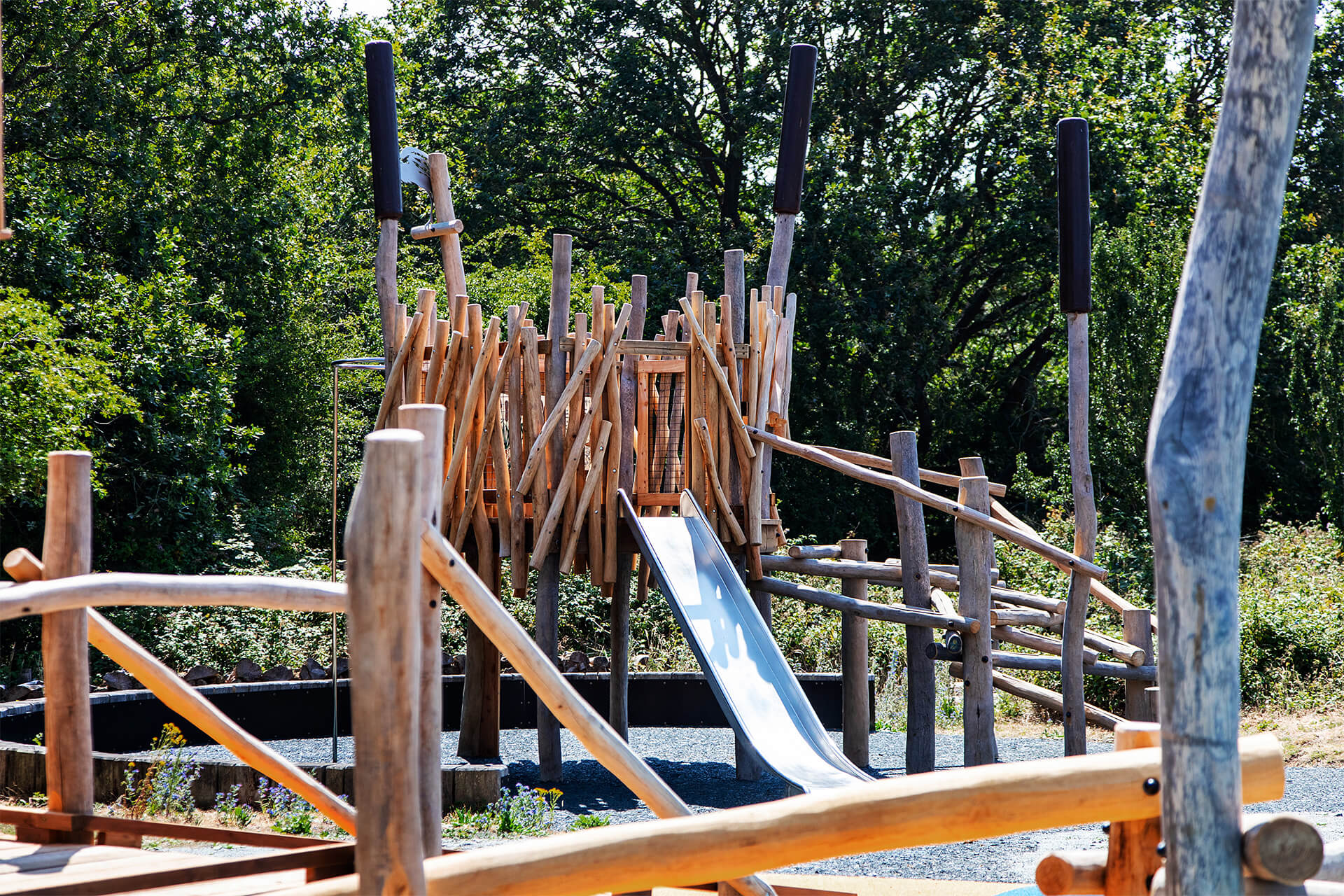
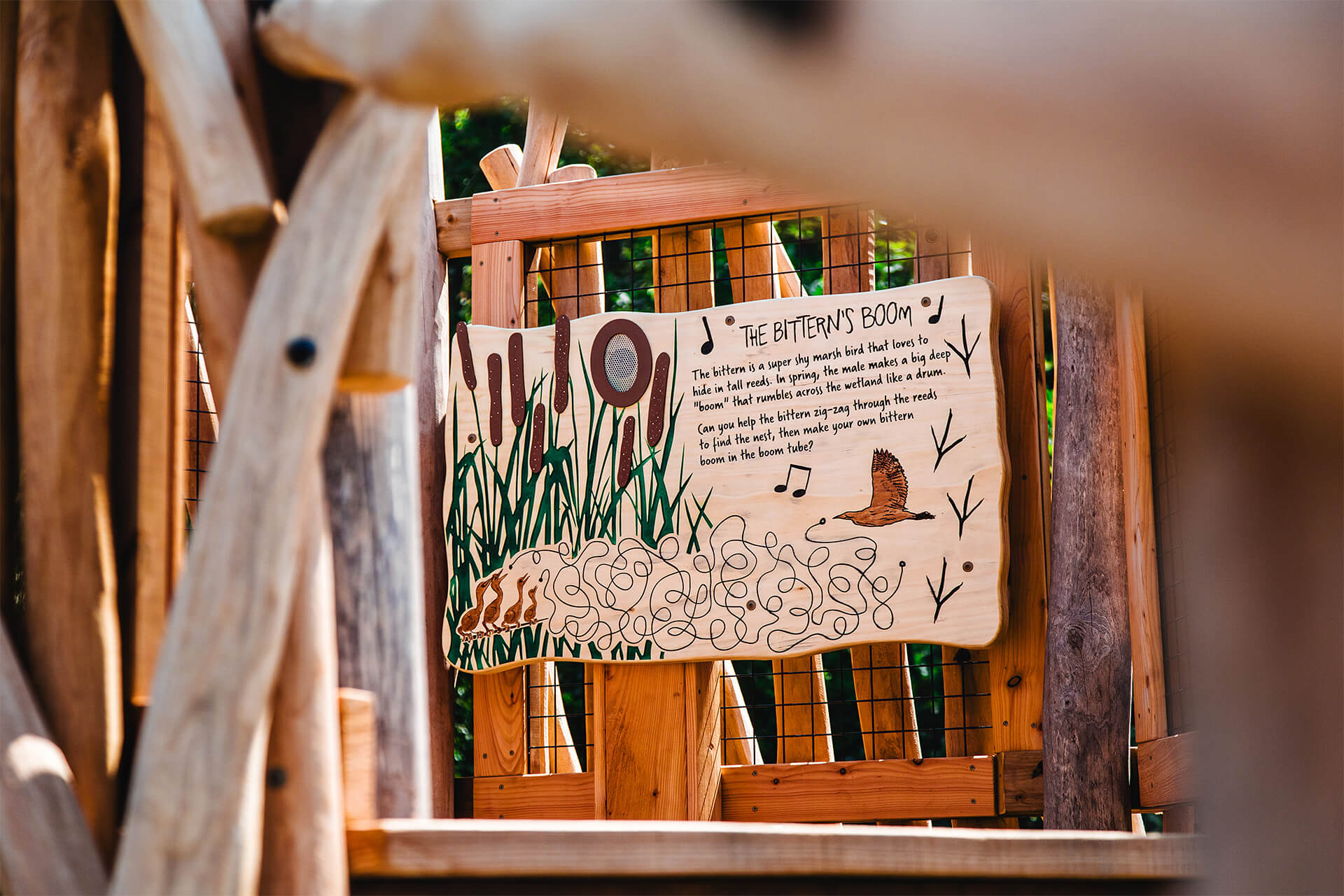
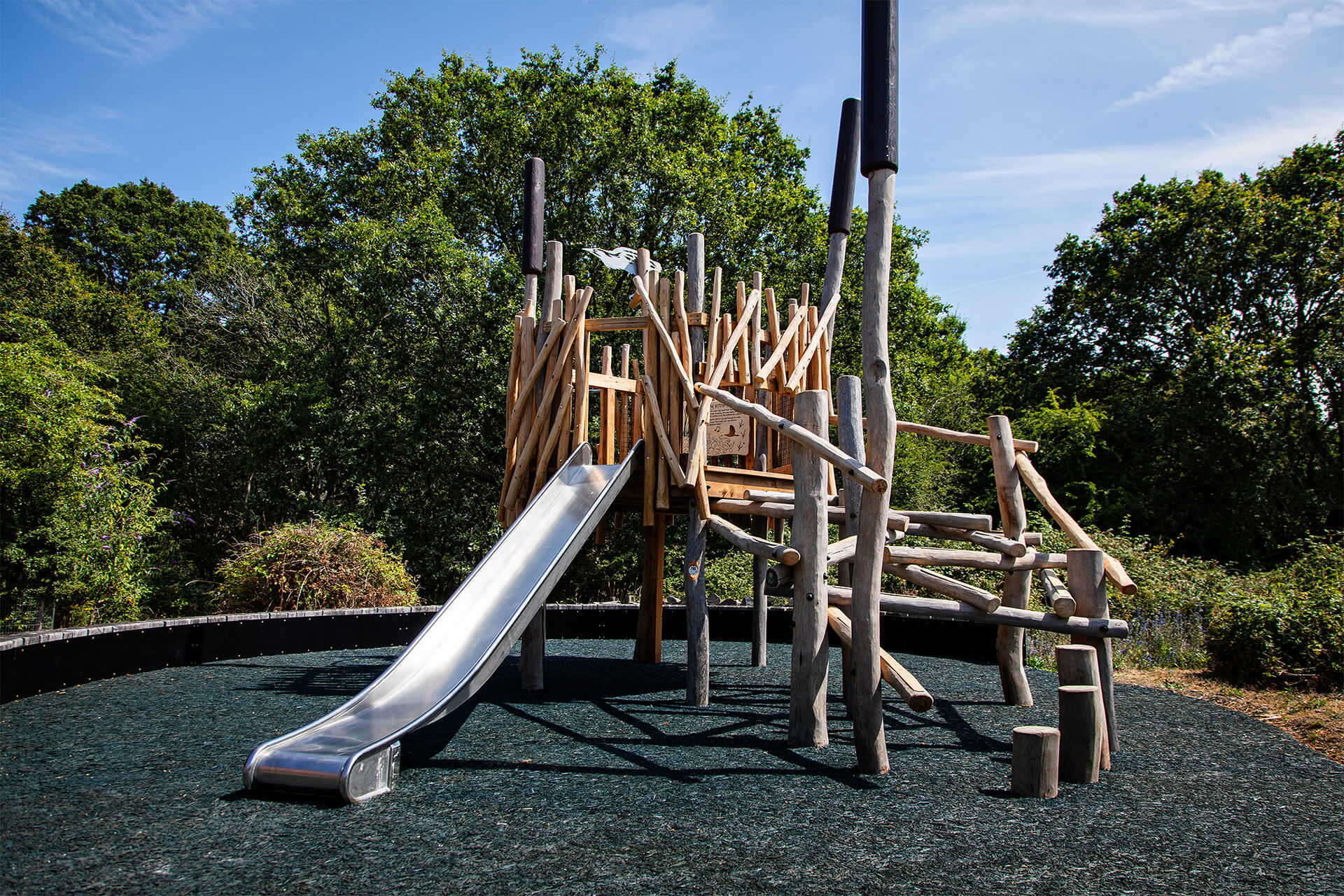
The secretive Bittern and its nest found amongst the reeds, lent its name to a giant reedbed style climbing structure. Visitors traverse into the nest through a cluster of bulrush-style timber uprights, choosing between a fire pole and a slide to make their descent. Along the way, discover a Bittern-themed activity board that carries your booming call between the tower and the ground, turning a solitary bird's call into a shared, playful conversation between friends and even generations playing together.
Created for every visitor
Accessibility runs through the design. It's there at every turn and has been baked in from the first designs. The open roundabout, the ramped route through The Perch, and the inclusive nest swing near the site's boundary are not add-ons but part of the same wetland-inspired story that ties the whole play area together. As with all of our work, we believe that genuinely inclusive play improves the experience for every visitor, not only those it is designed for.
Built to last, responsibly
Much of the timber used in the build is Robinia, chosen for its natural durability and low environmental impact. Safety surfacing was selected for its sustainability credentials too, using repurposed end-of-life rubber and locally sourced aggregates, with the wetland-inspired mounding designed to feel like a natural extension of the reedbeds beyond it rather than a hard edge against them.
The result is a play area that does what the best of Minsmere already does, and that is to encourage you to look closer, move through a landscape at your own pace, and have learned a little more about the wildlife that calls it home, when it's time to leave.
The Location
Minsmere is one of the UK's most celebrated nature reserves, shaped by wartime flooding and nearly eighty years of habitat creation across a landscape that draws Bitterns, Avocets and Marsh Harriers to its reedbeds and scrapes. When the RSPB asked us to reimagine the play area in its Wild Zone, the brief was simple to state and harder to deliver. Build something that felt as much a part of Minsmere's story as the hides and the reedbeds themselves.
To better understand the site, we looked at how visitors already experience the reserve, moving from hide to hide, watching, listening, discovering, and used that to shape the design. From a central hub, three play routes branch out across the site, each one built around the three main species that makes Minsmere what it is today.