Dorset


June 3, 2026
Dorset
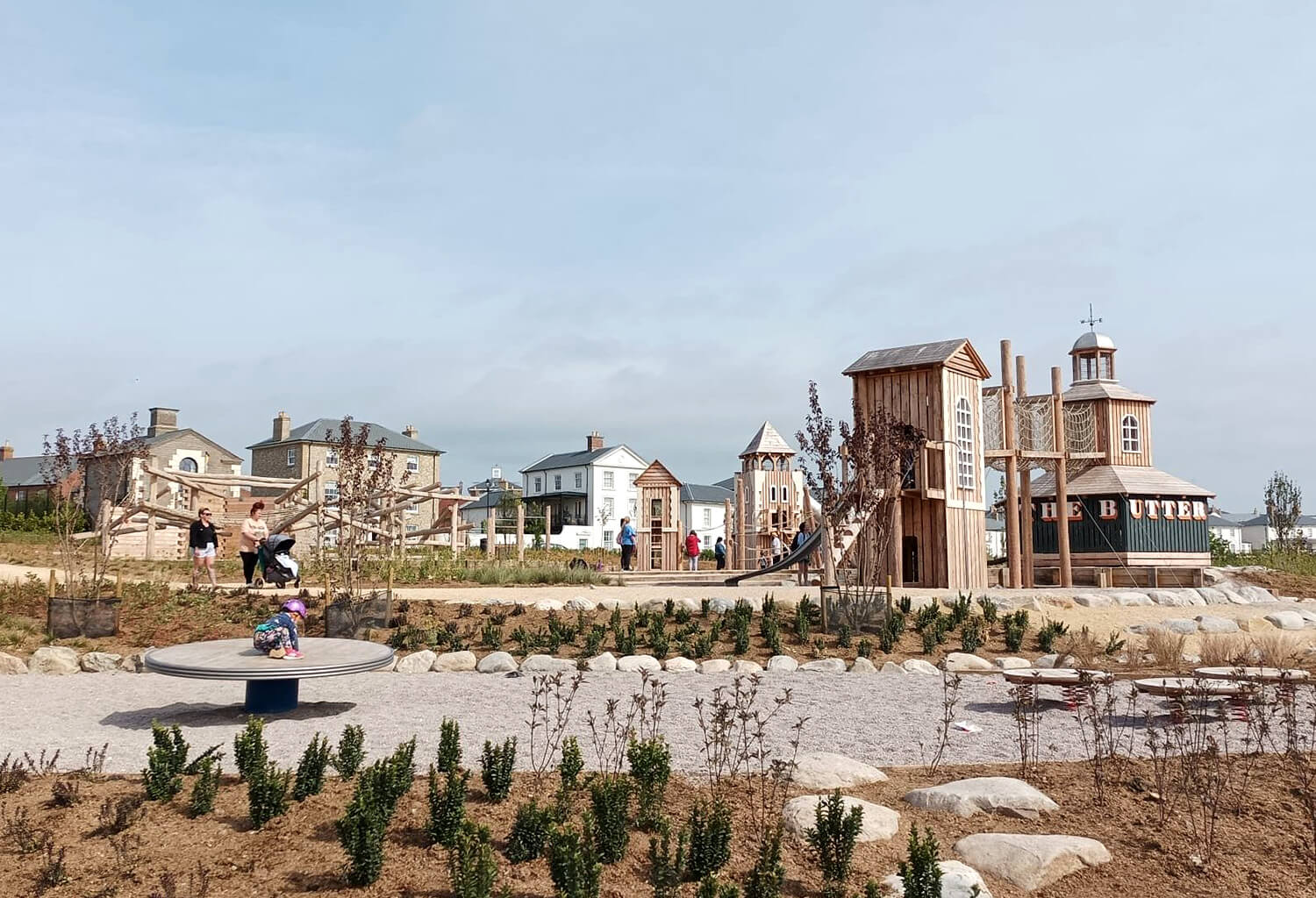
Back in 2019 we began work with the Duchy of Cornwall to create a play destination within the Poundbury development, on the outskirts of Dorchester, Dorset.
The development itself began back in the early 1990s under the guidance of King Charles III (then Prince of Wales), as a response to what he saw as poor modern planning and placemaking.
Where it saw things differently to modern new builds was in its desire to create a sense of place for the residents. It was designed around traditional urban principles, rather than the more crowded plans of the more recent suburban developments.
There were a few key principles. Streets designed for people first, cars second, supported by a strong sense of place and identity to try and target long-term stewardship - all brought together with cohesive, if traditional design codes.
What this meant in reality was Human-first design. Streets and buildings are proportioned to feel welcoming and there's space to spread out a little. As a critical part of this, the play was to be created to attract families and bring them together in attractive, communal play spaces.
Our first site visit was while construction was very much underway and the signs were obvious that it was a very different type of community that was being created.
The Great Field development was created to provide 12 hectares of green space at the heart of the community, planted with more than 26,000 shrubs and trees. The end goal was to create an inclusive space for all ages and abilities, to build a new community hub centred around the Pavilion building, which hosts a cafe, toilets and an outdoor seating area for all.
A key part of this is the drive to link the two communities of Poundbury and Dorchester and create a new destination for outdoor play within the area.
By engaging with two leaders in their respective fields, the aim was to combine the bespoke and natural feel of a (CAP.CO) Creating Adventurous Places design with the performance and durability of Timberplay products; to deliver a genuinely unique public offering unrivalled anywhere else in the UK.
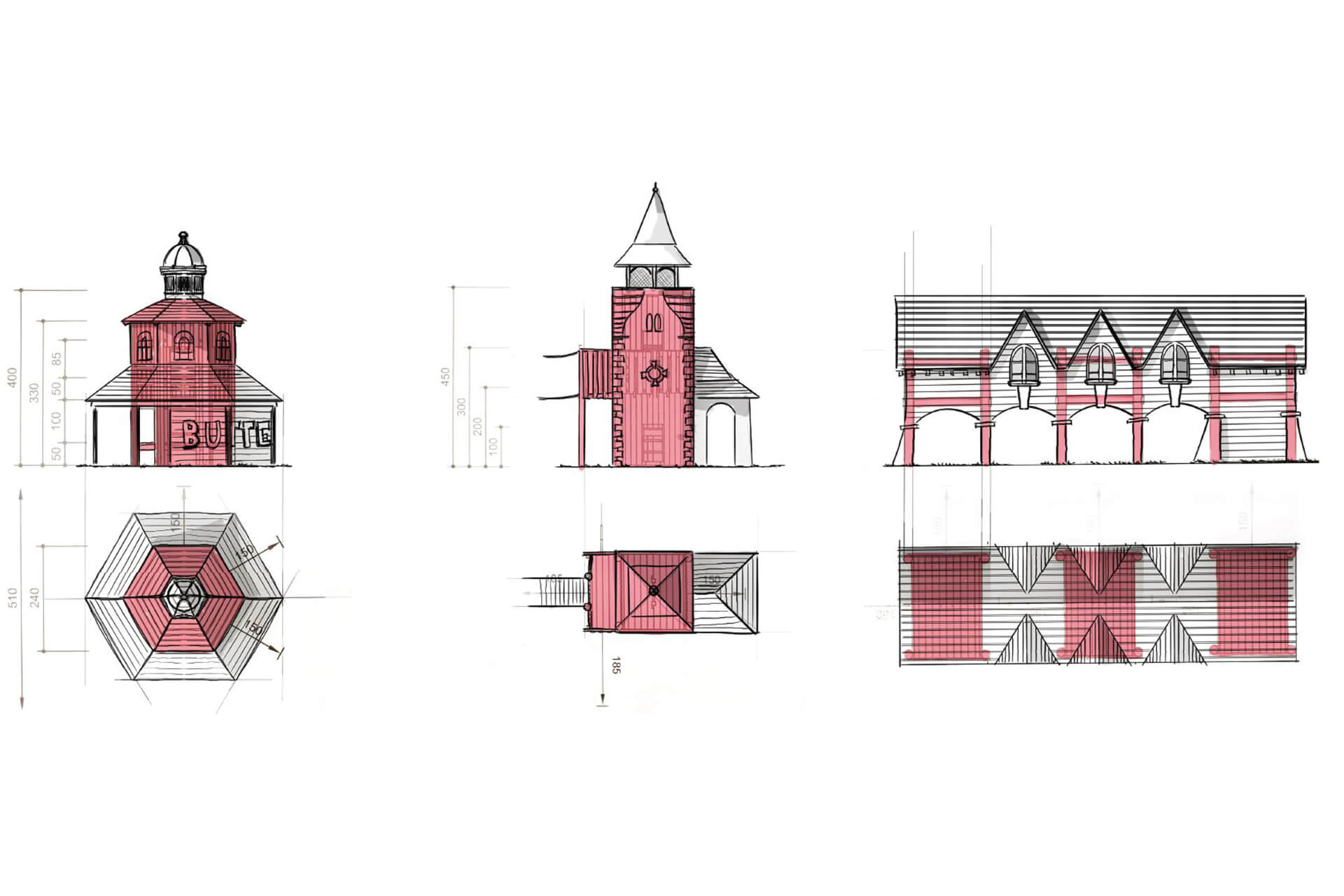
Having visited the site and surrounding areas a number of times, the team were drawn to the architectural variety and uniqueness of form prevalent across the wider Poundbury development.
Taking inspiration from this, our initial concept design was created around one of the key Poundbury principles - which is to create ‘architecture of its place’. By focusing on key buildings that help define Poundbury’s unique identity, it generates an immediate visual and historical connection between the play and its surroundings.
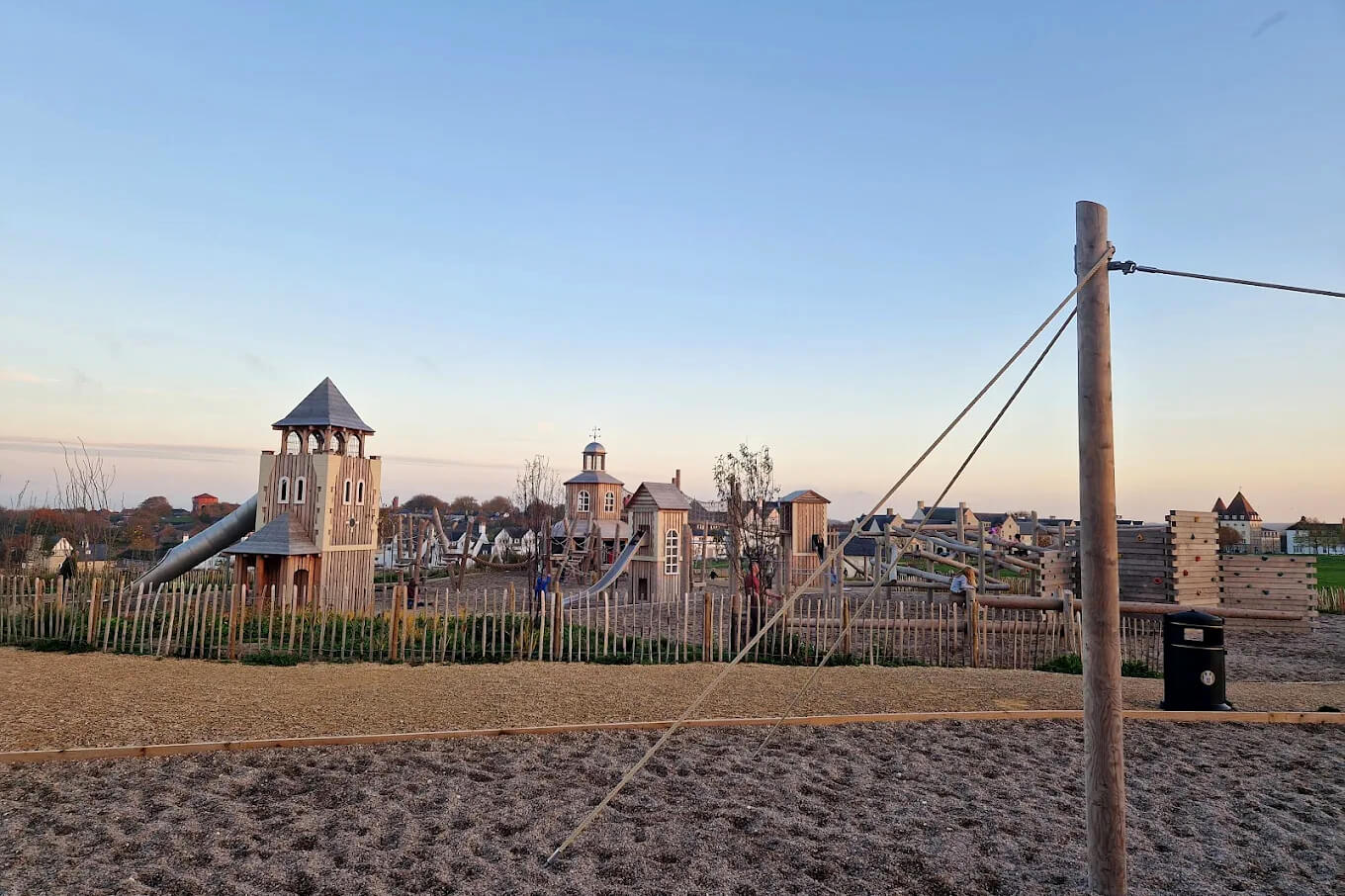
In addition, utilising the existing landscaping plans developed by Fabrik, our idea was to create a landscaped mound at the heart of the proposal to echo the local bronze age hill fort on Poundbury Hill. The combination of the landscaped elements and the installation of multi-activity play structures around these more natural earthworks, ensured that the play feels ‘of its place’.
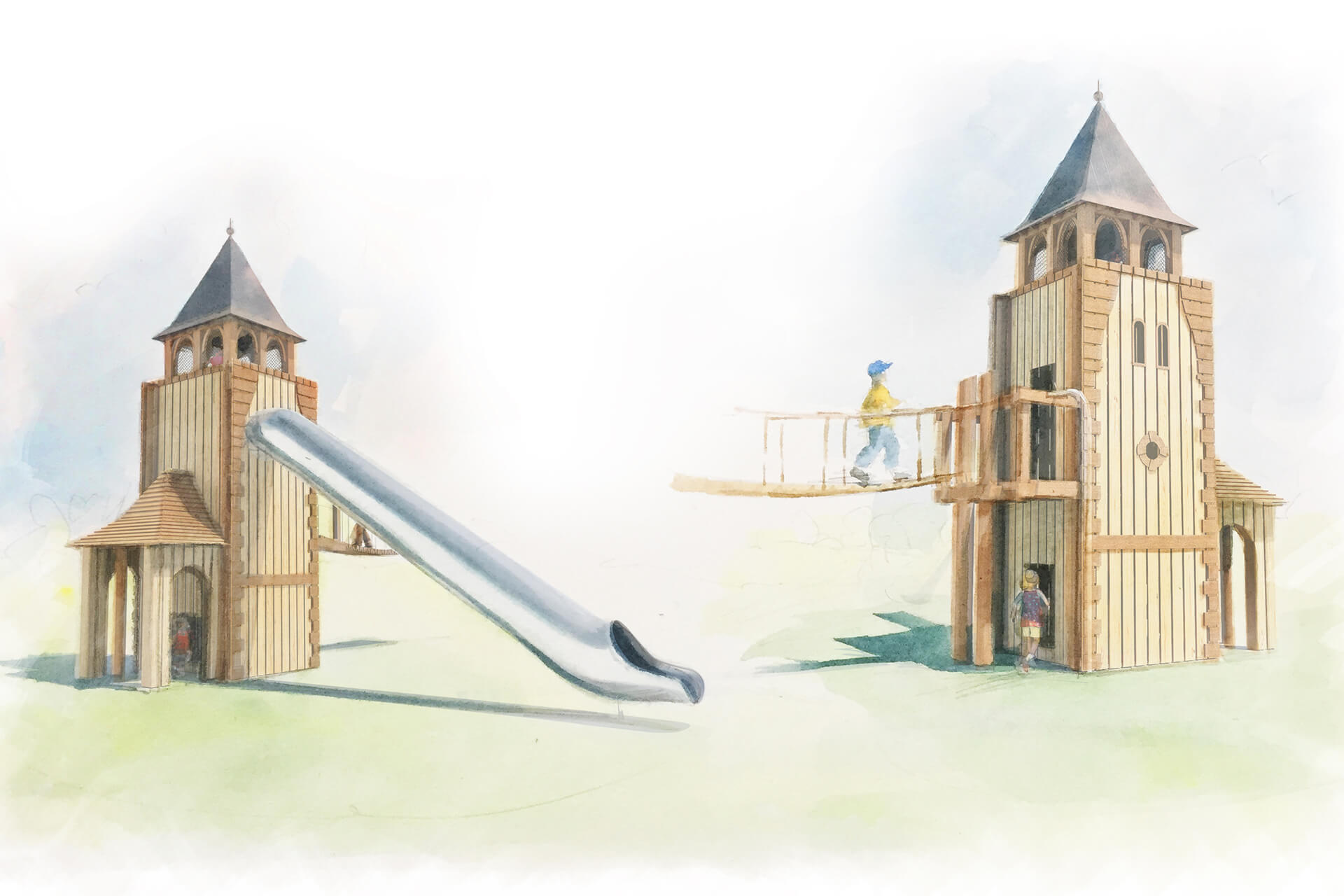
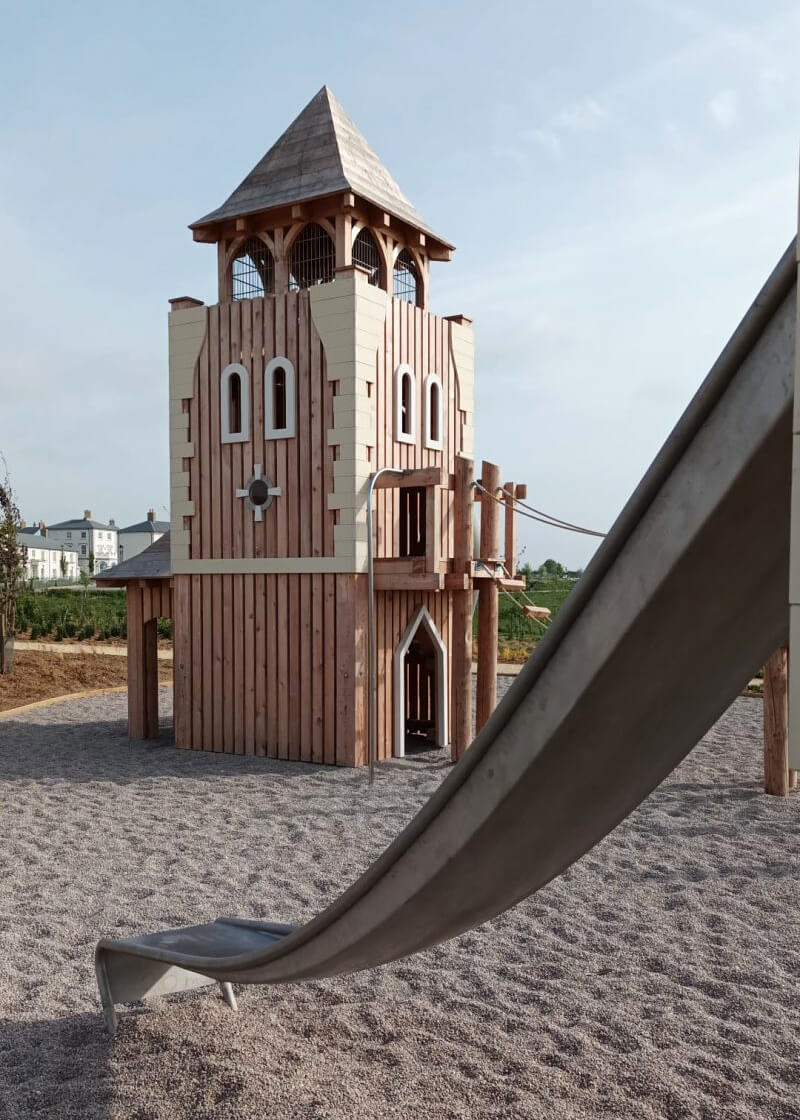
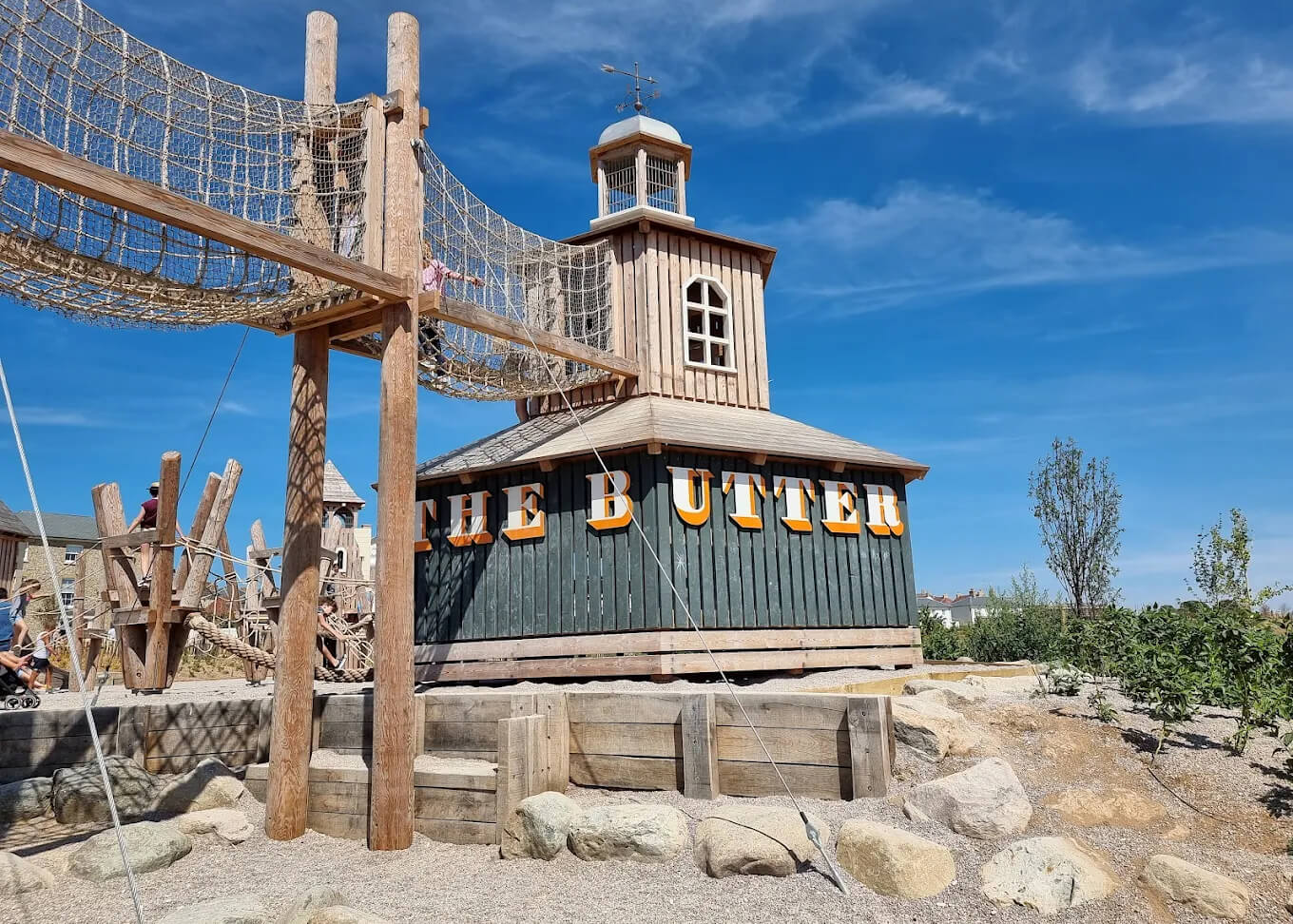
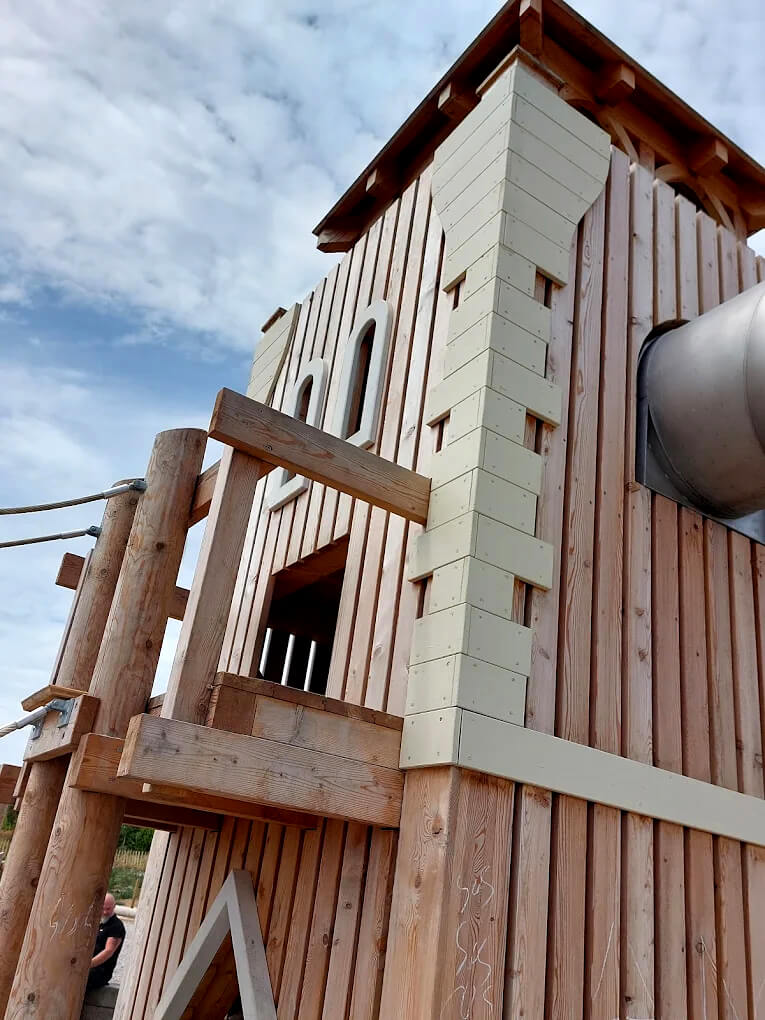
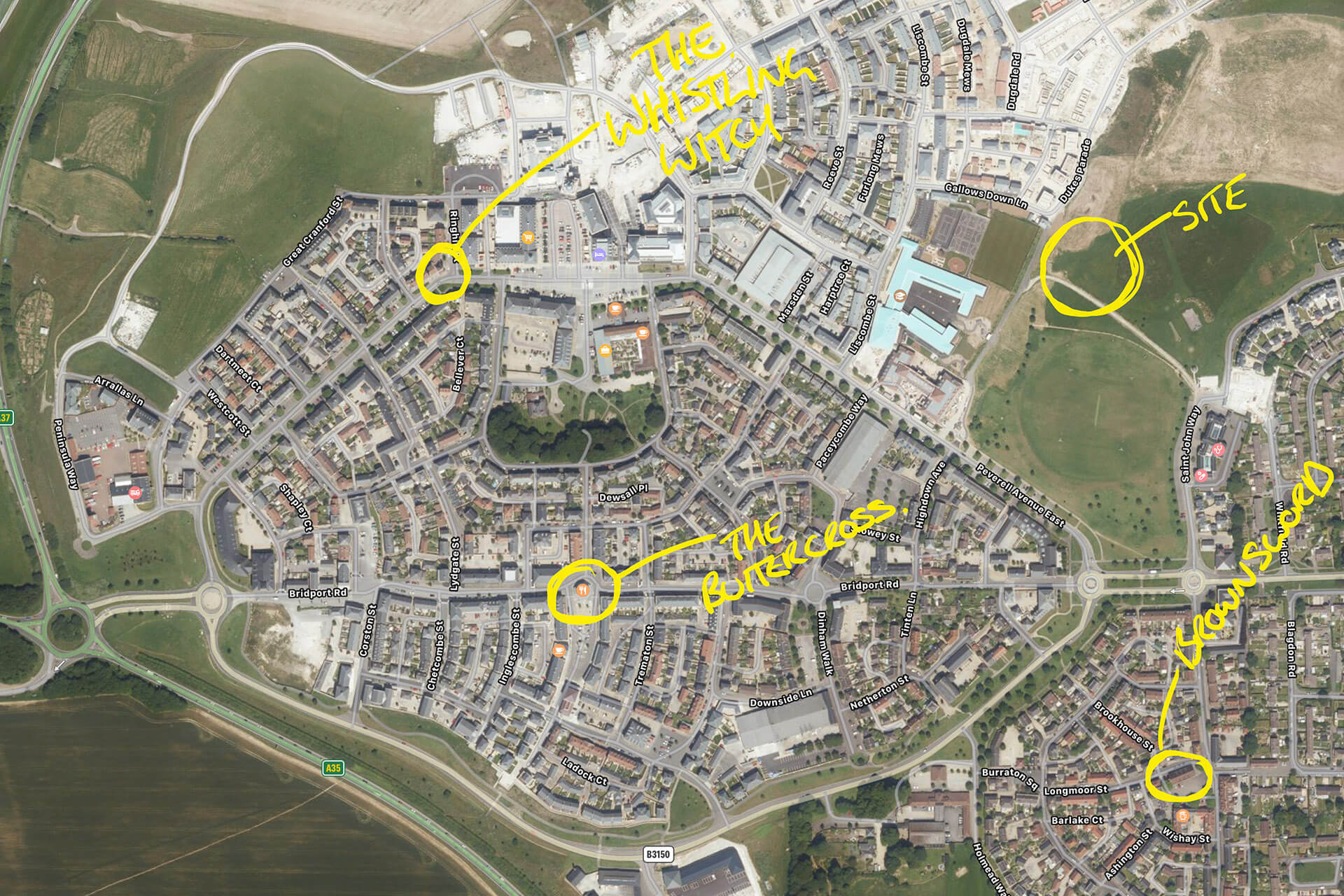
When you look at the Poundbury development, there were a few significant buildings that stood out as place makers for the village itself. The Buttercross building could be found on many of the Cotswold villages and towns nearby. The whistling Witch tower has echos of many a church steeple in the area. The Brownsword building offers such a strong visual cue, it could almost only be found in Poundbury, but be influenced by buildings across the region that it's been created to represent.
All of these in combination allowed the final design to create a powerful visual message of coherence with the local architectural vernacular. It also allowed our play designers to pack it with interesting places for kids to climb, explore and lose themselves, in the history being created by the new build development and the area in which it sits.