Worldwide


August 20, 2026
Worldwide
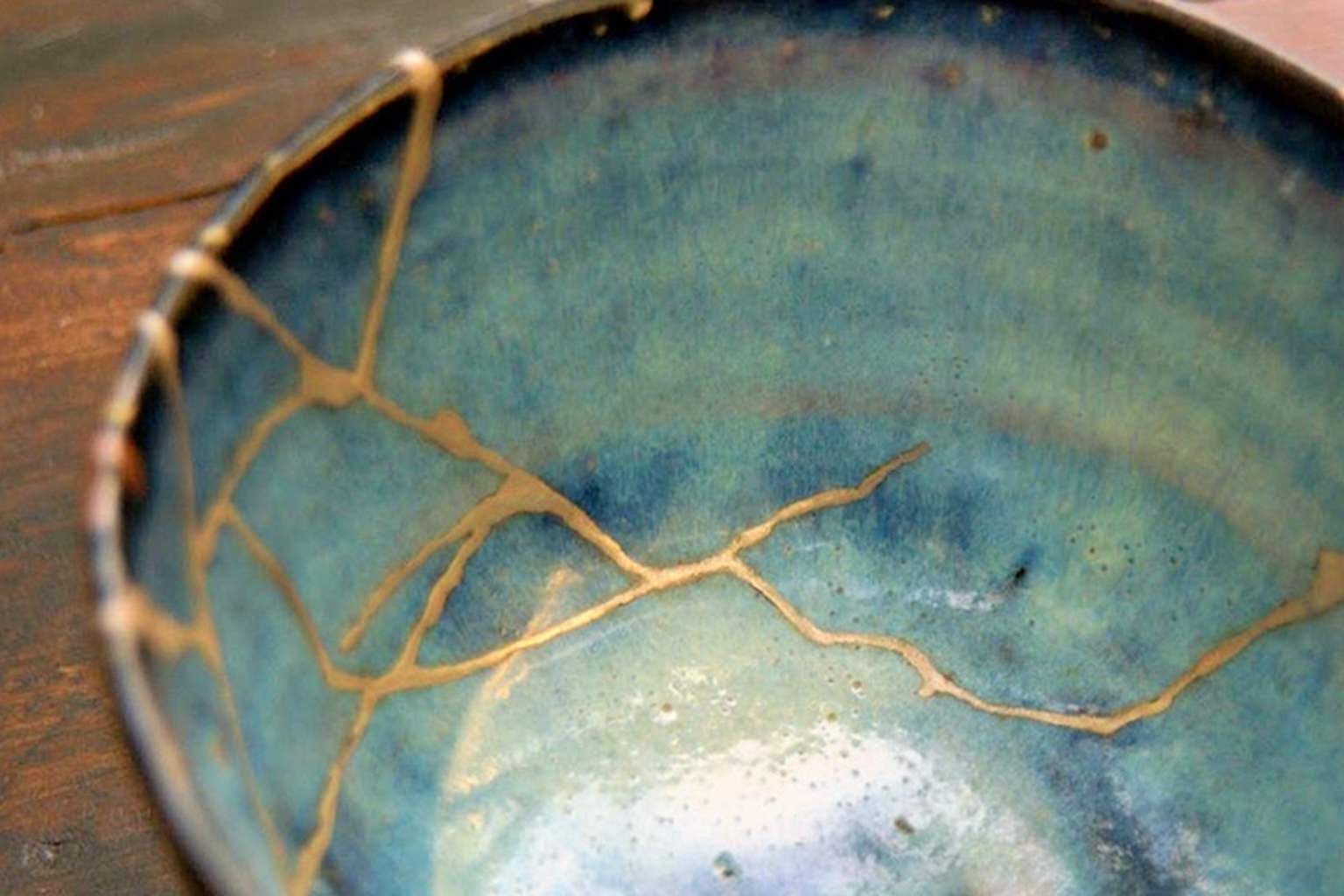
There's a Japanese art form called kintsugi, the practice of repairing broken pottery with lacquer mixed with powdered gold. Instead of hiding the crack, the gold highlights it. The break becomes part of the object's history, and genuinely the most beautiful part of it.
We were talking about this recently on a visit Liseberg in Sweden, and, even though we don't (often) spend our weekends mending ceramic pots with golden glue, it can teach us a lot. We think about it because we build things that are designed to be used a lot. Climbed on, jumped off, weathered by rain, sun, and to have thousands of pairs of stomping feet all over it every day of its life.
Everything we make will eventually need maintenance and even repair. The question is what that repair says about the thing itself.
What kintsugi does best is highlight the beauty in imperfection, age, and the marks that time leaves on things. A kintsugi bowl isn't pretending that nothing happened. It's showing its whole life, including the part where it broke and someone cared enough to fix it.
With our drive towards ever-increasing sustainability, we're always looking for different ways of reusing, repurposing and recycling in what we create. Over the last 10 or 20 years, the norm would have been to replace something completely or in a few cases, repair, repaint and bring it back to looking like new. Kintsugi does the opposite. It says the repair is not a failure, it's a moment worth marking and shows it has been well used and even well loved.
A lot of adventure play equipment lives outdoors, in the worst of the weather, surrounded by trees, out in the wind and in constant use. Timber naturally cracks and silvers without necessarily becoming weaker. A well-built play space isn't one that never needs attention, it's one that's designed to be loved and maintained and looked after visibly.
There's a maintenance philosophy in that gold seam. A required repair to a piece of play equipment shouldn't be ignored or bodged in as fast and as cheaply as possible. It can be done with the same care as the original build: the right materials, a joint that's honest about what it is, a fix that will itself last years.
Children are remarkably observant of the spaces they play in. They notice when something has been cared for, and they notice when it's been neglected and papered over. They then tend to care for it better themselves. We saw this at BeWILDerwood, where there was almost no litter. People cared enough to pick it up. It's the same at the beautifully maintained theme parks like Efteling and Liseberg. Efteling even has their famous bins (or Paper Gobblers as they are locally known) to make the caring part of the fun.
This is also a question of longevity. Bespoke adventure play structures are significant investments, often serving a school or an attraction for a generation or more. A maintenance plan built around this thinking, regular inspection, prompt and considered repair, materials chosen to age well rather than just be cheap and designed to look good on day one, protects that investment far better than a build-and-forget approach ever could.
There's a further layer worth drawing out. In narrative-led play, the physical history of a space becomes part of its story. A repaired pole on a structure that's been climbed by ten years of children, isn't a blemish, it's evidence the place has been loved and used exactly as intended. The wear is the proof of purpose.
That's not an argument for letting things fall apart. Quite the opposite. It's an argument for repair done with intention - visible, honest and well-made, rather than rushed and hidden. The gold seam only works because the repair itself is beautiful. A sloppy patch is still just damage. A considered one becomes part of the place's character.
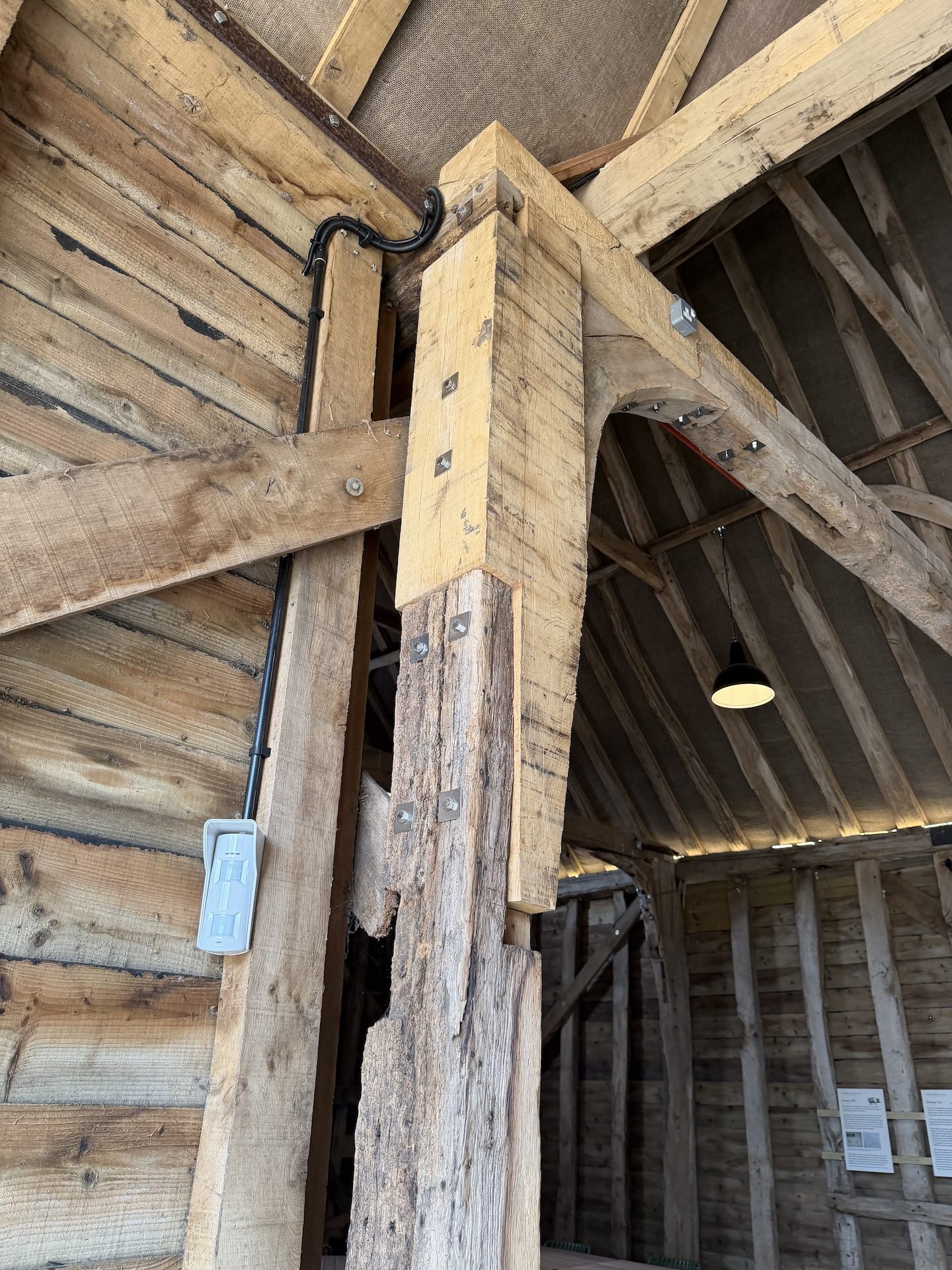
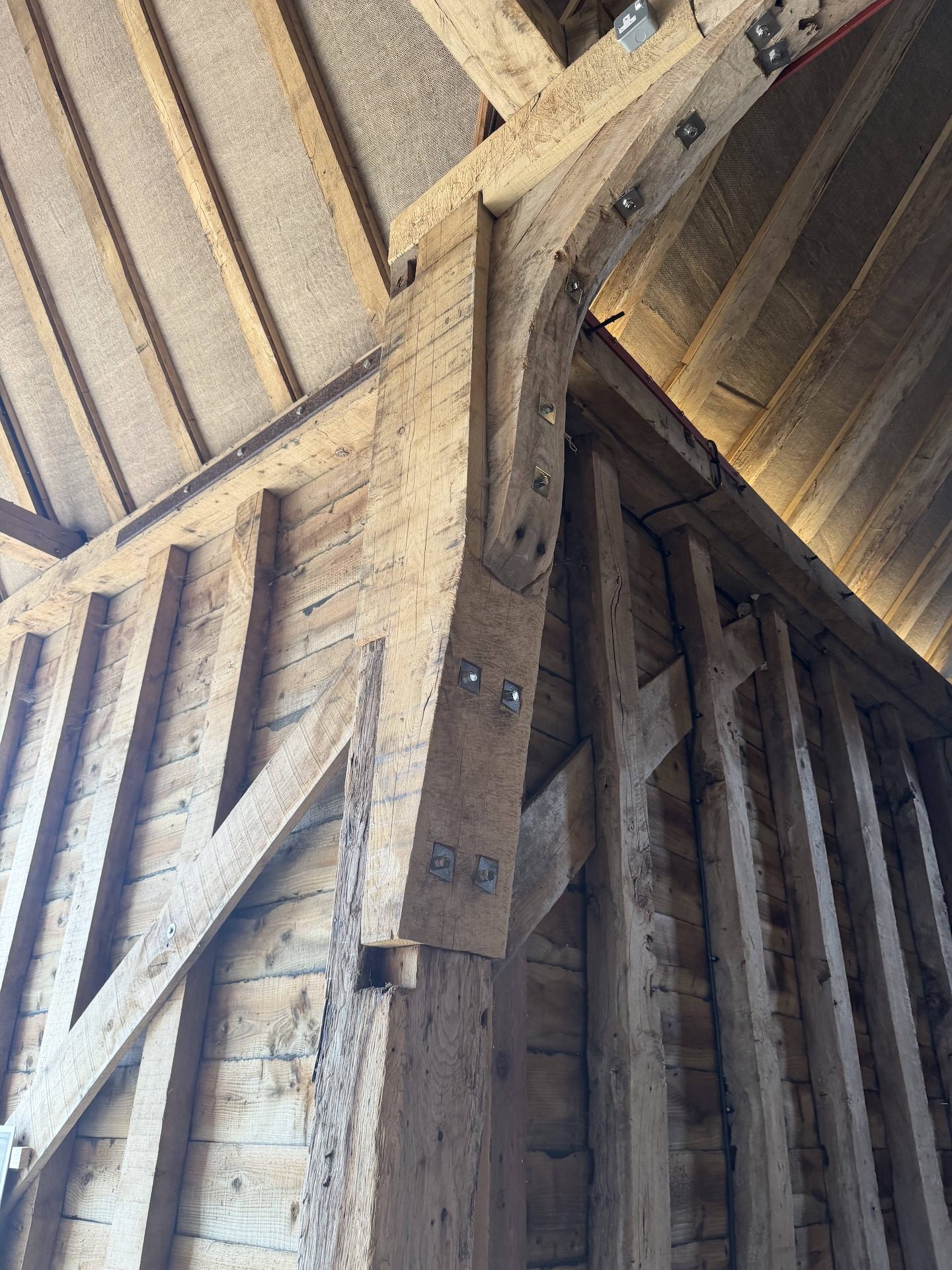
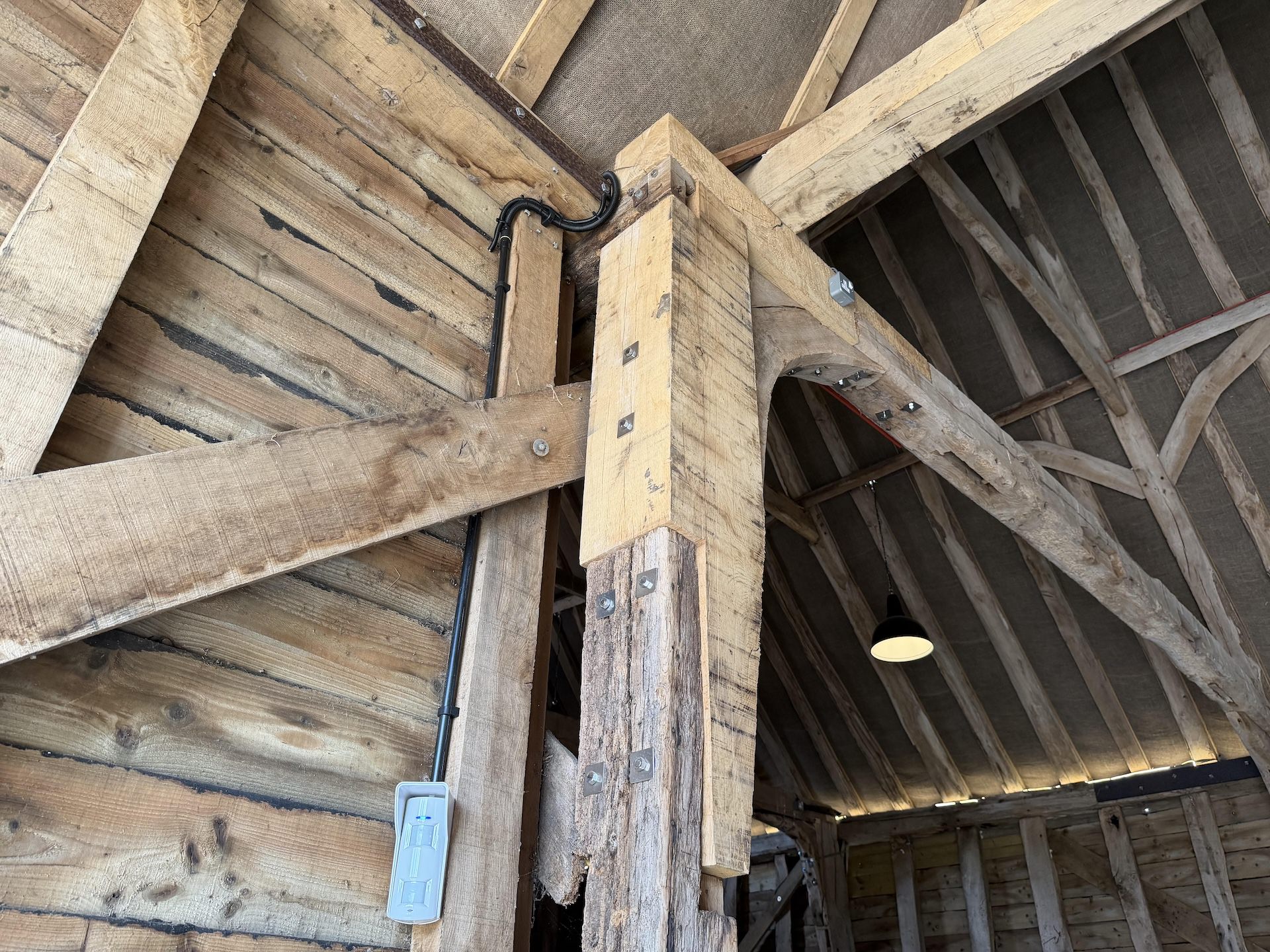
There's a beautiful barn at the entrance to Guildenacre that has some of the most visible repairs we have ever seen. And the building itself is all the better for this visible repair.
Kintsugi is a philosophy about understanding the value of something that's special to you. It says that something repaired with care can be more meaningful than something that was never broken or worn.
For anyone responsible for looking after a play space, that's worth holding onto. The goal isn't to build something indestructible. It's to build something worth maintaining, and to maintain it in a way that visibly extends its life into the next generation.
Image from https://www.lifegate.com/kintsugi
This summary from Lifegate and their image explain the whole concept in just a few words and characters.
When a bowl, teapot or precious vase falls and breaks into a thousand pieces, we throw them away angrily and regretfully. Yet there is an alternative, a Japanese practice that highlights and enhances the breaks, thus adding value to the broken object. It’s called kintsugi (金継ぎ), or kintsukuroi (金繕い), literally golden (“kin”) and repair (“tsugi”).Th